Tuesday, October 5, 2021

What Ingredients are in the COVID-19 Vaccine?

"Pfzer-BioNTech Vaccine

• 95% effective • Number of shots: 2 shots, 21 days apart
• Approved for use in people aged 16 years and older

• Ingredients:
messenger ribonucleic acid (mRNA), lipids (((4-hydroxybutyl)azanediyl)bis(hexane-6,1-diyl) bis(2-hexyldecanoate), 2 [(polyethylene glycol)-2000]- N,N-ditetradecylacetamide, 1,2-distearoyl-sn-glycero-3- phosphocholine, and cholesterol), potassium chloride, monobasic potassium phosphate, sodium chloride, dibasic sodium phosphate dihydrate, and sucrose •

Explanation of ingredients:
- Lipids: Nanolipids, or tiny fat molecules, protect the mRNA and provide a “greasy” exterior that helps the mRNA slide inside cells. Nanolipid components in the Pfzer-BioNTech vaccine include: ((4-hydroxybutyl)azanediyl)bis(hexane-6,1- diyl)bis(2-hexyldecanoate), 2 [(polyethylene glycol)-2000]- N,N-ditetradecylacetamide, 1,2-distearoyl-sn-glycero-3- phosphocholine, and cholesterol -

Salts: Helping to balance the acidity in your body, the following salts are included in the Pfzer-BioNTech vaccine: potassium chloride, monobasic potassium phosphate, sodium chloride, and dibasic sodium phosphate dihydrate -

Sugar: Basic table sugar, also known as sucrose, can also be found in the Pfzer-BioNTech vaccine. This ingredient helps the molecules maintain their shape during freezing.
• Does NOT contain: Eggs, Preservatives, Latex
Learn more, read the FDA full Pfzer-BioNToNTech Fact Sheet:
www.fda.gov/media/144414/download

Moderna Vaccine


• 94% effective •
Number of shots: 2 shots, 28 days apart
•Approved for use in people aged 18 years and older

• Ingredients: messenger ribonucleic acid (mRNA), lipids (SM-102, polyethylene glycol [PEG] 2000 dimyristoyl glycerol [DMG], cholesterol, and 1,2-distearoyl-sn-glycero-3-phosphocholine [DSPC]), tromethamine, tromethamine hydrochloride, acetic acid, sodium acetate, and sucrose

• Explanation of ingredients: - mRNA: Like the Pfzer BioNTech vaccine, Moderna’s also uses mRNA technology to build antibodies against COVID-19. - Lipids: Nanolipids help deliver the mRNA to the vaccine recipient’s cells. Nanolipid components of the Moderna vaccine include: (SM-102, 1,2-dimyristoyl-rac-glycero3- methoxypolyethylene glycol-2000 [PEG2000-DMG], cholesterol, and 1,2-distearoyl-snglycero-3-phosphocholine [DSPC]) - The remaining ingredients, including acids (acetic acid), acid stabilizers (tromethamine and tromethamine hydrochloride), salt (sodium acetate), and sugar (sucrose) all work together to maintain the stability of the vaccine after it’s produced.
• Does NOT contain: Eggs, Preservatives, Latex
Learn more, read the FDA full Moderna Fact Sheet:
www.fda.gov/media/144638/download.."
COVID-19 vaccine ingredients 

Saturday, October 2, 2021

5 Critical Resources for Working Families

"During National Work and Family Month, we're highlighting the need for equitable practices in the workplace that support all working families. From paid family and medical leave to flexible work hours and access to quality child care, research shows policies that support a healthy work-life balance are good for workers and employers.  

While there’s much more to be done to ensure working families have the support they need to thrive, here are five U.S. Department of Labor resources for working families:  

Protections for pregnant and nursing workers 

If you’re pregnant or nursing, explore our map to see what legal protections your state offers, such as protection against discrimination, and time and a private place to express milk.  

Guidance on retirement and health plan benefits  

If you have lost a job or are navigating major life changes – such as marriage, divorce or the birth of a child – we have guidance on your health and retirement plan rights and options

Long COVID support 

Many people who have had COVID-19 experience ongoing symptoms that make it difficult to do their jobs the same way as before. Even if your symptoms are temporary or episodic, you may qualify for accommodations under the Americans with Disabilities Act if you have long COVID. 

Unpaid time off 

Only 23% of private sector workers have access through their employer to paid family leave. If you are not one of them, you may be eligible for up to 12 weeks of unpaid, job-protected leave under the Family and Medical Leave Act to take care of your serious health condition or that of a family member. Our employee guide explains who is eligible and how to use FMLA leave. For questions about taking leave related to COVID-19, start here.

Career and training tools 

Sometimes balancing the demands of work and family means finding a new job. Whether you’re interested in working from home, getting back to work or changing careers, CareerOneStop can help you find the right job – or the training and support you need to land the right job. Use the interest assessment, salary finder, resume guide and other tools to get started.."
Working families resources 

Six Tips to Enhance Immunity

"A healthy lifestyle offers many benefits, including helping to prevent heart disease, type 2 diabetes, obesity, and other chronic diseases. Another important benefit is that healthy routines enhance your immunity.

The immune system is the body’s way of protecting itself from infection and disease; it fights everything from cold and flu viruses to serious conditions such as cancer.

Our immune systems are complex and influenced by many factors. Vaccines build immunity against specific diseases. Some additional ways you can strengthen your immune system are eating well, being physically active, maintaining a healthy weight, getting enough sleep, not smoking, and avoiding excessive alcohol use.

Eat Well

Food Assistance

If you need help obtaining nutritious food, see resources at USDA Nutrition Assistance Programexternal icon. You can also call the USDA National Hunger Hotline at 1–866–3–HUNGRY or 1–877–8–HAMBRE to find resources such as meal sites, food banks, and other social services.

Eating well means emphasizingexternal icon plenty of fruits and vegetables, lean protein, whole grains, and fat–free or low–fat milk and milk products. Eating well also means limiting saturated fats, cholesterol, salt, and added sugars.

Eating well provides multiple nutrients that support optimal immune function.1,2 Be aware, however, that too much of some vitamins and minerals can be harmful. Talk to your health care provider if you think you need nutritional supplements.

Be Physically Active

Regular physical activity helps you feel better, sleep better, and reduce anxiety. Combined with eating well, physical activity can help a person maintain a healthy weight.3

Following the physical activity recommendations for your age provides immediate and long–term benefits. Emerging research also suggests that physical activity may potentially benefit immunity.4,5

Maintain a Healthy Weight

Excess weight can affect how your body functions. Obesity, defined as a body mass index (BMI) of 30 or more in adults, is linked to impaired immune functions.6,7 Obesity may also lower vaccine effectiveness for numerous diseases, including influenza,8 hepatitis B,9,10,11 and tetanus.12

Safe ways to help maintain a healthy weight include reducing stress, eating healthy foods, getting enough sleep, and engaging in regular physical activity..."
Immunity 

Thursday, September 30, 2021

Types of Masks and Respirators

"Summary of Recent Changes, Updates as of September 23, 2021

  • Added section on considerations for children

Updates as of September 10, 2021

  • Made minor updates to the sections on Cloth Masks and Disposable Masks
  • Updated the section on Masks that Meet a Standard
  • Added section about Respirators that Meet International Standards (e.g., KN95s)
  • Added considerations for use of NIOSH-approved respirators because the availability of NIOSH-approved N95 respirators has increased significantly over the last several months
  • Added section on Alternative Masks for Special Situations
  • Updated section on Choosing a Mask or Respirator for Different Situations

This page describes different types of masks and respirators you can use to protect yourself and others from getting and spreading COVID-19.

Masks are designed to contain your respiratory droplets and particles. They also provide you some protection from particles expelled by others.

Respirators are designed to protect you from particles, including the virus that causes COVID-19, and in doing so they also contain your respiratory droplets and particles so you do not expose others.

CDC continues to learn more about the effectiveness of different types of masks and respirators for preventing COVID-19.

Masks

Cloth Masks

Cloth Masks can be made from a variety of fabrics and many types of cloth masks are available.

Wear cloth masks with

  • A proper fit over your nose and mouth to prevent leaks
  • Multiple layers of tightly woven, breathable fabric
  • Nose wire
  • Fabric that blocks light when held up to bright light source
mask considerations tightly woven

Do NOT wear cloth masks with

  • Gaps around the sides of the face or nose
  • Exhalation valves, vents, or other openings (see example)
  • Single-layer fabric or those made of thin fabric that don’t block light
  •  

 Disposable Masks

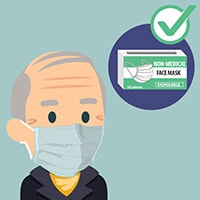
Disposable face masks are widely available. They are sometimes referred to as surgical masks or medical procedure masks.

Wear disposable masks with

  • A proper fit over your nose and mouth to prevent leaks
  • Multiple layers of non-woven material
  • Nose wire
Disposable masks are widely available.

Do NOT wear disposable masks with

Understanding Federal Legislation: A Section-by-Section Guide to Key Legal Considerations

"Federal bills are increasingly complex, making them difficult to understand for the average reader and the seasoned practitioner alike. What a congressional drafter understands to be the import of a given provision could later be discussed and interpreted in committee or on the floor of the House or the Senate. If the bill is enacted, federal agencies may then consider its meaning, either behind the scenes when evaluating their own compliance with the law or through guidance, rules, or agency orders governing third parties. If a litigant challenges an agency’s interpretation of the law, a court may need to resolve the law’s meaning. Although the court’s ultimate goal is to effectuate Congress’s intent, judges may draw on different philosophies or use different tools to arrive at their conclusions about what the law means.

A basic awareness of the rules and presumptions that apply when construing different components of a bill can help Members and congressional staff identify potential issues with the help of legislative counsel when formulating legislation or avoid interpretive pitfalls when reviewing bills proposed by other offices. For example:

 Titles, headings, and general statements of purpose can help to elucidate the meaning of substantive provisions in the bill, but they generally will not override the plain language of those provisions.
 Formal legislative findings can show whether Congress may legislate in areas typically reserved for the states or has identified harms sufficient to regulate speech or other constitutionally protected activities.
 Defined terms in a bill set the meaning of those terms wherever those definitions apply, even if those terms would normally have a different meaning in everyday usage.
 Language that ostensibly creates rights may not help the intended beneficiaries without an explicit remedy, just as prohibiting conduct may not curtail it without an enforcement mechanism.
 If a bill potentially conflicts with an existing law, a reader may look to see if the bill would repeal the existing law or otherwise address the potential conflict through an exception or a “notwithstanding” clause. In the absence of such language, courts are instructed to try to harmonize the conflicting provisions instead of assuming that Congress implicitly repealed the old law.
 A preemption clause or non-preemption clause may indicate whether the bill displaces state laws on the same subject. Without one, if the bill later becomes law, a court may have to decide whether Congress implicitly preempted state law, presuming that it did not but asking, among other questions, whether it is impossible to comply with both laws.
 A severability clause may persuade a court not to strike down an entire law after concluding that a particular provision in the legislation was unconstitutional.
 Timing rules addressing when a provision takes effect or how long it remains in force override the usual default rules that the provision takes effect upon enactment and remains in force until repealed or amended.

Beyond these considerations about the parts of a bill, it is useful to know how courts have interpreted common legislative language.

For example:
 The word “shall” generally introduces a requirement. While “may” can leave room for discretion, “may not” signals a prohibition.
 Words like “this Act” or “this section” can refer to different language, depending on whether they are used “inside the quotes” in language amending an existing law, or “outside the quotes” as part of the stand-alone bill text.
 The phrase “notwithstanding any other provision of law” is susceptible to different interpretations depending on the context.

The Supreme Court has advised lower courts to presume that “Congress says what it means and means what it says.” Thus, unless a provision contains an obvious technical error, a court may give effect to clear, though seemingly unintended, language rather than assume that the provision contains a drafting error..."
Federal Legislation 

Wednesday, September 29, 2021

2020 TRI Preliminary Dataset

"The 2020 Toxics Release Inventory (TRI) preliminary dataset contains data about chemical releases, waste management and pollution prevention activities that took place during 2020 at more than 21,000 federal and industrial facilities across the country.

The TRI preliminary dataset is available each July through September, giving the public access to the most recent TRI information, prior to finalizing the National Analysis dataset in October. EPA typically publishes the National Analysis report, based on the October dataset, early the following calendar year.

The data are available below. Note that TRI data only reflect submissions received by EPA from facilities that meet TRI reporting requirements. Other facilities in your area may be releasing toxic chemicals but either were not required to report to the TRI Program or have not yet submitted their 2020 data. In addition, a TRI facility may be managing a toxic chemical for which the TRI reporting threshold was not exceeded, resulting in that chemical not being reported to the TRI Program.

On this page:

Introduction

The 2020 TRI preliminary dataset consists of TRI data for calendar year 2020. Users should note that while these preliminary data have undergone the basic data quality checks included in the online TRI reporting software, they have not undergone the complete TRI data quality process. In addition, EPA does not aggregate or summarize these data, or offer any analysis or interpretation of them."
Toxics Release Inventory 

Congressional Serial Set

"About the Congressional Serial Set

The United States Congressional Serial Set collection was digitized by the Law Library of Congress, and is made publicly available through a partnership between the U.S. Government Publishing Office and the Law Library of Congress. The joint digitization project is a multi-year effort. Additional volumes of the Serial Set will be added to this collection as they are available.

The Serial Set is comprised of the numbered Senate and House Documents and Senate and House Reports, bound by Session of Congress. The contents of the Serial Set have varied throughout the publication’s history, and at times have included House and Senate Journals, and the reports of executive departments and agencies.

Each volume is assigned a Serial Number, beginning with the 1st Session of the 15th Congress in 1817. Reports and Documents for each chamber begin with Number 1 at the beginning of the Congress, and are numbered consecutively through all sessions of that Congress. Read More .."
Congressional Serial Set
 

Friday, September 24, 2021

Using the eCFR Point-in-Time System

"Getting Started

The Electronic Code of Federal Regulations (eCFR) provides a way of exploring the Code of Federal Regulations as it exists today and at points in time back to January 2017.

The eCFR allows you to:

  • browse the Code of Federal Regulations as it existed at any point in time
  • compare the regulations as they existed on any two dates
  • view a timeline of how the CFR content has changed
  • search for specific terms
  • subscribe to changes in the regulations

The eCFR is not an official legal edition of the CFR. Understanding the eCFR explains its status and the editorial process.

Code of Federal Regulations

The Code of Federal Regulations (CFR) is the codification of the general and permanent rules published in the Federal Register by the departments and agencies of the Federal Government. It is divided into 50 titles representing broad areas subject to federal regulation.

The Electronic Code of Federal Regulations (eCFR) is a continuously updated online version of the CFR and provides enhanced features that are not part of the published CFR.."
Code of Federal Regulations 

Thursday, September 23, 2021

Report on Indicators of School Crime and Safety, 2020

"This report provides official estimates of school crime and safety from a variety of data sources, including national surveys of students, teachers, principals, and post-secondary institutions.

Highlights
  • In 2019, students ages 12-18 experienced 764,600 victimizations at school and 509,300 victimizations away from school.
  • About 22% of students ages 12-18 reported being bullied at school during the school year in 2019, which was lower than the percentage who reported being bullied in 2009 (28%).
  • In 2019, of students ages 12-18, about 9% reported a gang presence at their school during the school year, 7% reported being called hate-related words, and 23% reported seeing hate-related graffiti.
  • Between 2009 and 2019, the percentage of students in grades 9–12 who reported carrying a weapon anywhere during the previous 30 days decreased (from 17% to 13%), as did the percentage of students who reported carrying a weapon on school property (decreased from 6% to 3%).
  • In 2019–20, there were a total of 75 school shootings with casualties, including 27 school shootings with deaths and 48 school shootings with injuries only. In addition, there were 37 reported school shootings with no casualties in 2019–20.

    Downloads

Correctional Populations in the United States, 2019

"This report presents statistics on persons supervised by U.S. adult correctional systems at year-end 2019, including those supervised in the community on probation or parole and persons incarcerated in state or federal prison or local jail. It describes the size and change in the total correctional population from 2009 to 2019.

Highlights
  • In 2019, the number of persons supervised by U.S. adult correctional systems (6,344,000) decreased (down 65,200 persons) for the twelfth consecutive year.
  • The 1.0% decline in the correctional population during 2019 was due to decreases in the community supervision (down 0.9%) and incarcerated (down 1.7%) populations.
  • Since 2009, the correctional population decreased by 12.4% (down 895,200 persons), an average of 1.3% annually.
  • At year-end 2019, about 2,480 per 100,000 adult U.S. residents were under correctional supervision, the lowest rate since 1991.
  • Downloads

Explore Census Data

"Explore Census Data

The Census Bureau is the leading source of quality data about the nation's people and economy.

Tables

Check out our new table display which allows you to dynamically add geographies, topics, or any applicable filters. You can reorder, pin, and hide columns all with simple drag and drop functionality. Tab through different tables to make sure you found the right one, customize it, and then download multiple vintages of it quickly. If you don’t see a functionality you need, find a bug, or have a comment, drop us a line at cedsci.feedback@census.gov.
VIEW TABLES