Showing posts with label vaccines. Show all posts

Friday, September 15, 2023

Updated COVID-19 Vaccine Recommendations are Now Available

"CDC is posting updates on respiratory viruses every week; for the latest information, please visit CDC Respiratory Virus Updates.

Key Takeaways:

  • Updated COVID-19 vaccines are recommended for everyone 6 months and older and will be available by the end of this week at most places you would normally go to get your vaccines.
  • Older adults and persons with weakened immune systems are at greatest risk for hospitalization and death. In addition, healthy children and adults can still experience severe disease.
  • The updated vaccines should work well against currently circulating variants of COVID-19, including BA.2.86, and continue to be the best way to protect yourself against severe disease.
  • The benefits of COVID-19 vaccination continue to outweigh any potential risks. Serious reactions after COVID-19 vaccination are rare.
  • In one study, the risk of cardiac complications, including myocarditis, in males 12-17 years old was 1.8 – 5.6 times higher after COVID-19 infection than after COVID-19 vaccination.
  • The vaccines are covered by insurance, including private insurance, Medicare plans, and Medicaid plans. Uninsured children and uninsured adults also have access through the Vaccine for Children Program and Bridge Access Program, respectively.

Background

COVID-19 burden is currently lower than at previous points in the pandemic; however, the absolute number of hospitalizations and deaths remains high. Older adults and persons with weakened immune systems are at highest for severe illness. Additionally, children and adults with no underlying medical conditions can still experience severe illness due to COVID-19.

Last fall and winter virus season, people who received the 2022-2023 COVID-19 vaccine had greater protection against severe illness and hospitalization than those who did not receive that vaccine. We are still at risk of COVID-19 since the virus continues to change and new variants emerge. Additionally, protection from COVID-19 vaccines and infection decline over time. An updated COVID-19 vaccine provides enhanced protection against the variants currently responsible for most hospitalizations in the United States.

Actions for the Public

On September 12, 2023, CDC recommended a COVID-19 vaccine updated for 2023-2024 for everyone aged 6 months and older to protect against serious illness.

The main reason to get vaccinated against COVID-19 is to protect yourself against severe illness, hospitalization, and even death. COVID-19 vaccines also reduce the chance of having Long COVID. This vaccine is expected to provide better protection against variants that are currently making people sick.

The updated COVID-19 vaccines are similar to earlier COVID-19 vaccines that were safely administered to hundreds of millions of Americans during the pandemic..."
COVID-19 Vaccine 

Thursday, October 21, 2021

How to Address COVID-19 Vaccine Misinformation

"On this page, the Centers for Disease Control and Prevention (CDC) shares strategies for communicating accurate information about COVID-19 vaccines, responding to gaps in information, and confronting misinformation with evidence-based messaging from credible sources.

Defining Misinformation and Disinformation
  • Misinformation is false information shared by people who do not intend to mislead others.
  • Disinformation is false information deliberately created and disseminated with malicious intent.

Both types can affect vaccine confidence and vaccination rates. Most misinformation and disinformation that has circulated about COVID-19 vaccines has focused on vaccine development, safety, and effectiveness, as well as COVID-19 denialism.

Addressing Misinformation About COVID-19 Vaccines

The first step to addressing misinformation about COVID-19 vaccines in your community is learning more about it, including where it starts and when, why, and how it is spreading and evolving.

Strategies for addressing COVID-19 vaccine misinformation in your community:

Social Listening and Monitoring Tools

Download the CDC Rapid Community Assessment Guidepdf icon for steps and adaptable tools to quickly gather information and better understand your community of focus.

  • Listen to and analyze misinformation circulating in your community through social and traditional media monitoring. This can include monitoring social media channels and traditional media outlets for misinformation and creating a log of that misinformation to identify trends in your area. This can help you understand where, when, why, and how misinformation is spreading in your community.
  • Engage with and listen to your community to identify and analyze perceptions, content gaps, information voids, and misinformation.
  • Share accurate, clear, and easy-to-find information that addresses common questions. This can be done through your website, social media, and other places your audience looks for health information. Also use methods to reach those with limited or no internet access, such as radio or community events. Share details, including addresses and hours, about local vaccination sites and events with community-based organizations and local media. See How to Tailor COVID-19 Information to Your Specific Audience.
  • Use trusted messengers to boost credibility and the likelihood of being seen and believed over misinformation. Some people may not trust public health professionals or visit the health department website, so it’s more effective to reach them through the channels and sources they look to and trust for health information, such as religious leaders or community organizations..."
    Vaccine misinformation
     

Tuesday, October 5, 2021

What Ingredients are in the COVID-19 Vaccine?

"Pfzer-BioNTech Vaccine

• 95% effective • Number of shots: 2 shots, 21 days apart
• Approved for use in people aged 16 years and older

• Ingredients:
messenger ribonucleic acid (mRNA), lipids (((4-hydroxybutyl)azanediyl)bis(hexane-6,1-diyl) bis(2-hexyldecanoate), 2 [(polyethylene glycol)-2000]- N,N-ditetradecylacetamide, 1,2-distearoyl-sn-glycero-3- phosphocholine, and cholesterol), potassium chloride, monobasic potassium phosphate, sodium chloride, dibasic sodium phosphate dihydrate, and sucrose •

Explanation of ingredients:
- Lipids: Nanolipids, or tiny fat molecules, protect the mRNA and provide a “greasy” exterior that helps the mRNA slide inside cells. Nanolipid components in the Pfzer-BioNTech vaccine include: ((4-hydroxybutyl)azanediyl)bis(hexane-6,1- diyl)bis(2-hexyldecanoate), 2 [(polyethylene glycol)-2000]- N,N-ditetradecylacetamide, 1,2-distearoyl-sn-glycero-3- phosphocholine, and cholesterol -

Salts: Helping to balance the acidity in your body, the following salts are included in the Pfzer-BioNTech vaccine: potassium chloride, monobasic potassium phosphate, sodium chloride, and dibasic sodium phosphate dihydrate -

Sugar: Basic table sugar, also known as sucrose, can also be found in the Pfzer-BioNTech vaccine. This ingredient helps the molecules maintain their shape during freezing.
• Does NOT contain: Eggs, Preservatives, Latex
Learn more, read the FDA full Pfzer-BioNToNTech Fact Sheet:
www.fda.gov/media/144414/download

Moderna Vaccine


• 94% effective •
Number of shots: 2 shots, 28 days apart
•Approved for use in people aged 18 years and older

• Ingredients: messenger ribonucleic acid (mRNA), lipids (SM-102, polyethylene glycol [PEG] 2000 dimyristoyl glycerol [DMG], cholesterol, and 1,2-distearoyl-sn-glycero-3-phosphocholine [DSPC]), tromethamine, tromethamine hydrochloride, acetic acid, sodium acetate, and sucrose

• Explanation of ingredients: - mRNA: Like the Pfzer BioNTech vaccine, Moderna’s also uses mRNA technology to build antibodies against COVID-19. - Lipids: Nanolipids help deliver the mRNA to the vaccine recipient’s cells. Nanolipid components of the Moderna vaccine include: (SM-102, 1,2-dimyristoyl-rac-glycero3- methoxypolyethylene glycol-2000 [PEG2000-DMG], cholesterol, and 1,2-distearoyl-snglycero-3-phosphocholine [DSPC]) - The remaining ingredients, including acids (acetic acid), acid stabilizers (tromethamine and tromethamine hydrochloride), salt (sodium acetate), and sugar (sucrose) all work together to maintain the stability of the vaccine after it’s produced.
• Does NOT contain: Eggs, Preservatives, Latex
Learn more, read the FDA full Moderna Fact Sheet:
www.fda.gov/media/144638/download.."
COVID-19 vaccine ingredients 

Thursday, June 10, 2021

VFC Information for Parents

"The Vaccines for Children (VFC) program offers vaccines at no cost to eligible children through health care providers enrolled in the program. Vaccinating on time means healthier children, families, and communities. Find out if your child qualifies for the VFC program.

Children who are eligible for the Vaccines for Children (VFC) program can receive vaccines at no cost through a national network of participating health care providers. The VFC program helps ensure that all children have a better chance of getting their recommended vaccinations on schedule. These vaccines protect babies, young children, and adolescents from 16 diseases.

Who Is Eligible for the VFC Program?

Children ages 18 years or younger who meet at least one of the following requirements:

  • American Indian or Alaska Native
  • Medicaid-eligible
  • Uninsured
  • Underinsured

What Is “Underinsured”?

Underinsured means that your child has health insurance, but the insurance policy:

Underinsured children are eligible to receive vaccines only at federally qualified health centers (FQHCs) or rural health clinics (RHCs). FQHCs and RHCs provide health care to medically underserved areas and meet certain criteria under Medicare and Medicaid programs. If you need help locating an FQHC or RHC, contact your state or city’s VFC program coordinator.

What Is the Cost?

There is no charge for the vaccines given by VFC providers to eligible children. Health care providers may charge other fees related to the visit, such as:

  • Giving a shot
  • Office visit
  • Non-vaccine services, like an eye exam or blood test

Where Can My Child Get Vaccinated?

Nationally, there are thousands of health care providers enrolled in the VFC program. If your child is VFC-eligible, ask your child’s doctor if they are a VFC provider. Other health care providers that might participate in the VFC program include pharmacies, urgent care clinics, and school-based clinics. For help finding a VFC provider near you, see if your state has a searchable website for VFC providers or call your state or local health department..."
Vaccines and children 

Tuesday, April 6, 2021

Be #VaccineReady this National Minority Health Month

"Every April, we observe National Minority Health Month by raising awareness about health disparities that affect people in racial and ethnic minority groups. The COVID-19 pandemic continues to highlight these inequities. This National Minority Health Month, learn how to be “vaccine ready” to help protect yourself and others. 

The COVID-19 pandemic continues to highlight inequities that impact the physical, social, and emotional health of people in some racial and ethnic minority groups. These groups experience disproportionate burdens from COVID-19. Long-standing systemic health and social inequities have led to barriers at all levels of society that put many people, including many people from some racial and ethnic minority groups, at increased risk of getting sick and dying from COVID-19.

COVID-19 poses additional challenges for people who lack healthcare resources and access to culturally relevant information about getting a COVID-19 vaccination. Getting vaccinated against COVID-19 is an important thing you can do to help protect yourself and others and bring this pandemic to an end.

Take steps to make sure you, your family, and your community are “vaccine ready.”

  • Get the facts about COVID-19 vaccines. Everyone should have access to trustworthy vaccine information. CDC’s website explains COVID-19 vaccine efficacy and safety and provides information for specific groups. Learn more about the different types of COVID-19 vaccines.
  • Share accurate vaccine information. Confidence in the vaccines leads to more people getting vaccinated, which leads to fewer COVID-19 illnesses, hospitalizations, and deaths. Help your friends and family address their uncertainty with clear and understandable information. CDC’s Vaccinate with Confidence strategy reinforces CDC’s activities to increase confidence in COVID-19 vaccines by building trust that patients, parents, or providers have in recommended vaccines;​ providers who administer vaccines; and processes and policies that lead to vaccine development, licensure, manufacturing, and recommendations for use.​
  • Get vaccinated when you are eligible. Learn how to register for vaccination. Once you are fully vaccinated against COVID-19, you can begin to do many of the things that you had stopped doing because of the pandemic.
  • Practice COVID-19 safety measures. Because of the new COVID-19 variants and many people are not yet vaccinated, it is critical to continue taking precautions to prevent COVID-19 in many situations, including in public. Wear a mask, stay six feet apart, avoid crowds and poorly ventilated spaces, and wash hands often..."
    Vaccine and minority health
     

Friday, March 26, 2021

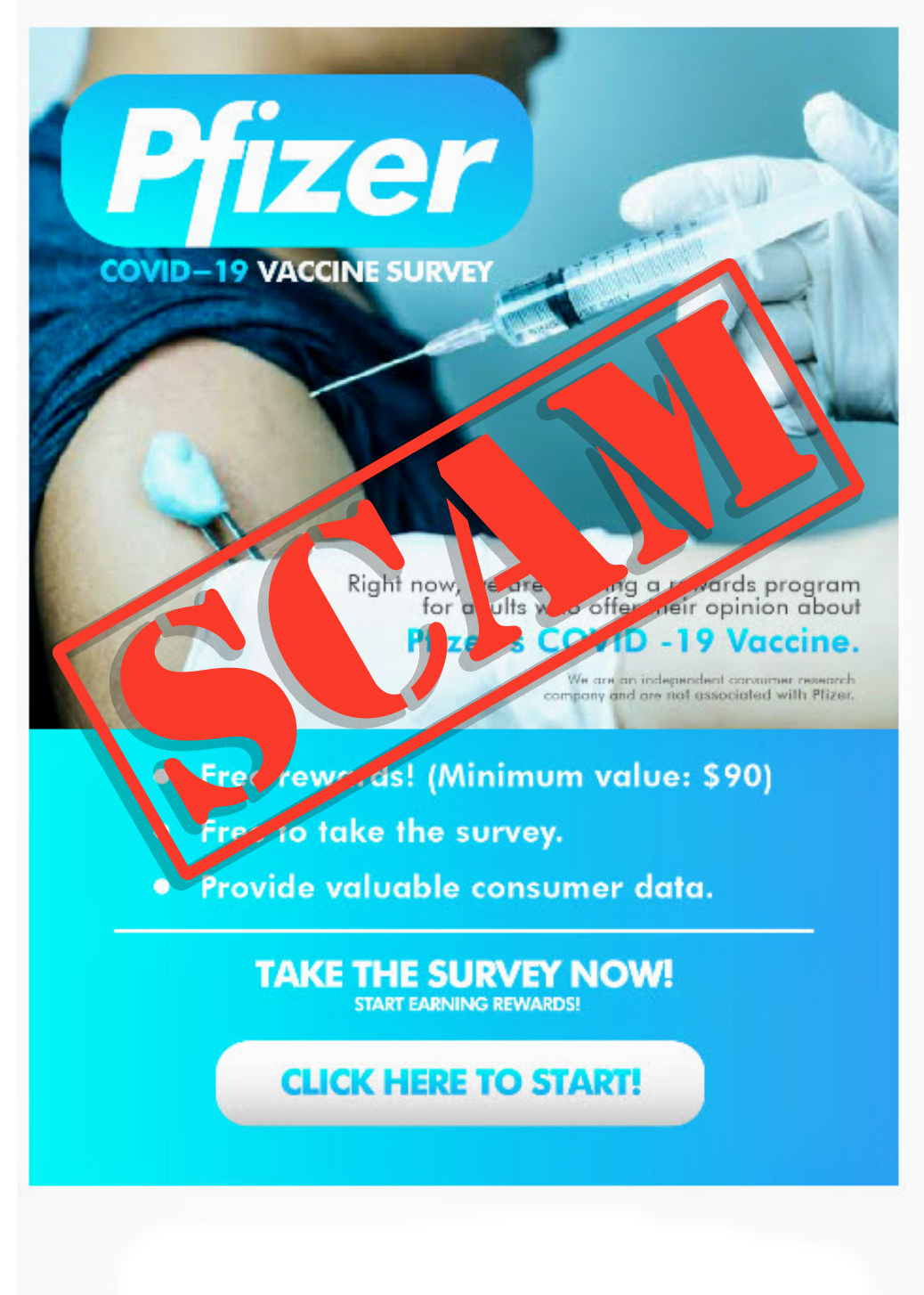
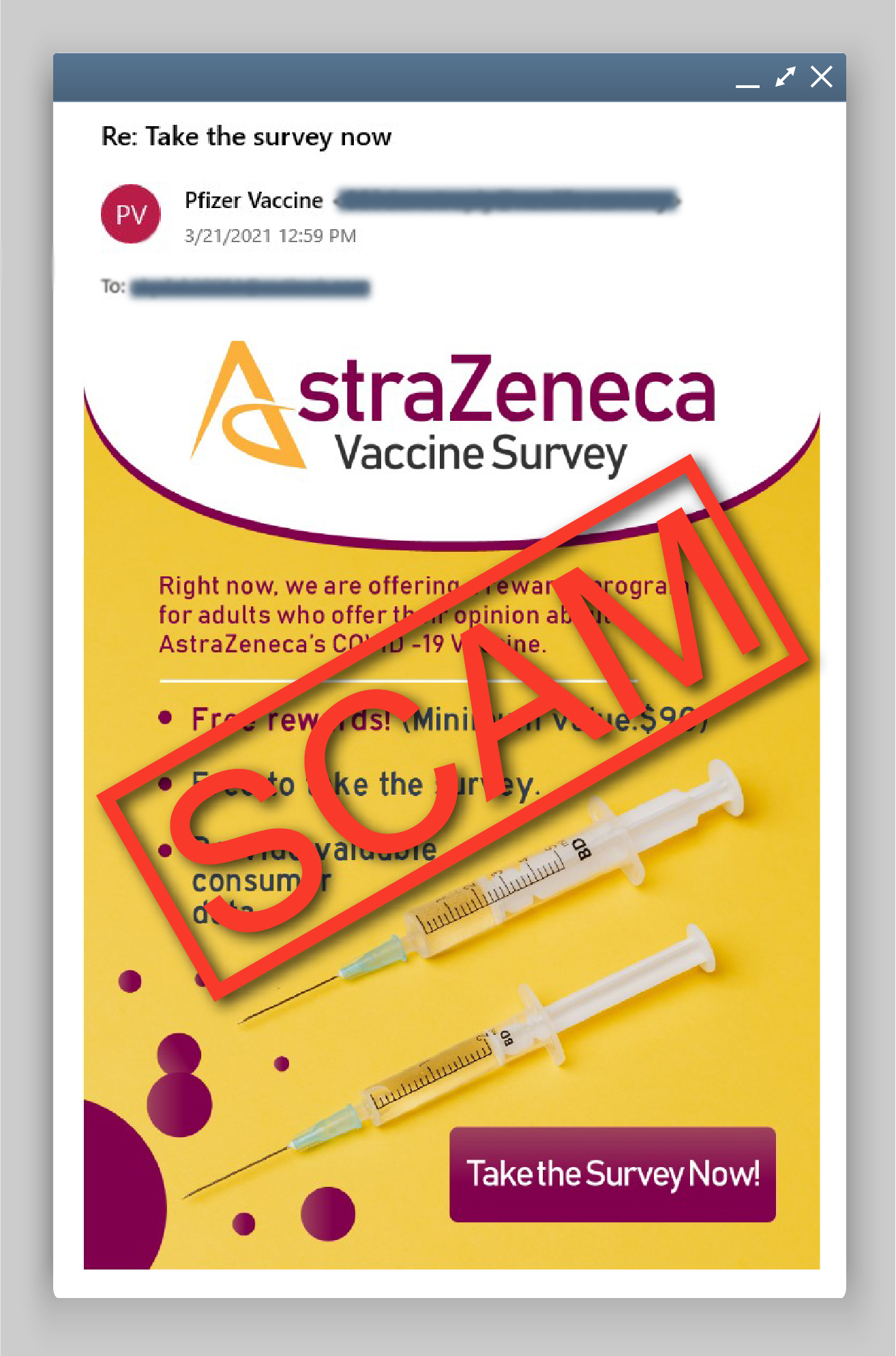
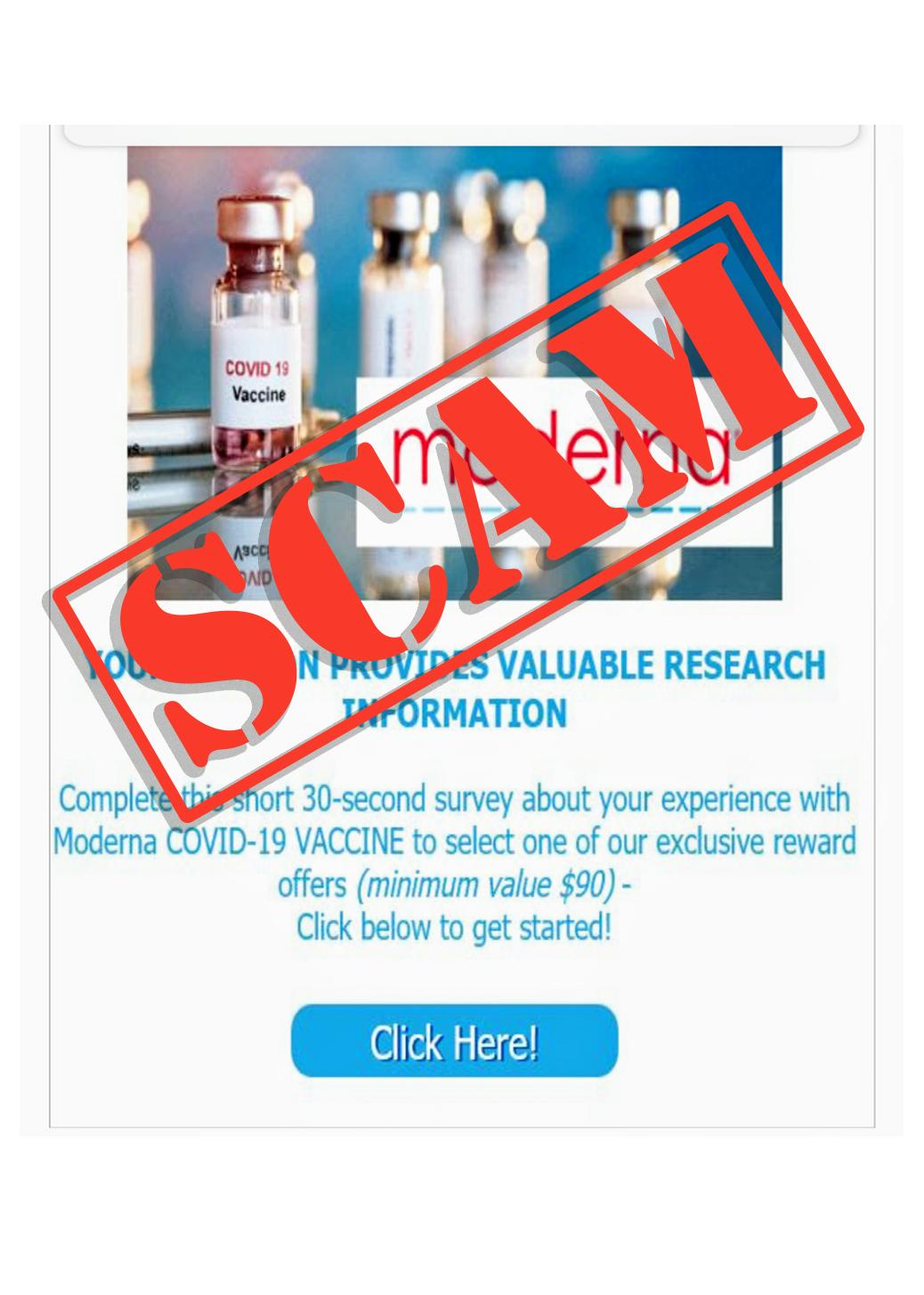
Ignore bogus COVID vaccine survey

"Ignore bogus COVID vaccine survey

Scammers are using a new trick to steal your money and personal information: a bogus COVID vaccine survey.

People across the country are reporting getting emails and texts out of the blue, asking them to complete a limited-time survey about the Pfizer, Moderna, or AstraZeneca vaccine. (And no doubt, there may be one for Johnson & Johnson, too.) In exchange, people are offered a free reward, but asked to pay shipping fees.

If you get an email or text like this, STOP. It’s a scam.


No legitimate surveys ask for your credit card or bank account number to pay for a “free” reward.

If you get an email or text you’re not sure about:

  • Don’t click on any links or open attachments. Doing so could install harmful malware that steals your personal information without you realizing it.
  • Don’t call or use the number in the email or text. If you want to call the company that supposedly sent the message, look up its phone number online.

Remember:

  • Don’t give your bank account, credit card, or personal information to someone who contacts you out of the blue.
  • You can filter unwanted text messages on your phone, through your wireless provider, or with a call-blocking app.
  • If you get an email or text that asks for your personal information and you think it could be a scam, tell the FTC at ReportFraud.ftc.gov.

To learn more about COVID-related frauds and scams, visit ftc.gov/coronavirus/scams..."
Bogus COVID-19 survey


Thursday, March 18, 2021

COVID-19 Vaccination: Selected U.S. Data Sources

"The sources below can help congressional staff track the progress of the U.S. COVID-19 vaccination campaign at the national, state, and local levels.

Sources were selected for having commonly cited and frequently requested data. This list is not intended to be comprehensive. Additional sources may be added in future updates. Because different resources use different methodologies, readers should check websites’ notes, definitions, and caveats. Readers should also use caution when comparing data across sources or geographies. For assistance in interpreting or analyzing these data, congressional staff should contact CRS (202-707-5700, or place a request at the CRS website).

For an overview of vaccine data systems and considerations for Congress, see CRS Insight IN11584, Tracking COVID-19 Vaccines: U.S. Data Systems and Related Issues.

The Centers for Disease Control and Prevention’s (CDC’s) COVID-19 Vaccine website can assist constituents with vaccine questions, including “How Do I Get a Vaccine?” Vaccine eligibility varies by state, locality, and provider. Sources tracking state eligibility policies include Kaiser Family Foundation, New York Times, USAFacts, National Governors Association, Johns Hopkins University, and NationalAcademy for State Health Policy.

Example data sources on public attitudes toward vaccination include Census Bureau (tables), Universityof Southern California, Kaiser Family Foundation, Carnegie Mellon University, AP-NORC, University ofMinnesota, Pew, and scholarly articles..."
COVID-19 Vaccination 

Tuesday, February 9, 2021

COVID-19 Vaccine Doses: Selected Data Sources on Allocation, Distribution, and Administration

"The selected sources below can help congressional staff track the progress of the U.S. COVID-19 vaccination campaign at the national, state, and local levels.

Sources were selected for having commonly cited and frequently requested data. This is not intended to be a comprehensive source list. Additional sources may be added in future updates. Because different resources use different methodologies, readers should check websites’ notes, definitions, and caveats. Readers should also use caution when comparing data across sources or geographies. For assistance in interpreting or analyzing these data, congressional staff should contact CRS (202-707-5700, or place a request at the CRS website). The Centers for Disease Control and Prevention’s (CDC’s) COVID-19Vaccine website can assist constituents with vaccine questions, including “How Do I Get a Vaccine?”

For an overview of vaccine data systems and considerations for Congress, see CRS Insight IN11584, Tracking COVID-19 Vaccines: U.S. Data Systems and Related Issues.

About Vaccine Data

In the COVID-19 vaccine program, doses are first allocated and made available to states and other jurisdictions for ordering. Once ordered, vaccines are distributed to the appropriate state and other jurisdiction sites. Doses are then administered to patients by providers that also report administration data to jurisdictions and CDC. The vaccines currently approved (Pfizer-BioNTech and Moderna) require two doses for full effectiveness. Federal health care programs (e.g., Indian Health Service) manage and report vaccine data through a similar process..."
Vaccine doses 

Friday, January 29, 2021

Tracking COVID-19 Vaccines: U.S. Data Systems and Related Issues

"The U.S. Food and Drug Administration (FDA) has granted Emergency Use Authorizations (EUAs) for two Coronavirus Disease 2019 (COVID-19) vaccines, sponsored by Pfizer-BioNTech and Moderna, and millions of vaccine doses are being distributed nationwide. Both vaccines require two doses, which are generally not interchangeable. Key to this effort, several existing and new data systems are in use to track, specifically,


 where the vaccines supply is: for example, whether vaccines are in a storage center or at a provider site, through the Vaccine Tracking System (VTrckS);
 who has received a vaccine: that is, recipients who have received one or both doses of which vaccine, through jurisdiction-based Immunization Information Systems (IIS); and
 if any new safety issues occur: several monitoring systems aim to identify new safety issues and inform public health recommendations or FDA actions.

The federal government has long supported data capabilities for vaccines, primarily through the Centers for Disease Control and Prevention (CDC). As with public health data generally, vaccine data systems use both federal and nonfederal (e.g., state-based) systems. For a number of years, 64 state, territorial, and local jurisdictions have received Immunization Cooperative Agreements (commonly referred to as “Section 317 grants”) administered by CDC. Among other functions, this flexible grant program has supported implementation of VTrckS for vaccine supply tracking and IISs for vaccine recipient tracking.

IISs (commonly referred to as immunization registries) enable both (1) consolidated immunization histories for a given individual, and (2) tracking of administered vaccines across the population. IISs also aid with vaccine reminders, including second-dose reminders. Most, but not all, jurisdictions have had IISs. New Hampshire created one for the COVID-19 vaccination program..."
COVID-19 Vaccinations 

Wednesday, December 9, 2020

COVID-19 Vaccines: Global Health Issues

"The Coronavirus Disease 2019 (COVID-19) pandemic has led to severe health and economic consequences across the globe, with country governments struggling to contain the spread of the disease through physical lockdown and quarantine measures, while working towards vaccines, to prevent further morbidity (illness) and mortality (death). As of December 8, 2020, COVID-19 cases had reached roughly 67 million, with over 1.5 million deaths globally. The successful deployment of a COVID-19 vaccine globally could curb spread of the virus by aiding in creating herd immunity; whereby a high proportion of individuals within a population are resistant to infection based on pre-existing immunity (through vaccination and/or previous infection). At least 200 experimental COVID-19 vaccine candidates are under development worldwide. As of November 30, 2020, several companies, including Pfizer and Moderna, had requested emergency use authorization from the Food and Drug Administration (FDA) for their vaccine candidates. Vaccine development is typically a long, complex, and difficult process that can take decades. However, given the urgency of controlling the COVID-19 pandemic, governments, philanthropies, international organizations, scientists, and manufacturers are expediting research and development (R&D) for COVID-19 vaccines and other medical countermeasures. The stated goal of many entities is making a vaccine widely available within two years. These accelerated efforts include performing different stages of vaccine trials simultaneously, testing multiple vaccine and therapeutic candidates in coordinated clinical trials, and ramping up production and distribution capacity for when a vaccine candidate receives regulatory approval.
 

Congress appropriates funds for multilateral and bilateral global immunization activities in the Department of State, Foreign Operations, and Related Programs, and Departments of Labor and Health and Human Services appropriations bills. These activities are implemented bilaterally by the U.S. Centers for Disease Control and Prevention (CDC) and the United States Agency for International Development (USAID), and used in support of multilateral vaccine campaigns for diseases like polio and measles, led by groups like the United Nations Children’s Emergency Fund (UNICEF). The U.S. government is the second-largest contributor to global vaccination campaigns. During the COVID-19 pandemic, however, U.S. engagement with the international community has been seen as uneven. On the one hand, U.S. agencies such as the FDA are collaborating with international counterparts on COVID-19 vaccines development regulation. On the other hand, the U.S. government has not joined new multilateral and international efforts for COVID-19 vaccine development..."
COVID-19 vaccines 

COVID-19 vaccines are in the pipeline. Scammers won’t be far behind

"Reports about the release of COVID-19 vaccines by the end of the year are promising, but plans for distribution are still being worked out.

Here’s what we know right now: Two vaccine manufacturers (Pfizer/BioNTech and Moderna) have submitted applications for Emergency Use Authorization to the Food and Drug Administration (FDA). The FDA could complete its review of these applications by the third or fourth week of December 2020. Additional vaccine manufacturers are expected to apply for FDA authorization in 2021. The Advisory Committee on Immunization Practices (ACIP), an independent group of experts convened by the Centers for Disease Control and Prevention (CDC), has already recommended that health care workers and residents of long-term care facilities should receive the first available doses. As additional data is available, more vaccines are authorized by the FDA, and vaccine production increases, ACIP will continue to update its recommendations.

Once the FDA authorizes one or more vaccines from pharmaceutical manufacturers, vaccines will be distributed to federal- and state-approved locations. For most people living in the U.S., states and territories will make the final decisions on who will get the vaccines and when. States are also working on their own specific vaccination plans. You may want to check with your state for specific information regarding distribution plans in your state. More information on where and how to get a COVID-19 vaccine will be available once vaccines are authorized and/or being shipped out.

While we wait for a timeline and more information, there’s no doubt scammers will be scheming. Here’s what you need to know to avoid a vaccine-related scam:

  • You likely will not need to pay anything out of pocket to get the vaccine during this public health emergency.
  • You can’t pay to put your name on a list to get the vaccine.
  • You can’t pay to get early access to the vaccine.
  • No one from a vaccine distribution site or health care payer, like a private insurance company, will call you asking for your Social Security number or your credit card or bank account information to sign you up to get the vaccine.
  • Beware of providers offering other products, treatments, or medicines to prevent the virus. Check with your health care provider before paying for or receiving any COVID-19-related treatment..."
    COVID-19 vaccines and scams
     

Thursday, November 5, 2020

Vaccine Safety in the United States: Overview and Considerations for COVID-19 Vaccines

"Widespread immunization efforts have been linked to increased life expectancy and reduced illness. U.S. vaccination programs, headed by the Centers for Disease Control and Prevention (CDC) within the Department of Health and Human Services (HHS), have helped eradicate smallpox and nearly eradicate polio globally, and eliminate several infectious diseases domestically. With the Coronavirus Disease 2019 (COVID-19) pandemic now causing major health and economic impacts across the world, efforts are underway to make safe and effective vaccines available quickly to help curb spread of the virus.

Background

Federal regulation of vaccine safety began with the Biologics Control Act of 1902, which was the first federal law to require premarket review of pharmaceutical products. Since the 1902 law was enacted, federal vaccine safety activities have expanded, with the aim of minimizing the possibility of adverse events following vaccination and detecting new adverse events as quickly as possible. Today, as covered in this report, federal efforts to ensure vaccine safety include the following activities:

 Premarket requirements: Clinical trials, or testing of investigational vaccines in human subjects, and U.S. Food and Drug Administration (FDA) licensure or authorization.

 Clinical recommendations: Recommendations for the clinical use of vaccines by the Advisory Committee on Immunization Practices (ACIP), and CDC clinical guidance and resources.

  Postmarket safety: Manufacturing requirements and ongoing safety monitoring of vaccines administered to patients.  Federal research on vaccine safety: Ongoing research to inform a better scientific understanding of vaccine safety and comprehensive scientific reviews on the safety of vaccines in use.

 Vaccine injury compensation: In nonemergency circumstances, the National Vaccine Injury Compensation Program (VICP) provides compensation to eligible individuals found to have been injured by a covered vaccine. In emergency circumstances, like COVID-19, a separate Countermeasures Injury Compensation Program (CICP) may be used.

 Vaccine distribution: Programs and requirements to ensure safety controls in vaccine distribution programs, led by CDC..."
Vaccine safety 

Monday, July 27, 2020

Routine Vaccination During the COVID-19 Outbreak

"A CDC report released in May 2020 found a troubling drop in routine childhood vaccinations as a result of families staying at home. While families followed public health warnings about going out, an unfortunate result was many missed routine vaccinations. CDC and the American Academy of Pediatrics (AAP) recommend every child continues to receive routine vaccinations during the COVID-19 outbreak.

Well-Child Visits and Vaccinations Are Essential Services

Children need to be protected against vaccine-preventable diseases. Well-child visits and vaccinations are essential services and help make sure children are protected. Children who are not protected by vaccines may be more likely to get diseases like measles and whooping cough.
As communities are opening up, it’s important for parents to work with their children’s doctor or nurse to make sure their children stay up to date on routine vaccines.

Going to Medical Offices During the COVID-19 Outbreak

If your child is due for a well-child visit, call the doctor’s office and ask about ways they safely offer well-child visits during this time. Many medical offices are taking extra steps to make sure that well visits can happen safely during the COVID-19 outbreak, including:
  • Scheduling sick visits and well-child visits during different times of the day
  • Asking patients to remain outside until it’s time for their appointment to reduce the number of people in waiting rooms
  • Offering sick visits and well-child visits in different locations.."
    Vaccines and COVID-19

Thursday, April 23, 2020

Making the Vaccine Decision: Addressing Common Concerns

"Most parents choose to vaccinate their children according to the recommended schedule. But some parents may still have questions about vaccines, and getting answers they can trust may be hard.

With so much information—and sometimes incorrect information—available today, learning the facts before making health decisions is very important.

How vaccines work: preventing diseases

The diseases vaccines prevent can be dangerous, or even deadly.
Statistically, the chances of your child getting diseases such as measles, pertussis, or another vaccine-preventable disease might be low, and your child might never need the protection vaccines offer. HOWEVER, you don’t want them to be lacking the protection vaccines provide if they ever do need it..."
Vaccines

Monday, December 9, 2019

Rotavirus Vaccines

"Rotavirus vaccine is the best way to protect your child against rotavirus disease.

Most children (about 9 out of 10) who get the vaccine will be protected from severe rotavirus disease. About 7 out of 10 children will be protected from rotavirus disease of any severity.
Two rotavirus vaccines are currently licensed for infants in the United States:
  • RotaTeq® is given in 3 doses at ages 2 months, 4 months, and 6 months
  • Rotarix® is given in 2 doses at ages 2 months and 4 months
The first dose of either vaccine should be given before a child is 15 weeks of age. Children should receive all doses of rotavirus vaccine before they turn 8 months old.
Both vaccines are given by putting drops in the child’s mouth.

Friday, October 11, 2019

Keeping Your Vaccine Records Up to Date

"Your vaccination record (sometimes called your immunization record) provides a history of all the vaccines you received as a child and adult. This record may be required for certain jobs, travel abroad, or school registration.

How to Locate Your Vaccination Records

Unfortunately, there is no national organization that maintains vaccination records. The CDC does not have this information. The records that exist are the ones you or your parents were given when the vaccines were administered and the ones in the medical record of the doctor or clinic where the vaccines were given.
If you need official copies of vaccination records, or if you need to update your personal records, there are several places you can look:
  • Ask parents or other caregivers if they have records of your childhood immunizations.
  • Try looking through baby books or other saved documents from your childhood.
  • Check with your high school and/or college health services for dates of any immunizations. Keep in mind that generally records are kept only for 1-2 years after students leave the system.
  • Check with previous employers (including the military) that may have required immunizations.
  • Check with your doctor or public health clinic. Keep in mind that vaccination records are maintained at doctor’s office for a limited number of years.
  • Contact your state’s health department. Some states have registries (Immunization Information Systems) that include adult vaccines..."
    Vaccine records

Monday, August 5, 2019

Maternal Vaccines: Part of a Healthy Pregnancy

"Measles cases and outbreaks have been reported in the U.S. in 2019. Measles can spread quickly in communities where people are not vaccinated. Anyone who is not protected against measles is at risk of getting infected. To learn more, CDC has answers to Frequently Asked Questions about measles in the U.S.
Vaccines help protect you and your baby against serious diseases. You probably know that when you are pregnant, you share everything with your baby. That means when you get vaccines, you aren’t just protecting yourself—you are giving your baby some early protection too. CDC recommends you get a whooping cough and flu vaccine during each pregnancy to help protect yourself and your baby.

Vaccine Safety Before, During, and After Pregnancy

vaccines help protect you and your baby.  Find out how.  Take the quiz.
CDC has guidelines for the vaccines you need before, during, and after pregnancy. Some vaccines, such as the measles, mumps, rubella (MMR) vaccine, should be given a month or more before pregnancy. You should get the Tdap vaccine (to help protect against whooping cough), during your pregnancy. Other vaccines, like the flu shot, can be given before or during pregnancy, depending on whether or not it is flu season when you’re pregnant. It is safe for you to receive vaccines right after giving birth, even while you are breastfeeding. Be sure to discuss each vaccine with your healthcare professional before getting vaccinated..."
Maternal vaccines

Tuesday, June 11, 2019

Vaccine Safety

"In the United States, a number of safeguards are required by law to help ensure that the vaccines we receive are safe.
The safety of vaccines is often a topic of media stories and blog postings. This attention may make you wonder, “How do we know our vaccines are safe?” Here are some important things to know about vaccine safety.
1. The safety of vaccines is thoroughly studied before they are licensed for public use.
Clinical trials are conducted to evaluate the safety and effectiveness of a vaccine before it can be brought to market. Vaccines are first tested in laboratory studies and animal studies. If the results indicate the vaccine is safe, additional testing in people must be done before the vaccine can be approved by the Food and Drug Administration (FDA). Learn more about vaccine clinical trialsexternal icon.
2. There is a strong system in place to help scientists monitor the safety of vaccines.
Multiple systems are used to monitor the safety of vaccines after they have been licensed for public use. These systems, such as the Vaccine Adverse Event Reporting System (VAERS), the Vaccine Safety Datalink (VSD), and the Clinical Immunization Assessment (CISA) project, complement each other and help scientists monitor the safety of vaccines and conduct vaccine safety research. Learn more about how vaccines are monitored for safety.

3. Like any medicine, vaccines can cause side effects. However, serious adverse events from vaccines are rare.
Most side effects from vaccines, such as pain and redness at the injection site, are mild and go away quickly on their own. Serious adverse events are rare. If you have questions or concerns about a vaccine, talk with your healthcare provider. Learn more about the safety of recommended vaccines.
4. Receiving combination vaccines or several different vaccines during one visit is safe and offers the quickest protection again multiple diseases.
It is safe to receive several different vaccines during one visit. Also, combination vaccines are as effective as individual vaccines. Learn more about multiple vaccines and the immune system..."
Vaccines