Showing posts with label food. Show all posts

Monday, December 18, 2023

Healthier Holidays in 1 – 2 – 3!

"If better health is the gift you want to give yourself this holiday season, try these tips to add more movement to your day and healthy foods to your plate.

1. Stay active

Even a few minutes of moderate-intensity physical activity can deliver some health benefits and count toward reaching the recommendations. For adults, the many benefits of physical activity include reduced short-term feelings of anxiety and better sleep.

Here are some tips for staying active during the holidays:

  • When shopping, walk a few quick laps around the shopping center before going into any stores.
  • Take the stairs at every opportunity. Look for stairs in parking garages, offices, and shopping centers. If you can’t climb the stairs all the way to where you’re going, take the elevator part of the way then take the stairs the rest of the way.
  • Skip the search for a close parking spot during your errands. Park farther away and walk briskly to your destination.
  • When friends and family gather, go for a group walk. You can make the walk more fun by turning it into a scavenger hunt. Or play an active group game in your yard or local park.
  • Bundle up and take a walk instead of a drive to see holiday lights.

2. Eat healthy

Eating well supports muscles and bones, boosts immunity, helps the digestive system function, and helps with weight management among other health benefits. Good nutrition involves eating a variety of healthy foods. To do that during the holidays:

  • If you eat foods that that are high in calories, saturated fat, or added sugars, choose small portions and only eat them once in a while. Opt for healthier foods most of the time.
  • At parties and other gatherings, fill your plate with your favorite fruits and vegetables first, then add small portions of less healthy items.
  • If you are taking food to a party, make it your favorite healthy dish. Then you’ll be sure that at least one item at the party will be a healthy choice that you enjoy.
  • Make healthier versions of your traditional recipes by using ingredients with less fat and salt.
  • Spice up baked fish or chicken by adding salsa or black bean sauce.
  • Consider beans in place of higher-fat meats..."
    Healthier Holidays 

Wednesday, September 22, 2021

Four Recipes for a Nutritious Start to Fall

"

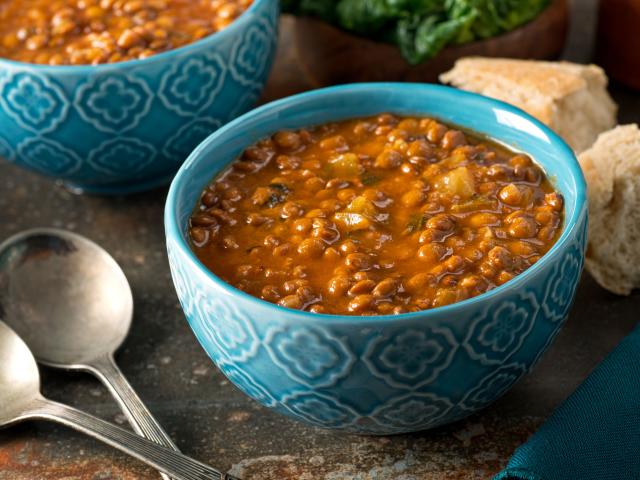
A blue bowl filled with lentil soup on a table

What recipes are you looking forward to this fall? Do foods like pumpkin, apples, soups, casseroles and baked goods come to mind? Here are four recipe ideas to bring nutrition and seasonal flavors to your table:

  • Roasted Root Vegetables: This recipe is packed with fiber, vitamins and minerals. Get potassium from the potatoes and rutabaga, vitamin C from the turnips and sweet potatoes, and vitamin A from the carrots and sweet potatoes.
  • Lentil Soup: Warm up with soup as the weather gets cooler. One cup of cooked lentils provides nearly 18 grams of plant protein and 16 grams of fiber to help keep you full between meals.
  • Pumpkin Pancakes: Pumpkin is a fall favorite for kids and adults! These pancakes use one cup of whole wheat flour to add more fiber compared to all-purpose (white) flour alone. Try topping them with yogurt, fruit or nuts.
  • Banana Oatmeal Cookies: Baking is a fun family activity, especially when it is too chilly to get outside. With no added sugar, these cookies are sweetened naturally from bananas and raisins, which also provide potassium.

These recipes are just some of the many flavorful and nutritious options that could be enjoyed this fall. Explore the nutrition content of other seasonal and traditional foods using USDA’s FoodData Central nutrient database..."
Recipes for fall 

Tuesday, February 2, 2021

Your Winning Game Plan for Super Bowl Sunday Food

"Every coach has a winning game plan. What’s your plan for your Super Bowl eats? Strategizing now can help prevent foodborne illness in your household and reduce food waste later.

Pregame Show

Wash hands immediately before and after handling food. A recent USDA study showed that 99 percent of people don’t wash their hands correctly. To properly wash your hands, wet your hands with water, lather with soap and scrub for 20 seconds. Rinse your hands and dry with a clean towel or paper towel.

Stock up on shallow food containers and make sure you’ve got extra space for them in your refrigerator or freezer.

Foods should not be left at room temperature for more than two hours. Know when you plan to serve the food and set a timer to remind yourself to start packing up leftovers.

Make sure you have a food thermometer to ensure that food reaches a safe internal temperature when you’re cooking and that leftovers reach 165 F when you reheat them.

If you plan on serving food throughout the game, make two portions of each dish. Serve one portion as the game starts and keep another portion in the refrigerator or oven to rotate out after half time.

Kickoff

Don’t mix players from different teams. Keep raw meat and poultry separate from other foods like fresh fruits and vegetables by using separate cutting boards and utensils. This will prevent cross-contamination of bacteria and keep your MVPs from getting food poisoning.

Don’t play dirty. Clean and sanitize all cooking surfaces and utensils, especially after handling raw meat. You’ll also need to wash your hands often throughout the game.

Make sure your players are warmed up enough to finish the game. The only way to be sure your chicken wings or any meat are cooked is with a food thermometer. Place the food thermometer in the thickest part of the wing, avoiding the bone. The thermometer should read 165 F.
 

Half Time

Half time is the perfect time to make sure your lineup of food and drinks are making the right plays (and not getting anyone sick).

Begin putting food away at the half time mark, especially if food has been sitting at room temperature since the beginning of the game. Pack leftovers in small portions in shallow containers and place the containers into the refrigerator or freezer immediately. Discard any food that has been out for more than two hours.

At half time you should also bring out the substitute players – those fresh portions of food that you’ve been keeping hot or cold. Your household will thank you for the fresh food, and for watching their blind side when it comes to food poisoning..."
Super Bowl Food 

Tuesday, February 19, 2019

Diabetes & Kidney Disease: What to Eat?

"One meal plan for diabetes, another for chronic kidney disease (CKD). Find out how you can eat well for both.
If you have diabetes and CKD, you’re definitely not alone—about 1 in 3 American adults with diabetes also has CKD. The right diet helps your body function at its best, but figuring out what to eat can be a major challenge. What’s good for you on one meal plan may not be good on the other.
Your first step: meet with a registered dietitian who’s trained in both diabetes and CKD nutrition. Together you’ll create a diet plan to keep blood sugar levels steady and reduce how much waste and fluid your kidneys have to handle.
Medicare and many private insurance plans may pay for your appointment. Ask if your policy covers medical nutrition therapy (MNT). MNT includes a nutrition plan designed just for you, which the dietitian will help you learn to follow.
Diabetes and CKD diets share a lot of the same foods, but there are some important differences. Read on for the basics.

Diabetes Diet

A healthy diabetes diet looks pretty much like a healthy diet for anyone: lots of fruits, veggies, healthy fats, and lean protein; less salt, sugar, and foods high in refined carbs (cookies, crackers, and soda, just to name a few). Your individual carb goal is based on your age, activity level, and any medicines you take. Following your meal plan will help keep your blood sugar levels in your target range, which will also prevent more damage to your kidneys.

Say No to Herbal Supplements

Herbal supplements aren’t safe if you have kidney disease. Some can hurt your kidneys and even make kidney disease worse. Some vitamins can cause kidney problems too and should also be avoided. Always talk to your doctor before taking any supplements or vitamins.

Kidney Diet

With a CKD diet, you’ll avoid or limit certain foods to protect your kidneys, and you’ll include other foods to give you energy and keep you nourished. Your specific diet will depend on whether you’re in early-stage or late-stage CKD or if you’re on dialysis..."
Diabetes and kindey disease

Tuesday, September 19, 2017

Household Food Security in the United States in 2016

"An estimated 87.7 percent of American households were food secure throughout the entire year in 2016, meaning they had access at all times to enough food for an active, healthy life for all household members. The remaining households (12.3 percent) were food insecure at least some time during the year, including 4.9 percent with very low food security, meaning that at times the food intake of one or more household members was reduced and their eating patterns were disrupted because the household lacked money and other resources for obtaining food. Changes from 2015 to 2016 in food insecurity overall (from 12.7 to 12.3 percent) and in very low food security (from 5.0 to 4.9 percent) were not statistically significant, but they continued a downward trend in food insecurity from a high of 14.9 percent in 2011. Among children, changes from 2015 in food insecurity and very low food security were also not statistically significant. Children and adults were food insecure in 8.0 percent of households with children in 2016, essentially unchanged from 7.8 percent in 2015. Very low food security among children was 0.8 percent in 2016, essentially unchanged from 0.7 percent in 2015. In 2016, the typical food-secure household spent 29 percent more on food than the typical food-insecure household of the same size and household composition. About 59 percent of food-insecure households participated in one or more of the three largest Federal food and nutrition assistance programs during the month prior to the 2016 survey (food stamps (SNAP); Special Supplemental Nutrition Program for Women, Infants, and Children (WIC); and the National School Lunch Program)..."
Food security

Friday, July 1, 2016

The FDA Just Declared War on Cookie Dough

"It’s a dangerous world out there—from geopolitical turmoil to new epidemics, it can sometimes seem as if potential hazards lurk around every corner. But don’t try to handle the fear by licking the beaters while baking or burying yourself in a bowl of homemade cookie dough. As Allison Carter writes for the Indianapolis Star, the Food and Drug Administration is warning Americans to put down the raw cookie dough or risk severe health consequences.
In a recent consumer update, the FDA warns consumers to stop indulging in raw dough in any form—regardless of whether it contains eggs. Jenny Scott, a senior adviser in the FDA’s Center for Food Safety and Applied Nutrition, says that “eating raw dough or batter—whether it’s for bread, cookies, pizza or tortillas—could make you, and your kids, sick.”..."
Cookie Dough

Friday, January 8, 2016

Dietary Guidelines for Americansa: 2015-2020, 8th edition

"One of our Government’s most important responsibilities is to protect the health of the American public. Today, about half of all American adults—117 million people—have one or more preventable, chronic diseases, many of which are related to poor quality eating patterns and physical inactivity. Rates of these chronic, diet-related diseases continue to rise, and they come not only with increased health risks, but also at high cost. In 2008, the medical costs linked to obesity were estimated to be $147 billion. In 2012, the total estimated cost of diagnosed diabetes was $245 billion, including $176 billion in direct medical costs and $69 billion in decreased productivity.
The Dietary Guidelines for Americans is an essential resource for health professionals and policymakers as they design and implement food and nutrition programs that feed the American people, such as USDA’s National School Lunch Program and School Breakfast Program, which feed more than 30 million children each school day. The Dietary Guidelines also provides information that helps Americans make healthy choices for themselves and their families..."
Dietary guidelines

Monday, July 13, 2015

Adults Meeting Fruit and Vegetable Intake Recommendations — United States, 2013

"Eating more fruits and vegetables adds nutrients to diets, reduces the risk for heart disease, stroke, and some cancers, and helps manage body weight when consumed in place of more energy-dense foods (1). Adults who engage in <30 1.5="" 2="" activity="" and="" class="Apple-converted-space" consume="" cup="" cups="" daily="" equivalents="" fruit="" minutes="" moderate="" of="" physical="" should="" span="" vegetables=""> 
daily.* However, during 2007–2010, half of the total U.S. population consumed <1 76="" 87="" and="" cup="" cups="" daily="" did="" fruit="" intake="" meet="" not="" of="" recommendations="" span="" vegetable="" vegetables="">2). Although national estimates indicate low fruit and vegetable consumption, substantial variation by state has been observed (3). Fruit and vegetable intake information from the Behavioral Risk Factor Surveillance System (BRFSS) is the sole source of dietary surveillance information for most states, but frequency of intake captured by BRFSS is not directly comparable to federal intake recommendations, which are expressed in cup equivalents. CDC analyzed median daily frequency of fruit and vegetable intake based on 2013 BRFSS data for the 50 states and the District of Columbia (DC) and applied newly developed prediction equations to BRFSS to calculate the percentage of each state's population meeting fruit and vegetable intake recommendations. Overall, 13.1% of respondents met fruit intake recommendations, ranging from 7.5% in Tennessee to 17.7% in California, and 8.9% met vegetable recommendations, ranging from 5.5% in Mississippi to 13.0% in California. Substantial new efforts are needed to build consumer demand for fruits and vegetables through competitive pricing, placement, and promotion in child care, schools, grocery stores, communities, and worksites..."Fruits and Vegetables 

Saturday, June 6, 2015

Raw Pet Food

"Pet owners have a variety of food choices to give their pets, even raw food. But some germs have been found in raw pet foods that can make pets and people sick, including Salmonella and Listeria monocytogenes. Learn how to protect your pets and yourself from disease.

What is raw pet food?

Raw pet food consists primarily of meat, bones, organs, and eggs that have not been cooked or treated to remove harmful germs, like Salmonella andListeria monocytogenes. Raw pet food products are generally sold as frozen packages and ask the owner to thaw before serving.
According to a recent study done by the U.S. Food and Drug Administration, raw pet food is more likely than other types of pet food to have these harmful germs. These germs can cause serious illness in both pets and people..."
Pet food

Monday, January 12, 2015

Avoid Harmful Substances

"In honor of National Birth Defects Prevention Month, make a PACT to get healthy, physically and mentally, before and during pregnancy to increase your chances of having a healthy baby. Avoiding harmful home and workplace exposures is one important step.
Women can lower their risk of having a baby born with a birth defect by following some basic health guidelines throughout their reproductive years. This is important because many birth defects happen very early during pregnancy, sometimes before a woman even knows that she is pregnant. For this year's National Birth Defects Prevention Month, we encourage all women and their loved ones to make a PACT for prevention..."
Pregnancy and Eating

Tuesday, October 1, 2013

FoodCORE: Enhancing foodborne disease outbreak response

"Each year, foodborne diseases cause illness in 1 in 6 Americans (or about 48 million people), resulting in about 128,000 hospitalizations and 3,000 deaths. FoodCORE is a program supported by CDC that helps states detect and respond to multistate foodborne disease outbreaks.."
FoodCore


Tuesday, March 5, 2013

Average Food Prices: a snapshot of how much has changed over a century

"As many senior citizens will tell you, prices have increased quite a lot over the past century. Of the items listed, potatoes were the least expensive item in 1913, at less than 2 cents per pound. By 2013, flour had replaced potatoes as the cheapest item per pound among the items tracked. And while potatoes remain among the cheapest food items today, potato prices have increased over 39-fold since 1913, the sharpest rate of increase seen of the items tracked over the past century..."
Average Food Price changes over the years

Monday, April 30, 2012

New Food Choices Free of Trans Fats Better Align U.S. Diets With Health Recommendations

"Federal agencies that are charged with giving dietary advice to consumers—the U.S.
Department of Agriculture and the U.S. Department of Health and Human Services—
recommend that consumers keep their intake of trans fatty acids as low as possible. To that
end, Federal regulations now require food labels to say how many grams of trans fats are
in each serving. In this report, we examine recent changes in the trans fats content of new
food products and the use of “no trans fats” package claims. We fi nd a marked decline in
the trans fats content of new food products from 2005 to 2010, along with an increase in the
use of “no trans fats” claims on product packages..."

Tuesday, December 27, 2011

The Federal Food Safety Working Group Progress Report

"...The federal government has taken important steps to protect an increasingly complex food supply . In March 2009, President Obama created the Food Safety Working Group (FSWG), a central coordinating mechanism for the federal government’s food safety activities that is led by the Department of Health and Human Services (HHS) and the U .S . Department of Agriculture (USDA) . The FSWG’s core mission is to strengthen federal efforts and develop short-term and long-term strategies to improve food safety . Partner agencies include HHS’s Food and Drug Administration (FDA), USDA’s Food Safety and Inspection Service (FSIS), and HHS’s Centers for Disease Control and Prevention (CDC), as well as the Environmental Protection Agency (EPA), Department of Homeland Security, Department
of Commerce, Department of State, and the Office of the United States Trade Representative . The White House Domestic Policy Council convenes the FSWG..."Federal Food Safety Working Group Progress Report

Monday, December 5, 2011

Food Recovery Challenge

"How much of your food and money are you literally throwing away? The Food Recovery Challenge, a Sustainable Materials Management Initiative, challenges participants to reduce as much of their food waste as possible — saving money, helping communities, and protecting the environment..."

Tuesday, November 22, 2011

New Projection Shows Global Food Demand Doubling by 2050

"Global food demand could double by 2050, according to a new projection reported this week in the journal Proceedings of the National Academy of Sciences (PNAS).

The analysis also shows that the world faces major environmental challenges unless agricultural practices change.

Scientists David Tilman and Jason Hill of the University of Minnesota (UMN) and colleagues found that producing the amount of food needed could significantly increase levels of carbon dioxide and nitrogen in the environment, and may cause the extinction of numerous species..."

Wednesday, August 17, 2011

Snapshot of Food Safety Milestones in the History of the FDA
Trace the history of food safety laws and regulations.

Wednesday, July 27, 2011

Dietary Supplements Label Database
Find information on the label ingredients on some 6000 plus dietary supplements.

Sunday, October 24, 2010

Nutrition.gov
"Nutrition.gov provides easy access to the best food and nutrition information from across the federal government. It serves as a gateway to reliable information on nutrition, healthy eating, physical activity, and food safety for consumers.

Providing science-based dietary guidance is critical to enhance the public's ability to make healthy choices in the effort to reduce obesity and other food related diseases. Since dietary needs change throughout the lifespan, specialized nutrition information is provided about infants, children, teens, adult women and men, and seniors..."

Saturday, June 26, 2010

Comparing the Structure, Size, and Performance of Local and Mainstream Food Supply Chains
"A series of coordinated case studies compares the structure, size, and performance of local food supply chains with those of mainstream supply chains. Interviews and site visits with farms and businesses, supplemented with secondary data, describe how food moves from farms to consumers in 15 food supply chains. Key comparisons between supply chains include the degree of product differentiation, diversification of marketing outlets, and information conveyed to consumers about product origin. The cases highlight differences in prices and the distribution of revenues among supply chain participants, local retention of wages and proprietor income, transportation fuel use, and social capital creation..."