Showing posts with label youth. Show all posts

Thursday, May 4, 2023

Marijuana and Youth

"Marijuana and Youth: The Impact of Marijuana Use on Teen Health and Wellbeing

National Cannabis Awareness Month is observed in April to increase awareness and education about marijuana. While scientists are still learning about the risks and benefits of using marijuana, we know that marijuana use can harm a teen’s health and wellbeing.

Fast Facts

  • In 2022, 30.7% of 12th graders reported using marijuana in the past year, and 6.3% reported using marijuana daily in the past 30 days.1
  • Compared to teens who do not use marijuana, teens who use marijuana may be less likely to graduate from high school or college.2,3
  • Research shows that marijuana use during teen years can harm the brain.4,5

drugs and booze at a house party

How Does Marijuana Use Affect Teen Health?

The teen brain is actively developing and continues to develop until around age 25. Marijuana use is associated with increased risk for the following issues4:


    • Harm to brain health. Marijuana use beginning in teen years or younger may affect brain development which may impair thinking, memory, and learning.
    • Mental health issues. Marijuana use has been linked to depression and social anxiety in adults.4 People that use marijuana are more likely to develop temporary psychosis (hallucinations, not knowing what is real, and paranoia) and long-lasting mental disorders, including schizophrenia.

      Schizophrenia is a type of mental illness where people might see or hear things that aren’t there. The association between marijuana and schizophrenia is stronger in people who start using marijuana frequently at an early age.10
    • Impaired driving. Driving while impaired by marijuana is dangerous and illegal. Marijuana affects reaction time, coordination, and concentration—skills required for safe driving.11
    • Increased potential for marijuana use disorder. People who begin using marijuana before the age of 18 are at increased risk of developing marijuana use disorder..."
      Marijuana and Youth 

Thursday, March 2, 2023

Youth Risk Behavior Survey Data Summary & Trends Report: 2011-2021

"The Youth Risk Behavior Survey Data Summary & Trends Report: 2011–2021 provides the most recent surveillance data, as well as 10-year trends, on health behaviors and experiences among high school students in the United States (U.S.) related to adolescent health and well-being. These include sexual behaviors, substance use, suicidal thoughts and behaviors, experiences such as violence and poor mental health, social determinants of health such as unstable housing, and protective factors such as school connectedness and parental monitoring. We also highlight disparities in these important outcomes by sex, race and ethnicity, sexual identity, and sex of sexual contacts.

This report is developed by the Centers for Disease Control and Prevention’s (CDC) Division of Adolescent and School Health (DASH) to highlight the national Youth Risk Behavior Survey (YRBS) data collected every two years among a nationally representative sample of U.S. high school students. DASH’s vision is one where young people in the U.S. have the knowledge, skills, and resources for healthy adolescence and adulthood.
Youth Risk Behavior 

Tuesday, May 10, 2022

Young drivers

"As summer approaches, employers may consider hiring young workers that may perform driving duties as part of their job. From 2011–2020, 896 workers ages 16–24* died in motor vehicle crashes at work, accounting for 25% of all work-related deaths in this age group.1 With your help, we can reduce these preventable deaths by keeping young workers safe behind the wheel while providing them with meaningful job experiences.

Use the following recommendations to set workplace policies and programs that promote safe driving for young workers.

  • Comply with labor laws that limit young workers’ driving. In non-agricultural jobs workers must be at least 17 years old to drive for work, but their driving is limited by Federal lawexternal icon. Workers aged 17 years have limitations on the type and weight of the vehicle they may drive. Workers ages 18 and older can drive on the job, but those under age 21 may not drive a commercial motor vehicle across state lines.
  • Ensure young drivers have a state license valid for the type of driving their work will require. Be aware of your state’s graduated driver licensing requirements. Young drivers in the U.S. receive their licenses in stages; requirements and restrictions, such as number of passengers in the vehicle and nighttime driving, vary by state.
  • Check driving records and remind young drivers they must always obey traffic laws. Ensure the young driver has no record of moving violations, impaired driving, and license suspensions at the time of hire. Stress the importance of driving at an appropriate speed and keeping a safe distance from other vehicles. Explain that a speed appropriate for road conditions (such as wet roads) is often less than the posted speed limit.
  • Provide the safest possible vehicle for young drivers to use. Select vehicles that have good crash-test ratingsexternal icon and keep them in proper operating condition.
  • Provide driver training. Training should include making young drivers aware of the safety features of the vehicle they will be driving. You can also schedule on-the-road driving sessions to assess driving skills and to help recognize traffic risks, anticipate risky situations, and reinforce company driving policies.
  • Require the use of seat belts at all times. Seat belt use is one of the most effective ways to save lives and reduce injuries in crashes. They must be worn in the front and the back seats – every trip, every time.
  • Prevent distracted driving. Ban all cell phone use while driving a company vehicle, and make sure cell phones and other electronic devices are off and out of sight. Ask young drivers to make necessary adjustments (such as adjusting mirrors, seat or radio controls) to the car before driving. Require workers to pull over in a safe location if they must text, make a call, or search for directions..."
    Youth driving, and workers

Friday, December 10, 2021

Protecting Youth Mental Health: U.S. Surgeon Advisory

"Every child’s path to adulthood—reaching developmental and emotional milestones, learning healthy social skills, and dealing with problems—is different and difficult. Many face added challenges along the way, often beyond their control. There’s no map, and the road is never straight.

But the challenges today’s generation of young people face are unprecedented and uniquely hard to navigate. And the effect these challenges have had on their mental health is devastating.

Recent national surveys of young people have shown alarming increases in the prevalence of certain mental health challenges— in 2019, one in three high school students and half of female students reported persistent feelings of sadness or hopelessness, an overall increase of 40% from 2009. We know that mental health is shaped by many factors, from our genes and brain chemistry to our relationships with family and friends, neighborhood conditions, and larger social forces and policies. We also know that, too often, young people are bombarded with messages through the media and popular culture that erode their sense of self-worth—telling them they are not good looking enough, popular enough, smart enough, or rich enough. That comes as progress on legitimate, and distressing, issues like climate change, income inequality, racial injustice, the opioid epidemic, and gun violence feels too slow.."
Youth mental health 

Monday, August 23, 2021

Talking to Youth and Young Adults to Prevent E-cigarette Use

"As students go back to school, parents, teachers, administrators, and coaches can help them make smart choices for their health, including avoiding e-cigarettes.

About 1 in 5 high school students and 1 in 20 middle school students reported using e-cigarettes in 2020. Now is an important time to help students understand the serious health risks of e-cigarette use.

Why It Matters
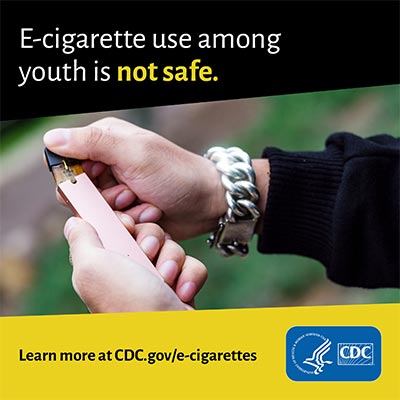
E-cigarette use among youth is not safe.

Any tobacco use by youth and young adults, including e-cigarettes, is unsafe.

Nearly all e-cigarette products sold contain nicotine, which is the same addictive drug found in other tobacco products, including cigarettes and cigars. The nicotine content information on e-cigarette packaging is often misleading or inaccurate.

Nicotine is highly addictive and can harm adolescent brain development, which continues into the mid-20s. Compared with older adults, the brains of youth and young adults are more vulnerable to nicotine’s harmful health effects. These include nicotine addiction and potentially reduced impulse control, mood disorders, and poor attention and thinking skills.

Many youth and young adults who use e-cigarettes also smoke regular cigarettes or use other tobacco products. Young people who use e-cigarettes may be more likely to smoke regular cigarettes later in life. E-cigarette use can also increase the risk for future addiction to other drugs.
Top of Page

Youth E-cigarette Use

Parents, teachers, counselors, and coaches should know that in 2020:

  • About 3.6 million US youth reported current e-cigarette use.
  • E-cigarettes were the most commonly used tobacco product among US middle and high school students.
  • 1 in 5 high school students and nearly 1 in 10 middle school students who used e-cigarettes reported using them every day..."
    Youth and E-cigarette use
     

Thursday, September 10, 2020

Protecting Young People From E-cigarettes

"As back-to-school season begins—whether that means in-person or virtual classes—parents and teachers must juggle many roles and many different concerns about students’ health. Protecting youth and young adults from the harms of using e-cigarettes is one important way you can help keep them healthy.

E-cigarette liquid that contains nicotine (the same addictive drug in other tobacco products like cigarettes) is unsafe for youth and young adults. Nicotine can harm brain development, and young people’s brains continue to develop up to about age 25. In 2018, the U.S. Surgeon General called it an epidemicexternal icon, meaning an outbreak of a health threat in a specific group of people.

E-Cigarette Use and Young People

E-cigarettes came onto the market in the United States in 2007, and by 2014, they were the tobacco product most often used by youth. In 2020, about 3.6 million youth nationwide reported currently using e-cigarettes, including 1 in 5 high school students.

Nicotine addiction is part of what has caused the youth e-cigarette epidemic. Newer types of e-cigarettes, sometimes called “pod mods,” use a liquid containing nicotine salts, which lets the user breathe in even more nicotine, with less irritation to the throat and lungs, than older types of e-cigarettes.

Other factors have also played a part in youth e-cigarette use. Companies that make e-cigarettes use advertising tactics like animated ads, young actors, and celebrities to appeal to younger audiences. In one study of e-cigarette ads shown on TV in the U.S., more than 70% showed e-cigarette users in positive moods—happy, smiling, having fun—while using.

The fact that e-cigarette liquid is available in flavors also attracts youth. Most youth who use e-cigarettes use flavored products, and flavors are among the most common reasons youth say they first try e-cigarettes..."
E-cigarettes
 

Tuesday, April 14, 2020

Help Young People Grow Up Violence-Free

"All young people deserve to grow up safely and thrive. Learn more about how you can help prevent youth violence and #StopBullying in your community!

What Is Youth Violence?

Youth Violence is the intentional use of physical force or power to threaten or harm others by young people ages 10-24. Examples include bullying, fighting, threats with weapons, and gang-related violence. Youth violence is an adverse childhood experience (ACE). It is linked to other forms of violence including teen dating violence, suicide, and adult intimate partner violence..."
Youth violence

Monday, December 23, 2019

Sexual Victimization Reported By Youth In Juvenile Facilities, 2018

"This report, the third in a series that began in 2008-2009, presents estimates of youth-on-youth sexual victimization and staff sexual misconduct in juvenile facilities, as reported by youth. The report includes the prevalence rate of sexual victimization, type of incident, and national, state, and facility-level estimates. Findings are based on data from the National Survey of Youth in Custody, which was conducted between March and December of 2018. This report meets the Prison Rape Elimination Act of 2003 (P.L. 108-79) requirement for the Bureau of Justice Statistics to rank facilities according to the prevalence of sexual victimization.
Highlights:
  • The overall rate of sexual victimization reported by youth declined from 9.5% in 2012 to 7.1% in 2018.
  • In 2018, 5.8% of youth reported sexual misconduct by facility staff, and an estimated 2.1% of youth reported sexual misconduct by facility staff that involved force or coercion.
  • In 2018, 1.9% of youth reported sexual victimization by another youth that involved force or coercion.
  • Out of 113 facilities with enough interviews to qualify for facility-level rankings, 12 were identified as high-rate and 14 as low-rate based on the prevalence of sexual victimization reported by youth.
  • Among states that were eligible for state-level estimates and had at least a 50% response rate among eligible sampled youth, the rate of sexual victimization reported by youth ranged from 0.0% to 12.3%..."
    Youth sexual victimization

Monday, February 25, 2019

Tobacco use by youth is rising

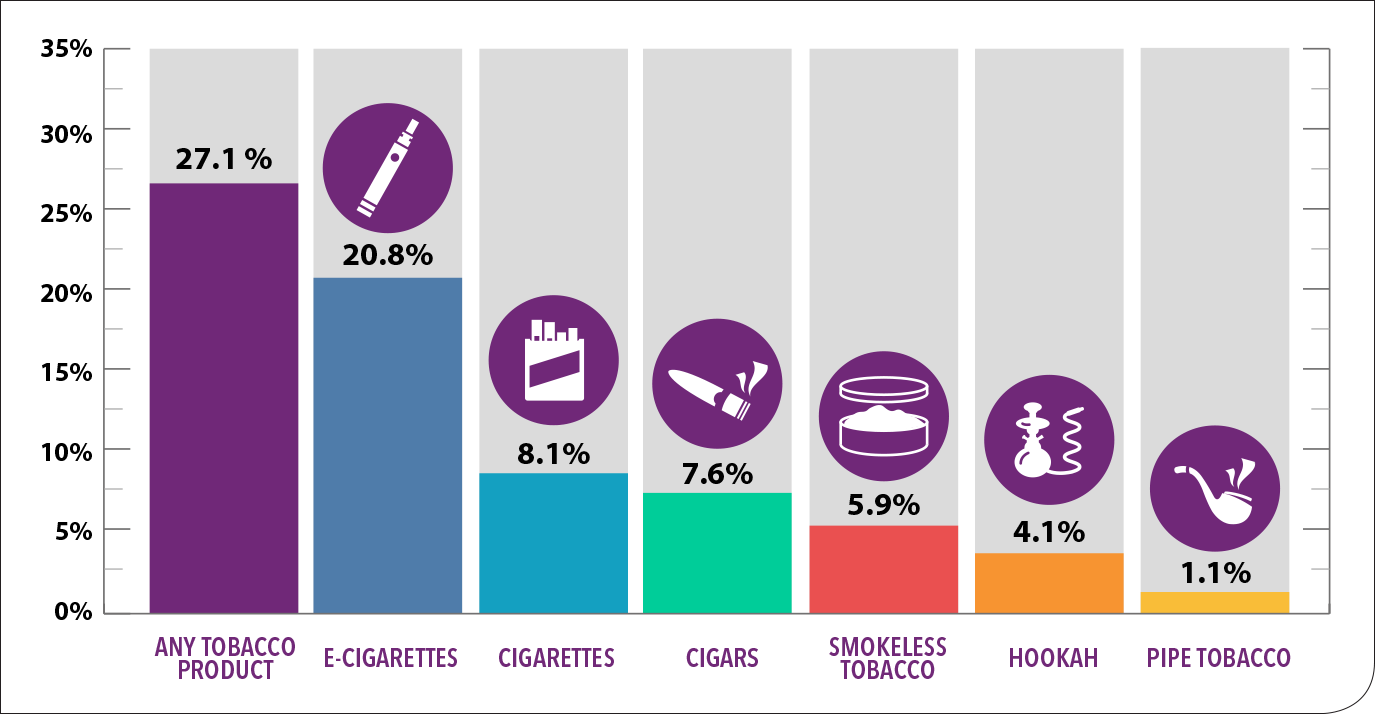
"Tobacco product use among US youth is increasing. More than 1 in 4 high school students and about 1 in 14 middle school students in 2018 had used a tobacco product in the past 30 days. This was a considerable increase from 2017, which was driven by an increase in e-cigarette use. E-cigarette use increased from 11.7% to 20.8% among high school students and from 3.3% to 4.9% among middle school students from 2017 to 2018. No change was found in the use of other tobacco products, including cigarettes, during this time.
Among youth:
  • E-cigarettes are still the most commonly used tobacco product, ahead of cigarettes, cigars, smokeless tobacco, hookah, and pipes.
  • E-cigarettes are the most commonly used product in combination with other tobacco products.
  • E-cigarette use is highest for boys, whites, and high school students.
  • Tobacco product use among high school students—2018


Monday, June 18, 2018

Sickle Cell: Taking Charge of Your Health and Health Care

"This World Sickle Cell Day (observed every year on June 19), the Centers for Disease Control and Prevention (CDC) is raising awareness around sickle cell disease and ‘transition.’
Transition is the process of young people with sickle cell disease (SCD), a genetic blood disorder, learning to become more responsible for their health and transferring their health care to an adult healthcare provider. Learn about transitioning care with SCD, read tips to prepare for it, and find more resources to help manage transition.

For teens with sickle cell disease, transition is part of maturing into an adult.

Sickle cell disease (SCD) is a genetic blood disorder affecting red blood cells. People with SCD have abnormally shaped red blood cells that block oxygen from reaching the body’s tissues and organs. SCD is present at birth, and mild to severe health problems, such as pain crises, infection, and stroke can affect people with SCD throughout their lifetime.
When a child with SCD is young, parents or other adult caregivers are responsible for managing the child’s health and healthcare needs. Parents or other adult caregivers will schedule doctor’s appointments, manage treatment schedules, and make sure the child is both eating healthy and sleeping well to reduce the severity and occurrence of pain crises and other SCD-related health problems.."
Sickle cell and transition

Friday, June 15, 2018

Youth Risk Behavior

"CDC releases new data on health behaviors and experiences among high school students. Learn more about the role of schools, communities and families in helping youth establish lifelong healthy behaviors.
The adolescent years are an ideal time to develop healthy behaviors. In the United States, schools play a central role in promoting the health and safety of young people. Each day, the nation’s schools provide an opportunity for roughly 56 million students to learn about the dangers of unhealthy behaviors and practice skills to help establish lifelong healthy behaviors. Both risk and protective behaviors are often established during childhood and persist into adult­hood.

YRBS Results and 10-Year Trends

CDC’s Youth Risk Behavior Surveillance System (YRBSS) monitors priority health behaviors and experiences among high school students across the country. The Youth Risk Behavior Survey (YRBS) results help in understanding the factors that contribute to the leading causes of illness, death and disability among youth and young adults.
The YRBS Data Summary and Trends Report uses YRBS data to focus on four priority areas closely linked to HIV and STD risk including sexual behavior, high-risk substance use, violence victimization, and mental health over the past decade..."
Youth risks

Friday, April 21, 2017

The Changing Economics and Demographics of Young Adulthood: 1975-2016

"This report looks at changes in young adulthood over the last 40 years. It focuses on how the experiences of today’s young adults differ, in timing and degree, from what young adults experienced in the 1970s—how much longer they wait to start a family, how many have gone to college, and who are able to live independently of their parents. This report looks at a snapshot of the young adult population, defined here as 18 to 34 years old, and focuses on two periods: 1975 and today (using data covering 2012 to 2016 to reflect the contemporary period). Many of the milestones of young adulthood are reflected in the living arrangements of young people: when they move out of their parents’ home and when they form families. Because these milestones are tied to young adults’ economic security, the report also focuses on how education and work experience vary across young adult living arrangements..."
Demogrpahics of young adulthood

Wednesday, March 29, 2017

Youth Banking Resource Center

"The FDIC is sharing resources to encourage banks and schools to work together to improve the financial skills and experiences of youth. Financial education and school-based savings programs introduce young people to financial services at an early age, while helping youth learn how to manage their money more effectively. Youth savings programs not only encourage the development of savings habits at a formative age, but also have the potential to promote economic inclusion for entire families.
A research report from the U.S. Treasury Department concluded that having a bank account boosts the effect of financial education instruction on students. The report also said that in schools where there was a branch of a federally-insured financial institution, students had more positive attitudes towards banks and were more likely to have a bank account...."
Youth and banking

Tuesday, June 14, 2016

Youth Risk Behavior Surveillance — United States, 2015

"Results: Results from the 2015 national YRBS indicated that many high school students are engaged in priority health-risk behaviors associated with the leading causes of death among persons aged 10–24 years in the United States. During the 30 days before the survey, 41.5% of high school students nationwide among the 61.3% who drove a car or other vehicle during the 30 days before the survey had texted or e-mailed while driving, 32.8% had drunk alcohol, and 21.7% had used marijuana. During the 12 months before the survey, 15.5% had been electronically bullied, 20.2% had been bullied on school property, and 8.6% had attempted suicide. Many high school students are engaged in sexual risk behaviors related to unintended pregnancies and STIs, including HIV infection. Nationwide, 41.2% of students had ever had sexual intercourse, 30.1% had had sexual intercourse during the 3 months before the survey (i.e., currently sexually active), and 11.5% had had sexual intercourse with four or more persons during their life. Among currently sexually active students, 56.9% had used a condom during their last sexual intercourse. Results from the 2015 national YRBS also indicated many high school students are engaged in behaviors associated with chronic diseases, such as cardiovascular disease, cancer, and diabetes..."
Youth risks

Tuesday, October 6, 2015

Disconnected Youth: A Look at 16 to 24 Year Olds Who Are Not Working or In School

"In recent years, policymakers and youth advocates have focused greater attention on young people who are neither working nor in school. Generally characterized as “disconnected,” these youth may also lack strong social networks that provide assistance in the form of employment connections and other supports such as housing and financial assistance. Without attachment to work or school, disconnected youth may be vulnerable to experiencing negative outcomes as they transition to adulthood. The purpose of the report is to provide context for Congress about the characteristics of disconnected youth, and the circumstances in which they live. These data may be useful as Congress considers policies to retain students in high school and to provide opportunities for youth to obtain job training and employment..."
Disconnected youth

Monday, March 23, 2015

Partnerships to Prevent Youth Violence

"Youth violence is a significant public health problem that causes considerable harm to young people, families, and communities. Learn about CDC's work leveraging partnerships across jurisdictions through the STRYVE Action Council, a multi-sector group of organizations with the common objective of mobilizing and sustaining actions that prevent youth violence before it starts.."
Youth Violence

Tuesday, December 9, 2014

Are Today’s Young Adults Better Off Than Their Parents? Yes and No

"Compared with prior generations, young people today, those 18 to 34 years old, are more educated and, in some parts of the country, earn more. However, they are also less likely to be employed and more likely to live in poverty than their counterparts were in 1980..."
Todays young 
 

Wednesday, November 19, 2014

In the Shadow of the Great Recession: Experiences and Perspectives of Young Workers

"Young adults in the United States have experienced higher rates of unemployment and lower rates of labor force participation than the general population for at least two decades. The Great Recession exacerbated this phenomenon. Despite a substantial labor market recovery from 2009 through 2014, vulnerable populations—including the nation’s young adults—continue to experience higher rates of unemployment..."

Young workers and recession

Wednesday, September 3, 2014

America's Young Adults: Special Issue, 2014

"The well-being of young adults in the United States today remains an area of key interest to the public and policy-makers alike. This age group faces the well-known challenges of achieving financial and social independence while forming their own households at a time of greater economic uncertainty than in the past. Better understanding of the achievements and needs of these young adults will inform approaches to best support this exciting and challenging transition to adulthood..."
America's Young Adults

Saturday, June 14, 2014

CDC Releases 2013 Youth Risk Behavior Survey


"In the United States, schools play a critical role in promoting the health and safety of young people and helping them establish lifelong healthy behaviors. Each school day, the nation's schools provide an opportunity for more than 50 million students to learn about the dangers of unhealthy behaviors and practice the skills that promote a healthy lifestyle. Unhealthy behaviors, or risk behaviors, are often established during childhood and persist into adult­hood. However, they are largely preventable..."
Youth and risks