Showing posts with label heart_disease. Show all posts

Tuesday, February 9, 2021

Lower Your Risk for the Number 1 Killer of Women

"Learn about heart disease and women and what you can do to keep a healthy heart.

The term heart disease refers to several types of heart conditions, including coronary artery disease and heart attack.

Get Informed: Facts on Women and Heart Disease

Despite an increase in awareness over the past decades, only about half (56%) of women recognize that heart disease is their number 1 killer.1

Heart disease is the leading cause of death for women in the United States, killing 301,280 women in 2019—or about 1 in every 5 female deaths.2 Among American Indian and Alaska Native women, heart disease and cancer cause roughly the same number of deaths each year. For Hispanic or Latina and Asian or Pacific Islander women, heart disease is second only to cancer as a cause of death.3

  • About 1 in 16 women age 20 and older (6.2%) have coronary artery disease, the most common type of heart disease.4

hand holding a heart shaped image

Heart disease is the leading cause of death for women in the United States.

Although heart disease is sometimes thought of as a man’s disease, almost as many women as men die each year of heart disease in the United States.

Symptoms

Sometimes heart disease may be “silent” and not diagnosed until you have symptoms or emergencies, including5

  • Heart attack: Chest pain or discomfort, upper back or neck pain, indigestion, heartburn, nausea or vomiting, extreme fatigue, upper body discomfort, dizziness, and shortness of breath
  • Arrhythmiaexternal icon external icon: Fluttering feelings in the chest (palpitations)
  • Heart failure: Shortness of breath, fatigue, or swelling of the feet, ankles, legs, abdomen, or neck veins
What You Can Do for Heart Health

To lower your chances of getting heart disease, it’s important to do the following:6

  • Manage stress levels by finding healthy ways to cope with stress. Learn more about coping with stress.
  • Know your blood pressure. Having uncontrolled blood pressure can lead to heart disease. High blood pressure has no symptoms, so it’s important to have your blood pressure checked regularly. Learn more about high blood pressure. Additionally, high blood pressure may increase the risk of problems during pregnancy.
  • Talk to your doctor or health care team about whether you should be tested for diabetes. Having uncontrolled diabetes raises your risk of heart disease.7 Learn more about diabetes, including gestational diabetes.
  • Quit smoking. If you don’t smoke, don’t start. If you do smoke, learn ways to quit.
  • Be physically active.  Adults should strive for at least 2 hours and 30 minutes (or 150 minutes total) of physical activity each week. Not getting enough physical activity can lead to heart disease and other heart disease risk factors, including obesity, high blood pressure, high blood cholesterol, and type 2 diabetes.
  • Choose healthy foodsexternal icon and drinks to help prevent heart disease and its complications. Be sure to eat plenty of fresh fruits and vegetables and eat fewer processed foods Learn more about overweight and obesity. Learn more about overweight and obesity.
  • Limit how much alcohol you drink to one drink a day. Learn more about alcohol..."
    Heart disease and women
     

Monday, February 3, 2020

Diabetes and Your Heart

"Diabetes and heart disease often go hand in hand. Learn how to protect your heart with simple lifestyle changes that can also help you manage diabetes.
Heart disease is very common and serious. It’s the leading cause of death for both men and women in the United States. If you have diabetes, you’re twice as likely to have heart disease or a stroke than someone who doesn’t have diabetes—and at a younger age. The longer you have diabetes, the more likely you are to have heart disease.
But the good news is that you can lower your risk for heart disease and improve your heart health by changing certain lifestyle habits. Those changes will help you manage diabetes better too.

What Is Heart Disease?

Heart disease includes several kinds of problems that affect your heart. The term “cardiovascular disease” is similar but includes all types of heart disease, stroke, and blood vessel disease. The most common type is coronary artery disease, which affects blood flow to the heart.
Coronary artery disease is caused by the buildup of plaque in the walls of the coronary arteries, the blood vessels that supply oxygen and blood to the heart. Plaque is made of cholesterol deposits, which make the inside of arteries narrow and decrease blood flow. This process is called atherosclerosis, or hardening of the arteries. Decreased blood flow to the heart can cause a heart attack. Decreased blood flow to the brain can cause a stroke.
Hardening of the arteries can happen in other parts of the body too. In the legs and feet, it’s called peripheral arterial disease, or PAD. PAD is often the first sign that a person with diabetes has cardiovascular disease.

How Diabetes Affects Your Heart

Over time, high blood sugar can damage blood vessels and the nerves that control your heart. People with diabetes are also more likely to have other conditions that raise the risk for heart disease:
  • High blood pressure increases the force of blood through your arteries and can damage artery walls. Having both high blood pressure and diabetes can greatly increase your risk for heart disease.
  • Too much LDL (“bad”) cholesterol in your bloodstream can form plaque on damaged artery walls.
  • High triglycerides (a type of fat in your blood) and low HDL (“good”) cholesterol or high LDL cholesterol is thought to contribute to hardening of the arteries.
None of these conditions has symptoms. Your doctor can check your blood pressure and do a simple blood test to see if your LDL, HDL, and triglyceride levels are high.
These factors can also raise your risk for heart disease:
  • Smoking
  • Being overweight or having obesity
  • Not getting enough physical activity
  • Eating a diet high in saturated fat, trans fat, cholesterol, and sodium (salt)
  • Drinking too much alcohol..
    Diabetes and the heart

Friday, June 7, 2019

Trends in Cancer and Heart Disease Death Rates Among Adults Aged 45–64: United States, 1999–2017

"...Cancer death rates for middle-aged adults aged 45–64 declined by 19% from 1999 to 2017 (224.9 deaths per 100,000 to 182.6), whereas heart disease death rates declined by 22% from 1999 (164.3) to 2011 (127.9) and then increased 4% from 2011 to 2017 (133.6). The same trend patterns were observed for both men and women. The cancer death rate was always higher than the heart disease death rate from 1999 to 2017, and was 37% higher in 2017. For non-Hispanic white and non-Hispanic black men and women, cancer death rates declined over the 1999–2017 period, whereas heart disease death rates declined and then increased since 2009 for non-Hispanic white men and women, and since 2011 for non-Hispanic black men and women. Hispanic men and women experienced different trends than their non-Hispanic white and black counterparts— both cancer and heart disease death rates for this group had periods of decline and stability..." 
Cancer and heart diseases

Monday, February 25, 2019

Lower Your Risk for the Number 1 Killer of Women

"Learn about heart disease and women and what you can do to keep a healthy heart.
Heart attacks and strokes can be catastrophic, life-changing events that are all too common. Heart disease and stroke are preventable, yet they remain leading causes of death, disability, and healthcare spending in the US. Alarmingly, many of these events happen to adults ages 35-64—over 800,000 in 2016.

Get Informed: Facts on Women and Heart Disease

High blood pressure, high LDL (low-density lipoprotein) cholesterol, diabetes, and smoking are key risk factors for heart disease. LDL is considered the “bad” cholesterol because having high levels can lead to buildup in your arteries and result in heart disease and stroke. Controlling your blood pressure, managing your cholesterol, not smoking, and regular physical activity will reduce your chances for heart disease.
Some conditions and lifestyle choices increase a person’s chance for heart disease, including diabetes, overweight and obesity, poor diet, physical inactivity, and excessive alcohol use.
Black women are about 60 percent more likely than white women to have heart attacks, primarily because of socioeconomic factors such as poor insurance coverage, lack of quality care and insufficient prenatal counseling.
Top heart attack predictors included congestive heart failure, anemia and pregnancy-related complications such as preeclampsia, gestational high blood pressure, and an imbalance of fluids and electrolytes..."
Heart disease

Tuesday, February 12, 2019

Does Heart Disease Run in Your Family?

"Take time to collect information about your family health history of heart disease, and share this information with your doctor and other family members. Your doctor can help you take steps to lower your chances of getting heart disease.

Collect and Share Your Family Health History of Heart Disease

Each year in the United States, over 610,000 people die from heart disease. Some medical conditions, such as high cholesterol, high blood pressure, and diabetes, and lifestyle factors, such as an unhealthy diet, lack of physical activity, and smoking, can make you more likely to develop heart disease. In addition, having close blood relatives with heart disease can make you more likely to get heart disease.
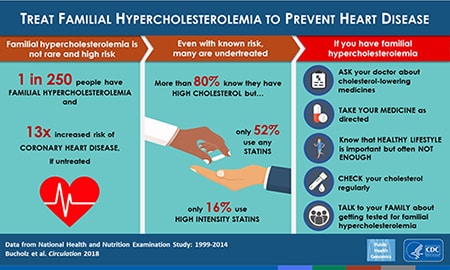
Infographic: Treat Familial Hypercholesterolemia to Prevent Heart Disease
Recent data suggest that more than 1.3 million people (1 in 250) in the United States have FH and that many of them are undertreated, even when they know they have high cholesterol.
If you have a family health history of heart disease, collect information on your relatives with heart disease, including what age they were diagnosed. This is especially important if you have a parent, brother, or sister with heart disease. Share this information with your doctor so you can work together on steps to lower your chances of getting heart disease...."

Heart disease

Tuesday, February 13, 2018

Lower Your Risk for the Number 1 Killer of Women

"Learn about heart disease and women and what you can do to keep a healthy heart.

Get Informed: Facts on Women and Heart Disease

  • Heart disease is the leading cause of death for women in the United States.
  • Although heart disease is sometimes thought of as a “man’s disease,” around the same number of women and men die each year of heart disease in the United States.
  • Some conditions and lifestyle choices increase a person’s chance for heart disease, including diabetes, overweight and obesity, poor diet, physical inactivity, and excessive alcohol use.
  • High blood pressure, high LDL (low-density lipoprotein) cholesterol, and smoking are key risk factors for heart disease. LDL is considered the “bad” cholesterol because having high levels can lead to buildup in your arteries and result in heart disease and stroke. Controlling your blood pressure and cholesterol, not smoking, and regular physical activity will reduce your chances for heart disease..."

Women and Heart Disease

Heart Disease: It Can Happen at Any Age

"Heart disease doesn’t happen just to older adults. It is happening to younger adults more and more often. This is partly because the conditions that lead to heart disease are happening at younger ages. February is Heart Month, the perfect time to learn about your risk for heart disease and the steps you need to take now to help your heart.
Heart disease—and the conditions that lead to it—can happen at any age. High rates of obesity and high blood pressure among younger people (ages 35-64) are putting them at risk for heart disease earlier in life. Half of all Americans have at least one of the top three risk factors for heart disease (high blood pressure, high cholesterol, and smoking).

You Could Be at Risk

Many of the conditions and behaviors that put people at risk for heart disease are appearing at younger ages:
  • High blood pressure. Millions of Americans of all ages have high blood pressure, including millions of people in their 40s and 50s. About half of people with high blood pressure don’t have it under control. Having uncontrolled high blood pressure is one of the biggest risks for heart disease and other harmful conditions, such as stroke.
  • High blood cholesterol. High cholesterol can increase the risk for heart disease. Having diabetes and obesity, smoking, eating unhealthy foods, and not getting enough physical activity can all contribute to unhealthy cholesterol levels.
  • Smoking. More than 37 million U.S. adults are current smokers, and thousands of young people start smoking each day. Smoking damages the blood vessels and can cause heart disease..."
    Heart disease

Tuesday, December 19, 2017

Kidney Disease and Your Heart: What’s the Connection?

"Your heart health is tied to your kidney health. In fact, having kidney disease puts you at risk for getting heart disease. And having heart disease puts you at risk for kidney disease. Learn how these two diseases are connected and how you can lower your risk for both with a few simple steps.

What Is Kidney Disease?

The kidneys are two organs, each about as big as a fist and shaped like a kidney bean. As the heart pumps blood throughout the body, kidneys clean it, remove waste, help maintain blood pressure, and ensure the blood has the right amounts of certain nutrients and minerals.
Kidney disease means the kidneys are damaged. Experts think that more than 1 in 7 U.S. adults, or about 30 million people, have chronic kidney disease (disease lasting longer than 3 months). Most people with kidney disease don’t know they have it. Often, people with early kidney disease feel fine and do not have any symptoms. The only way to know for sure whether you have kidney disease is to get blood and urine tests.

How Does Kidney Disease Affect the Heart?

Damaged kidneys put extra stress on the heart. The damage prevents the kidneys from cleaning waste and extra fluids from the blood and body. When waste and extra fluid stay in the body, people can have other health problems, including high blood pressure, heart disease, and stroke. People with kidney disease are much more likely to die from heart disease than kidney problems..."
Kidney Disease & your heart

Monday, July 10, 2017

How Cardiac Rehabilitation Can Help Heal Your Heart

"If you have a heart attack or other heart problem, cardiac rehabilitation (rehab) is an important part of your recovery. Cardiac rehab can help prevent another, perhaps more serious, heart attack and can help you build heart-healthy habits. Learn more about who needs cardiac rehab and how it can help your recovery.
Nearly 800,000 people in the United States have a heart attack every year. About 1 in 4 of those people had already had a heart attack.1 Cardiac rehab not only can help a person recover from a heart problem, but it can also prevent another heart problem in the future..."

Cardiac rehabilatation

Friday, February 3, 2017

6 Reasons to Talk to Your Family About Heart Disease

"Heart disease, the leading killer of Americans, doesn't just suddenly happen. It takes decades to develop, and your risk increases as you age.
It turns out young adults (a.k.a. those born in the millennial era, from 1982 to 2002) have a unique opportunity to help parents and other family members improve their heart health and prevent heart disease.
A record number of young adults are likely to live with their parents instead of alone, with roommates, or with a friend.1 Young adults are also more likely than past generations to respect their elders and report having fewer fights with their parents.2 All this adds up to a golden opportunity to have a heart-to-heart with mom and dad about their health. Even if you don't live at home, you can talk to your parents and other relatives to get them thinking about ways to protect their hearts for the long haul..."

Heart Disease

Wednesday, November 23, 2016

Diabetes, Heart Disease, and You

"Diabetes is a serious condition that happens when your body can't make enough of a hormone called insulin or can't properly use the insulin it has. Insulin helps your body digest sugars that come from what you eat and drink. Without enough insulin, sugar builds up in your blood. Over time, that sugar buildup damages your nerves, blood vessels, heart, and kidneys.
More than 29 million Americans have diabetes, or about 1 of every 11 people. 1 About 8 million of them don't know they have diabetes. Another 86 million—more than 1 in 3 Americans older than 20 years—have prediabetes, a condition in which a person's blood sugar is high, but not yet high enough to trigger diabetes.2..."
Diabetes and heart disease

Monday, February 2, 2015

Women and Heart Disease

"Get Informed: Facts on Women and Heart Disease
  1. Heart disease is the leading cause of death for women in the United States, killing nearly 422,000 each year.
  2. Although heart disease is sometimes thought of as a "man's disease," around the same number of women and men die each year of heart disease in the United States. Following a heart attack, approximately 1 in 4 women will die within the first year, compared to 1 in 5 men.
  3. Some conditions and lifestyle choices increase a person's chance for heart disease, including diabetes, overweight and obesity, poor diet, physical inactivity, and excessive alcohol use.
  4. Among women, black women are at highest risk of dying early from heart disease and stroke followed by American Indian/Alaska Native, White, Hispanic, and Asian/Pacific Islander women.
  5. High blood pressure, high LDL cholesterol, and smoking are key risk factors for heart disease. Lowering your blood pressure and cholesterol and not 
  6. smoking will reduce your chances for heart disease..."
  7. Women and Heart Disease

Thursday, February 6, 2014

Women and Heart Health Awareness

"Although heart disease is sometimes thought of as a "man's disease," around the same number of women and men die each year of heart disease in the United States. Despite increases in awareness over the past decade, only 56 percent of women recognize that heart disease is their No. 1 killer. That's why it's important to know the signs and symptoms and how to lower your risk for heart disease..."
Women's heart health

Wednesday, September 4, 2013

Preventable Deaths from Heart Disease & Stroke

"Nearly 1 in 3 deaths in the US each year is caused by heart disease and stroke. At least 200,000 of these deaths could have been prevented through changes in
health habits, such as stopping smoking, more physical activity, and less salt in the diet; community changes to create healthier living spaces, such as safe places to exercise and smoke-free areas; and managing high blood pressure, high cholesterol, and diabetes.."
 Preventable Deaths from Heat Disease

Friday, October 21, 2011

What Should You Know About Congenital Heart Defects

"Congenital heart defects are conditions that are present at birth and can affect the structure of a baby’s heart and the way it works. They are the most common type of birth defect. As medical care and treatment have advanced, infants with congenital heart defects are living longer and healthier lives. Many now are living into adulthood..."

Monday, October 17, 2011

Prevalence of Coronary Heart Disease — United States, 2006–2010

"From 2006 to 2010, CHD prevalence overall in the United States decreased from 6.7% to 6.0%. Prevalence varied substantially by sex (men, 7.8%, versus women, 4.6%), race (American Indians/
Alaska Natives, 11.6%, versus Asians or Native Hawaiians/Other Pacific Islanders, 3.9%), education (those with less than a high school education, 9.2%, versus those with more than a college
degree, 4.6%), and state of residence, with prevalence generally greater in the South, the highest in Kentucky (8.2%) and the lowest in Hawaii (3.7%)..."