Showing posts with label health_statistics. Show all posts

Wednesday, August 24, 2022

Health, United States 2020-2021 by Topic

"About Health, United States

Health, United States provides a wide array of trends in health statistics to policymakers, public health professionals, and the public. It presents statistics in four overarching areas: health status and determinants, health care utilization, health care resources, and health expenditures and payers.

In addition to presenting key findings from the major data collection systems of the National Center for Health Statistics and other CDC programs, Health, United States uses data from other federal agencies, as well as private and global sources.

Changes Coming to Health, United States, 2020–2021

Health, United States, 2020–2021 is the 44th edition of the congressionally mandated annual reporting on health statistics. Over the years, the Health, United States program has updated how it reports data based on the ways that readers search for, access, and use health statistics. To better meet the needs of today’s readers, Health, United States materials will be published online periodically throughout the year. This change will better align releases with data availability from more than 40 data sources.

The cornerstone of the redesigned Health, United States are the trend tables. These trend tables provide data supporting analyses in topic pages, including key findings, featured charts, and trend analyses on a given health topic. The topic pages also contain links to detailed methodology available on a new Sources & Definitions page. Trend tables are indexed through the searchable Data Finder.

Annual Report
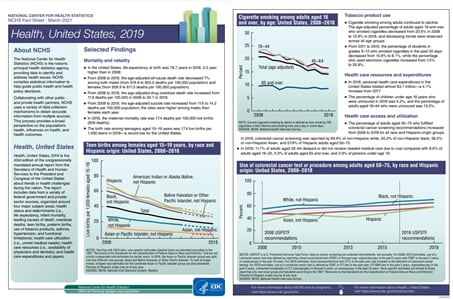
Health United States factsheet

NCHS Fact Sheet on Health, United States

Starting with the 2020–2021 edition, a brief annual report—the Health, United States Annual Perspective—will integrate selected analyses from the Health, United States topics released online. This report is submitted on behalf of the Secretary of the Department of Health and Human Services to the President and Congress in compliance with Section 308 of the Public Health Service Act.

Each Annual Perspective explores a theme across multiple indicators and data sources, and the theme for the 44th edition is health disparities. Health, United States reports prior to the redesigned 2020–2021 edition are available from the Previous Reports page..."
Health, United States, 2020-2021
 

Thursday, December 23, 2021

Health United States 2019

"Health, United States, 2019 is the 43rd report on the health status of the nation and is submitted by the Secretary of Health and Human Services to the President and the Congress of the United States in compliance with Section 308 of the Public Health Service Act. This report was compiled by the National Center for Health Statistics (NCHS) of the Centers for Disease Control and Prevention.

The Health, United States series presents an annual overview of national trends in key health indicators. The 2019 report presents current information and trends on selected measures of morbidity, mortality, health care utilization and access, health risk factors, prevention, health insurance, and personal health care expenditures in a 20-figure Chartbook.

The Health, United States, 2019 Chartbook is supplemented by several other products, including Trend Tables, an At-a-glance Table, Appendixes, and Spotlight Infographics available for download from the Health, United States website at: https://www.cdc.gov/nchs/hus/index.htm.

2019 Edition

The Health, United States, 2019 Chartbook contains 20 figures and associated data tables on health and health care in the United States. Examining trends in health informs the development, implementation, and evaluation of health policies and programs. The first section (Figures 1–13)focuses on health status and determinants: life expectancy, infant mortality, selected causes of death, drug overdose deaths, suicide, maternal mortality, teen births, preterm singleton births, use of tobacco products, current asthma among children, hypertension, heart disease and cancer, and functional limitation. The second section (Figures 14 and 15) presents trends in health care utilization: use of mammography and colorectal tests and procedures, and unmet need due to cost. The third section (Figures 16 and 17) focuses on health care resources—supply of dentists and physicians. The fourth section (Figures 18–20) describes trends in personal health care expenditures, health insurance coverage, and supplemental insurance among Medicare beneficiaries. The Highlights section summarizes major findings from the Chartbook..."
Health United States 

Friday, September 4, 2020

NCHS Health E-Stats

"Health E-Stats are internet-only releases on current and timely health topics that feature highlights from all NCHS data systems. This list of all Health E-Stats that have been released to date is presented in an interactive, searchable, and sortable data tables format. Subscribe to CDC’s free email service to receive alerts by e-mail when new reports are available.Reset to default view.


 Health E-Stats 

Thursday, November 21, 2019

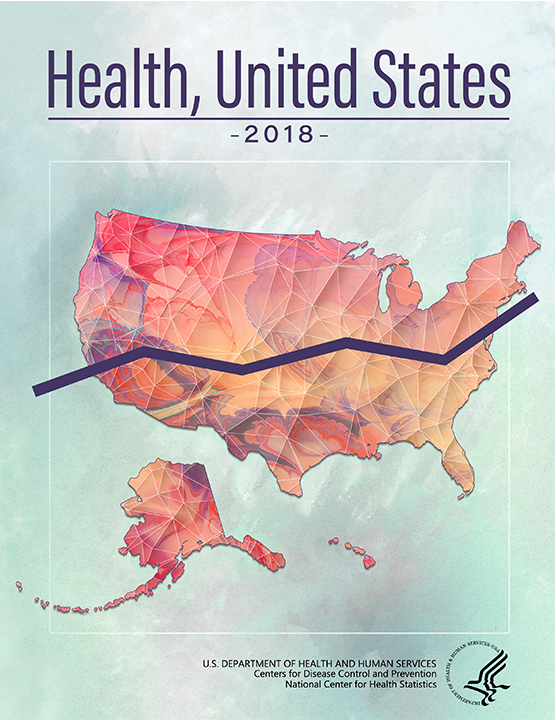
Health United: 2018

"Health, United States
Health, United States
 is an annual report on trends in health statistics.


Monday, February 25, 2019

Health Statistics: Measuring Our Nation's Health

"Health Statistics: Measuring Our Nation's Health
NCHS Fact Sheet, February 2019

What are the leading causes of death in the United States?
How many Americans smoke?
How many Americans are obese?
Are drug-poisoning deaths increasing?*
The National Center for Health Statistics (NCHS) collects data needed to answer these and many other key questions about health and health care in the United States. NCHS is part of the federal statistical system, which includes agencies that are responsible for compiling, analyzing, and disseminating data for statistical purposes..."
Health statistics

Thursday, October 11, 2018

Health United States 2017

"Health, United States, 2017 is the 41st report on the health status of the country, and is submitted by the Secretary of the U.S. Department of Health and Human Services to the President and the Congress of the United States in compliance with Section 308 of the Public Health Service Act. This report was compiled by the Centers for Disease Control and Prevention’s (CDC) National Center for Health Statistics (NCHS).

The Health, United States series presents an annual overview of national trends in health statistics. The report contains a Chartbook that presents trends and current information on selected measures of morbidity, mortality, health care utilization and access, health risk factors, prevention, health insurance, and personal health care expenditures. The Chartbook includes a Special Feature section, which examines a topic of public health interest and policy relevance.

In addition to the Chartbook, Health, United States, 2017 provides 114 Trend Tables organized around four subject areas: health status and determinants, health care utilization, health care resources, and health care expenditures. The Trend Tables, along with the other components of Health, United States, 2017, are available for download on the Health, United States website at: https:// www.cdc.gov/nchs/hus/index.htm..."
Health Statistics

Tuesday, May 29, 2018

Disability and Health Data at Your Fingertips


"There are important health differences between people with and without disabilities. Do you know what they are in your state? Disability and Health Data System (DHDS) can help you find out.
Disability doesn’t have to equal poor health. However, adults with disabilities are more likely to be obese,1 smoke,2 have high blood pressure3and be physically inactive.4 These are all preventable factors that can increase the risk for chronic diseases such as heart disease, stroke, diabetes, and some cancers,4-6 which are also more common among adults with disabilities.7
CDC created Disability and Health Data System (DHDS) to provide the vital information needed to better understand the health needs of adults with disabilities at the state and national levels. Equipped with these data, state epidemiologists, researchers, policy makers, public health professionals and everyone interested in the health of adults with disabilities can plan for inclusive communities that offer the programs and services needed to improve the health of this population.."
Disability and health data


Friday, June 30, 2017

Health United States, 2016

"Health, United States, 2016 is the 40th report on the health status of the nation and is submitted by the Secretary of the Department of Health and Human Services to the President and the Congress of the United States in compliance with Section 308 of the Public Health Service Act. This report was compiled by the Centers for Disease Control and Prevention's (CDC) National Center for Health Statistics (NCHS).

The Health, United States series presents an annual overview of national trends in health statistics. The report contains a Chartbook that assesses the nation's health by presenting trends and current information on selected measures of morbidity, mortality, health care utilization and access, health risk factors, prevention, health insurance, and personal health care expenditures. This year's Chartbook focuses on long-term trends in health. The report also contains 114 Trend Tables organized around four major subject areas: health status and determinants, health care utilization, health care resources, and health care expenditures..."
Health, United States

Thursday, March 9, 2017

500 Cities: Local data for better health

"The 500 Cities project is a collaboration between CDC, the Robert Wood Johnson Foundation, and the CDC Foundation. The purpose of the 500 Cities Project is to provide city- and census tract-level small area estimates for chronic disease risk factors, health outcomes, and clinical preventive service use for the largest 500 cities in the United States. These small area estimates will allow cities and local health departments to better understand the burden and geographic distribution of health-related variables in their jurisdictions, and assist them in planning public health interventions. Learn more about the 500 Cities Project...."
Cities health data

Wednesday, May 18, 2016

Health, United States: 2015, with special features on Racial and Ethnic Dispairities

"Health, United States, 2015 is the 39th report on the health status of the nation and is submitted by the Secretary of the Department of Health and Human Services to the President and the Congress of the United States in compliance with Section 308 of the Public Health Service Act. This report was compiled by the Centers for Disease Control and Prevention's (CDC) National Center for Health Statistics (NCHS). The Health, United States series presents an annual overview of national trends in health statistics.

The report contains a Chartbook that assesses the nation's health by presenting trends and current information on selected measures of morbidity, mortality, health care utilization and access, health risk factors, prevention, health insurance, and personal health care expenditures. This year's Chartbook includes a Special Feature on racial and ethnic health disparities.."
Health, United States

Tuesday, November 5, 2013

Hypertension Among Adults in the United States

Find the latest statistics on hypertension in the United States for the years 2011-2012.
Hypertension

Wednesday, July 17, 2013

Health United States:2012

Find health statistics in this annual publication from the U.S. National Center for Health Statistics. 
Health United States

Tuesday, February 22, 2011

Health, United States, 2010
An annual report of the U.S. Department of Health and Human Services on the nation's health, with a special report on Death and Dying.

Tuesday, November 23, 2010

CDC Vital Signs: Access to Health Care
"New 2010 estimates show that the number of Americans without health insurance is growing,
affecting middle-income Americans as well as those living in poverty. About 50 million adults
18–64 years old had no health insurance for at least some of the past 12 months. People in all
income brackets have been affected, not just adults living in poverty, according to a 2009 survey.
In the past few years, the number of adults aged 18–64 who went without health insurance for
at least part of the past 12 months increased by an average of 1.1 million per year. About half of
those additional adults were middle-income.* Adults without consistent health insurance are
more likely to skip medical care because of cost concerns, which can lead to poorer health, higher
long-term health care costs, and early death..."

Monday, March 1, 2010

Health United States, 2009
"Health, United States, 2009 is the 33rd report on the health status of the Nation. The report contains a Chartbook and 150 trend tables presenting current and historic information on the health of the U.S. population. The trend tables are organized around four major subject areas: health status and determinants, health care utilization, health care resources, and health care expenditures and payors. The 2009 Chartbook focuses on selected determinants and measures of health and includes a special feature on medical technology..."

Thursday, November 5, 2009

Spotlight on Statistics: Health Care
"Health care touches the lives of nearly everyone in the United States at some point. For example, many are born in the delivery wing of a hospital, while others enjoy their golden years in an assisted living facility. Between these two points, whether you obtain medical insurance through your employer, seek consultation with a doctor about an illness, fill a prescription at the pharmacy, take a day of sick leave from work—or just wonder how you will pay for it all—almost everyone rubs elbows with the U.S. health care system. This Spotlight uses BLS data to shed some light on what is happening in this dynamic and interesting field. Read on to explore these data and discover the "diagnosis" on health care industries and occupations as well as the "prognosis" on future employment!.."

Monday, September 21, 2009

The New Numbers – Health Insurance Reform Cannot Wait
"Health and Human Services Secretary Kathleen Sebelius today released a new state by state analysis of last week’s U.S. Census numbers regarding the uninsured. The results are sobering and confirm that health insurance reform cannot wait another year.

“These numbers only serve to further confirm a reality that far too many American families live with every day,” said Secretary Sebelius. “Our health care system has reached a breaking point. The status quo is unsustainable, and continuing to delay reform is not an option.”

The facts below underscore the urgency of health insurance reform.

Nationwide, the number of uninsured has increased from 39.8 million in 2001 to 46.3 million in 2008.

With the exception of Massachusetts – which enacted its own version of health insurance reform in 2006 – every state in the nation has seen its uninsured population grow or remain unacceptably high from 2001 to 2008. These numbers don’t even include those who have lost their insurance in the recent recession or have had coverage gaps of shorter than a year.

In nearly every state, private coverage is eroding with the percentage of people covered by employer-based coverage decreasing.
The new numbers also drive home the frightening reality that losing health insurance could happen to any of us.

Across the nation, more and more working Americans are uninsured, left without protection from health care costs.

Even among high-income households, the ranks of the uninsured are rapidly growing.
“In states across the country, we’ve seen the health care coverage situation go from bad to worse,” Secretary Sebelius added. “And it’s clear that losing insurance isn’t a problem that plagues only the poor or the unemployed – it could happen to anyone.”

To learn more and view state by state data

Wednesday, February 25, 2009

GROWTH IN NATIONAL HEALTH EXPENDITURES EXPECTED TO SLOW BY 2009 AS A RESULT OF RECESSION
"Growth in national health expenditures (NHE) in the United States is expected to significantly outpace economic growth in 2008 and 2009 due to the recession, according to a report issued today by the Centers for Medicare & Medicaid Services (CMS). The report was prepared by CMS’s Office of the Actuary and published online by the journal Health Affairs.

In 2008, growth in national health expenditures is expected to be 6.1 percent, as health spending increases from $2.2 trillion in 2007 to $2.4 trillion in 2008, while growth in the economy, as measured by the gross domestic product (GDP) is anticipated to be 3.5 percent. For 2009, health spending is projected to increase 5.5 percent while GDP is expected to decrease 0.2 percent. The health share of GDP is expected to increase from 16.2 percent in 2007 to 16.6 percent in 2008 and to 17.6 percent in 2009. This represents about one-third of the total increase in the health share of GDP for 2008 through 2018."

Wednesday, February 18, 2009

Health Habits of Adults Aged 18-29 Highlighted in Report on Nation′s Health
"Young adults in the United States aged 18-29 face a number of health challenges, including increases in obesity, high injury rates, and lack of insurance coverage compared to older adults, according to the latest report on the nation′s health.

Health, United States: 2008 is the 32nd annual edition of the report prepared by CDC′s National Center for Health Statistics, and includes a compilation of health data from a number of sources within the federal government and in the private sector. The report uses the most current data available at the time of publication.

This year′s edition features a special section on adults aged 18 to 29, a group making many life choices including decisions about education, marriage, childbearing, and health behaviors such as tobacco and alcohol use, which will affect both their future economic and health status."

Friday, August 29, 2008

Surveillance of Certain Health Behaviors and Conditions Among States and Selected Local Areas --- Behavioral Risk Factor Surveillance System (BRFSS), United States, 2006
"The Behavioral Risk Factor Surveillance System (BRFSS) is an ongoing, state-based, random-digit--dialed telephone survey of the noninstitutionalized U.S. population aged >18 years. BRFSS collects data on health-risk behaviors and use of preventive health services related to the leading causes of death and disability in the United States. This report presents results for 2006 for all 50 states, DC, Puerto Rico, the U.S. Virgin Islands, 145 selected metropolitan and micropolitan statistical areas (MMSAs), and 234 corresponding counties."