Thursday, August 12, 2021

COVID-19 Vaccines While Pregnant or Breastfeeding

"What You Need to Know

  • COVID-19 vaccination is recommended for all people 12 years and older, including people who are pregnant, breastfeeding, trying to get pregnant now, or might become pregnant in the future.
  • Evidence about the safety and effectiveness of COVID-19 vaccination during pregnancy has been growing. These data suggest that the benefits of receiving a COVID-19 vaccine outweigh any known or potential risks of vaccination during pregnancy.
  • There is currently no evidence that any vaccines, including COVID-19 vaccines, cause fertility problems in women or men.

Pregnant and Recently Pregnant People Are at Increased Risk for Severe Illness from COVID-19

Although the overall risk of severe illness is low, pregnant and recently pregnant people are at an increased risk for severe illness from COVID-19 when compared with non-pregnant people. Severe illness includes illness that requires hospitalization, intensive care, need for a ventilator or special equipment to breathe, or illness that results in death. Additionally, pregnant people with COVID-19 are at increased risk of preterm birth and might be at increased risk of other adverse pregnancy outcomes, compared with pregnant women without COVID-19.

Data about the Safety and Effectiveness of COVID-19 Vaccination during Pregnancy

Evidence about the safety and effectiveness of COVID-19 vaccination during pregnancy, although limited, has been growing. These data suggest that the benefits of receiving a COVID-19 vaccine outweigh any known or potential risks of vaccination during pregnancy.

  • No safety concerns were found in animal studies: Studies in animals receiving a Moderna, Pfizer-BioNTech, or Johnson & Johnson (J&J)/Janssen COVID-19 vaccine before or during pregnancy found no safety concerns in pregnant animals or their babies.
  • No adverse pregnancy-related outcomes occurred in previous clinical trials that used the same vaccine platform as the J&J/Janssen COVID-19 vaccine: Vaccines that use the same viral vector have been given to pregnant people in all trimesters of pregnancy, including in a large-scale Ebola vaccination trial. No adverse pregnancy-related outcomes, including adverse outcomes affecting the baby, were associated with vaccination in these trials. Learn more about how viral vector vaccines work.
  • COVID-19 vaccines do not cause infection, including in pregnant people or their babies: None of the COVID-19 vaccines contain the live virus that causes COVID-19 so a COVID-19 vaccine cannot make anyone sick with COVID-19, including pregnant people or their babies.
  • Early data on the safety of receiving an mRNA COVID-19 vaccine (Moderna or Pfizer-BioNTech) during pregnancy are reassuring:
    • CDC released the first U.S. data on the safety of receiving an mRNA COVID-19 vaccine during pregnancy. The report analyzed data from three safety monitoring systems in place to gather information about COVID-19 vaccination during pregnancy. These early data did not find any safety concerns for pregnant people who were vaccinated or their babies.1
    • Another report looked at pregnant people enrolled in the v-safe pregnancy registry who were vaccinated before 20 weeks of pregnancy. Scientists did not find an increased risk for miscarriage among people who received an mRNA COVID-19 vaccine during pregnancy.2
    • Many pregnancies reported in these safety monitoring systems are ongoing. CDC will continue to follow people vaccinated during all trimesters of pregnancy to better understand effects on pregnancy and babies.
  • Early data suggest receiving an mRNA COVID-19 vaccine during pregnancy reduces the risk for infection: A recent study from Israel compared pregnant people who received an mRNA COVID-19 vaccine with those who did not. Scientists found that vaccination lowered the risk of infection from the virus that causes COVID-19.3
  • Vaccination of pregnant people builds antibodies that might protect their baby: When pregnant people receive an mRNA COVID-19 vaccine during pregnancy, their bodies build antibodies against COVID-19, similar to non-pregnant people. Antibodies made after a pregnant person received an mRNA COVID-19 vaccine were found in umbilical cord blood. This means COVID-19 vaccination during pregnancy might help protect babies against COVID-19. More data are needed to determine how these antibodies, similar to those produced with other vaccines, may provide protection to the baby.4

Additional clinical trials that study the safety of COVID-19 vaccines and how well they work in pregnant people are underway or planned. Vaccine manufacturers are also collecting and reviewing data from people in the completed clinical trials who received a vaccine and became pregnant..."
COVID-19 and pregnancy 

An Economist’s View on the Care Economy

"In June, Secretary of Labor Marty Walsh hosted a virtual roundtable on the care economy featuring business leaders and Dr. Nancy Folbre, an economist at the University of Massachusetts. We asked Dr. Folbre to share more of her thoughts on the care economy – and what kind of investments will support America’s care infrastructure – as we continue to recover and build a more inclusive economy. 

Tell us about yourself and why you chose your current career path. 

I grew up in San Antonio, Texas, in a household where I was exposed to both extreme wealth and the realities of the working class. My father worked for oil millionaires as a business manager and accountant. An immigrant nanny who raised my father, known as Auntie or Tia, took care of me as a child, and I was very close to her and her successor, Maria. They were extraordinarily kind and wise caregivers. When I was about nine years old, Tia died and left me her life savings — a modest sum of money that later helped pay my college tuition. So, I had good reason to be interested in economics. I knew I wanted to go to graduate school, and to specialize in something that would at least seem somewhat practical, and was always drawn to themes like wealth, poverty and inequality. 

  How would you describe the care economy to someone who is unfamiliar with the term?  

I use the term care economy as the site of production, development and maintenance of human capabilities — a process very different from producing commodities that easily be bought and sold. A lot of the time and money that goes into the care economy moves outside the market — in families and communities that raise children, care for sick or disabled family members, and the frail elderly. Historically this form of “production” was excluded from “the economy” simply because it is based on meeting needs rather than the forces of supply and demand. Fortunately, this is beginning to change.  

The care economy, however, is not confined to families and communities; it encompasses many private and public enterprises that provide health, education and social services. There are big synergies between unpaid and paid work — parents collaborate with teachers in educating children, and doctors and nurses rely on patients and their family members to help produce “health.” Childcare workers and eldercare workers are also indispensable to effective care provision. 

Women are heavily concentrated in both unpaid and paid care provision, and this helps explain why they generally earn less than men. It is harder for them to “capture” the value they create.  

 What is caregiving work?  

One distinctive feature of caregiving work, emphasized above, is its highly customized and individually specific output. Another distinctive feature is the labor process itself, which often entails more personal connection than other types of work. These two features are clearly related — intrinsic motivation becomes especially important when it is difficult to reward people on the basis of measurable value-added. In caregiving work, concern for the wellbeing of the care recipient is quite likely to affect the quality of the services provided — the “invisible heart” of personal commitment is more important than the “invisible hand” of an impersonal market..."
Care Economy 

These Finders Are Keepers Archivists, librarians, and staff check back in.

[New York Public Library]
"It’s easy to convince yourself, after a year in virtual space, that most of the world’s knowledge is either online or can be acquired with a couple of Amazon clicks. Spend five minutes with Julie Golia — curator of history, social sciences, and government information at the New York Public Library — and you’ll realize how wildly wrong that is. “One thing that historians learned this year is that digitization can never replace the archives,” she says. A single collection (out of many at the NYPL) “will have tens of thousands of pieces of material.” Billions of pages are a long way from being scanned. But also, their physicality is information: what was filed next to what, who’s next to whom, which pages are most worn from handling. “That’s information that digitization wipes away.”

The research library in the Stephen A. Schwarzman Building, a.k.a. the Main Branch on 42nd Street With the Lions Outside, closed at the start of the pandemic in March 2020. A few months later, about 80 librarians and staff began filtering in “on an A-B schedule,” explains operations manager Fernando Martinez. His team started helping to field digital requests: Patrons could ask for 10 percent of a book or up to 50 pages to be photographed page-by-page. A couple of big book scanners were set up in the landmark Rose Main Reading Room. “It’s really an art to get a good scan,” Martinez says. “The windows are big, so we have aluminum shades on a tripod to direct light, and we dimmed the chandeliers.” In nine months, the staff scanned 151,000 pages for scholars around the world. When researchers were let back in by appointment, the microfilm requests came in a flood. At first, “we didn’t have enough machines.”

Now that the librarians are back en masse (the building fully reopened on July 6), so is their collective knowledge, a lot of which comes from simply spending time there. “Some of our collections use finding aids” — that is, indexes — “that were collected 50, 60 years ago,” explains Golia, “and that description has not been updated. So our librarians are indispensable. When I need an expert opinion on what we have on the history of, let’s say, Black women suffragists, I look in our finding-aid portal, but I also call Cara and Tal and Meredith. They always know more than the catalogue does.."
Onine vs in-house research
 

What is the Constitution Annotated?

"For over a hundred years, the Constitution Annotated—officially The Constitution of the United States of America: Analysis and Interpretation—has served as Congress’s Constitution of record. A Senate document, the Constitution Annotated surveys and illuminates how the Supreme Court of the United States has interpreted every provision of the Constitution throughout the nation’s history.

Because the Constitution shapes congressional oversight and legislative actions, Congress has ensured its availability to members of Congress from the Republic’s earliest days. Beginning in 1795, “for the more general promulgation of the laws of the United States” (ch. 50, 1 Stat. 443 (1795)) Congress required “a complete edition of the laws of the United States, comprising the constitution” and other laws of the land, to be collected and printed. On March 3, 1797, Congress passed legislation (ch. 27, 1 Stat. 517) to print a personal copy of the above-mentioned collection for each member. By the 1830s, these copies were indexed so that members could quickly locate relevant provisions. Lists of Supreme Court decisions interpreting constitutional provisions were featured in copies of the Constitution that Congress provided to members in 1896. By the turn of the century, the length of these lists of decisions led to another innovation—a Constitution annotated (50 Cong. Rec. 197 (1913)) with explanations of Supreme Court decisions that interpreted constitutional provisions. This annotated version proved popular not only with Congress but also with the general public. Responding to public demand, Congress provided for the publication of additional copies of the annotated Constitution so they could be distributed to federal courts, depository libraries, and sold to the public. This version of the document has evolved into today’s hard-bound Constitution Annotated, which is published every 10 years with a supplement insert issued every two years containing cumulative updates. The next hard-bound edition, which has grown to almost three thousand pages, is scheduled to be published in 2022.

In 1970, Congress charged the Librarian of Congress with maintaining the Constitution Annotated, and the Librarian, in turn, has delegated this responsibility to the Congressional Research Service (CRS). Consistent with CRS’s mission, the Constitution Annotated (or CONAN) provides Congress and the general public with authoritative, objective, and nonpartisan information on the Constitution..."
Constitution Annotated 

Tuesday, August 10, 2021

Rhabdomyolysis Risk in Firefighters

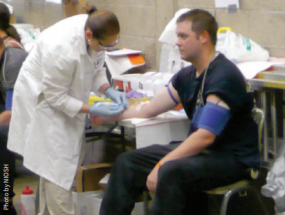
"Firefighters are at an increased risk for rhabdomyolysis. Rhabdomyolysis, or rhabdo, is the breakdown of damaged muscles. This breakdown releases muscle cell contents (proteins and electrolytes) into the blood. This can damage the heart and kidneys, result in permanent disability, and can even be fatal! If treated early, most firefighters can return to work in a few days without lingering effects. Firefighters should learn the signs and symptoms of rhabdo and quickly seek medical care to prevent serious medical problems.

Why are firefighters at risk?

Anyone can get rhabdo, but firefighters (both structural and wildland) have increased risk due to their jobs. Job factors that can increase their risk include:

  • Elevated core body temperature from
    • exposure to fires
    • working in hot seasons or geographic area (e.g., summer in the U.S. south)
    • performing physically strenuous tasks (e.g., carrying chainsaws or heavy gear, victim rescue, climbing stairs or ladders with heavy equipment)
    • wearing personal protective equipment (turnout gear) that can trap body heat
  • Traumatic injuries to muscles (e.g., struck by collapsing structures or trees)
  • Overuse injuries from performing strenuous tasks for long periods

How can firefighters protect themselves?

 1.) Learn the signs and symptoms

  • Muscle cramps, aches, or pains that are worse than expected
  • Dark urine (tea- or cola-colored)
  • Feeling weak, tired, or unable to complete typical job tasks or workout routine

Symptoms might not appear until several days after injury. Rhabdo signs and symptoms may look like other heat-related illnesses or dehydration. Only a blood test can tell if rhabdo is happening.

Doctor with patient

2.) Get medical care immediately whenever you have any symptoms that could be rhabdo

Early diagnosis and treatment are crucial to prevent serious long-term effects. The only way to know if you have rhabdo is to obtain a blood test.

Firefighters should download this wallet card and give it to their healthcare provider. The card reminds providers that firefighters are at risk for rhabdo and how to check for it. If you are a firefighter and have any symptoms, do not hesitate to give this card to your healthcare provider..."
Rhabdomyolysis 

Monday, August 9, 2021

AR6 Climate Change 2021: The Physical Science Basis

"The Working Group I contribution to the Sixth Assessment Report addresses the most up-to-date physical understanding of the climate system and climate change, bringing together the latest advances in climate science, and combining multiple lines of evidence from paleoclimate, observations, process understanding, and global and regional climate simulations.

Summary for Policymakers

The Summary for Policymakers (SPM) provides a high-level summary of the understanding of the current state of the climate, including how it is changing and the role of human influence, and the state of knowledge about possible climate futures, climate information relevant to regions and sectors, and limiting human-induced climate change. (39 pages)


Technical Summary

The Technical Summary (TS) is designed to bridge between the comprehensive assessment of the Working Group I Chapters and its Summary for Policymakers (SPM). It is primarily built from the Executive Summaries of the individual chapters and atlas and provides a synthesis of key findings based on multiple lines of evidence. (150 pages)


Full report

The thirteen chapters of the Working Group I report provide an assessment of the current evidence on the physical science of climate change, knowledge evaluation gained from observations, reanalyses, paleoclimate archives and climate model simulations, as well as physical, chemical and biological climate processes. (1300 pages?).."

 UN Climate Change Report 2021 

Thursday, August 5, 2021

Passport Services Available Now

"Passport Services Available Now

What to Expect:

  • Mail delays are impacting when we receive passport applications for processing. Our processing times begin the day we receive your application, not the day you mail it.
  • Routine service can take up to 18 weeks from the day an application is submitted to the day a new passport is received. The 18-week timeframe includes up to 12 weeks for processing and up to 6 weeks for mailing times on the front and back end.
  • Expedite service (for an additional $60) can take up to 12 weeks from the day an application is submitted to the day a new passport is received. The 12-week timeframe includes up to 6 weeks for processing and up to 6 weeks for mailing times on the front and back end.

We suggest you:

  • Send your application to us via trackable mail, so you can track your application before it enters our system. This can be done whether applying at an acceptance facility or by mail.
  • Pay an extra $17.56 for 1-2 day delivery for the return of your completed passport.

Use Self-Service Tools Online: You can get your questions answered immediately by using one of the self-service tools available on our site. Check online for your passport status. Customer service representatives will not give status updates over the phone. 

Planning to Travel? Apply Early! Apply at least six months before planned travel. Due to limited availability for urgent travel appointments, we cannot guarantee you can receive in-person service at a passport agency or center. We are prioritizing customers with life-or-death emergencies. We do not charge a fee to make an appointment. Visit our Passport Agency and Center page to learn more.

Appointments are Limited, Must Be Scheduled by Phone: Call 1-877-487-2778 or 1-888-874-7793 TDD/TTY from 8:00 a.m. to 10:00 p.m. ET, Mondays through Fridays. Learn more to see if you qualify for an appointment.

Renew By Mail: Adults with 10-year passports can renew them by mail instead of appearing in person..."
Passports 

Federal Cybersecurity: America's Data Still at Risk

"In June 2019, the Permanent Subcommittee on Investigations (Subcommittee) issued a bipartisan report titled: Federal Cybersecurity: America’s Data at Risk (the 2019 Report). That report highlighted systemic failures of eight key Federal agencies to comply with Federal cybersecurity
standards identified by agencies’ inspectors general. The 2019 Report documented how none of  these eight agencies met basic cybersecurity standards and protocols, including properly  protecting Americans’ personally identifiable information (PII); maintaining a list of the
equipment and programs on agency networks; and promptly installing security patches to remediate vulnerabilities that hackers could exploit. The 2019 Report also highlighted that all eight agencies were operating legacy computer systems, which are costly to maintain and difficult to secure. Based on those findings, the Subcommittee determined that these eight
Federal agencies were failing to protect the sensitive data they stored and maintained. 

 
This report revisits those same eight agencies two years later. What this report finds is stark. Inspectors general identified many of the same issues that have plagued Federal agencies for more than a decade. Seven agencies made minimal improvements, and only DHS managed to
employ an effective cybersecurity regime for 2020. As such, this report finds that these seven Federal agencies still have not met the basic cybersecurity standards necessary to protect America’s sensitive data.
* * * * * * * * * * *
The current state of cyber espionage. In the past two years, state-sponsored hackers have perpetrated some of the largest and most damaging cyber-attacks in our history. In December
2020, we learned that the Russian Foreign Intelligence Service used a sophisticated supply chain vulnerability to corrupt a security patch for SolarWinds network management software. This allowed hackers to infiltrate nine Federal agencies, including DHS, State, Energy, and Treasury. Russia’s cyber-spies remained undetected in those Federal agencies’ systems for at least nine months. The Federal Government only became aware of the attack after it was discovered by a private cybersecurity firm, FireEye, which was also breached. The Federal Government is still working to understand exactly what information and data Russia accessed during those nine months..."
Federal Cybersecurity 

DHS Statement on Updated CDC Order

"“As part the United States’ COVID-19 mitigation efforts, DHS will continue to process individuals in accordance with the CDC’s updated Title 42 Order. Title 42 is not an immigration authority, but a public health authority, and its continued use is dictated by CDC and governed by the CDC's analysis of public health factors.

“Under Title 42, DHS continues to expel the majority of single adults, and, to the extent possible, families encountered at the Southwest Border.

“While we continue to defer to public health experts on decisions related to Title 42, the Biden-Harris Administration continues to work to build a fair, orderly, and humane immigration system, including by expanding lawful pathways to the United States and discouraging irregular migration. DHS recently expanded the Central American Minors program and made 6,000 H-2B visas available for Central Americans. DHS last week also resumed expedited removal flights for certain families who recently arrived at the southern border, cannot be expelled under Title 42, and do not have a legal basis to stay in the United States.”
CDC order/ COVID-19

5 Facts About Black Women in the Labor Force

"Black women are an integral part of the American labor force but have long faced a pay gap due to longstanding inequities in education and the labor market. In addition, they have been disproportionately impacted by the pandemic. Black women workers are overrepresented in low-paying service sector jobs, which were among the hardest hit, in terms of job losses.

Aug. 3, 2021, marks Black Women’s Equal Pay Day, a symbolic representation of the number of additional days Black women working full-time, year-round, must work, on average, to earn what white, non-Hispanic men earned the year before.

Here are five facts about Black women in the labor force:

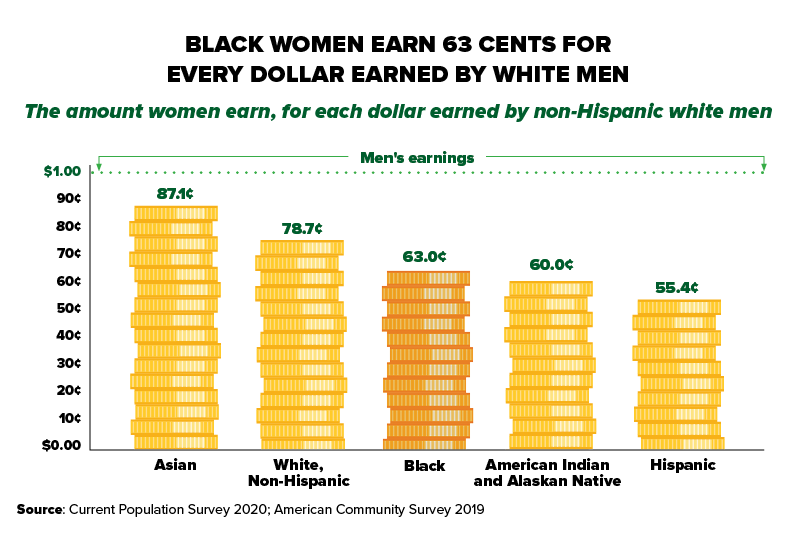
1. Black women earn 63 cents for every dollar earned by white, non-Hispanic men

Black women’s earnings are 63.0% of white, non-Hispanic men’s earnings – the third-widest gap after Native women (60%) and Hispanic women (55.4%). In comparison, white, non-Hispanic women earn 78.7% of white, non-Hispanic men’s earnings, and Asian women earn 87.1%.

Black women’s earnings are 63.0% of white, non-Hispanic men’s earnings – the third-widest gap after Native women (60%) and Hispanic women (55.4%). In comparison, white, non-Hispanic women earn 78.7% of white, non-Hispanic men’s earnings, and Asian women earn 87.1%.

2. This wage gap is not just driven by educational differences

Even controlling for education, Black women still earn less than their white male counterparts. Among those with a bachelor’s degree, Black women only earn 65% of what comparable white men do, for instance. And among people with advanced degrees, Black women earn 70% of what white men do. In fact, Black women with advanced degrees have median weekly earnings less than white men with only a bachelor’s degree..."
Black women and labor force 

Home Canning and Botulism

"What You Need To Know

  • You cannot see, smell, or taste the toxin that causes botulism, but taking even a small taste of food containing this toxin can be deadly.
  • Follow these steps to protect yourself and others from botulism:
    • Always use proper canning techniques and the right equipment for the kind of foods you’re canning.
    • If you have any doubt about whether a home-canned food was canned properly, throw it out!
    • Also throw out home-canned and store-bought food that has signs of contamination. Never taste food to see if it’s safe!
  • Botulism is an emergency. Seek medical help immediately if you or someone you know has symptoms.

Home canning is an excellent way to preserve garden produce and share it with family and friends, but it can be risky—or even deadly—if not done correctly and safely.

It’s time to harvest your delicious produce, and you may be thinking about canning some of it. But beware! If home canning is not done the right way, your canned vegetables and fruits (as well as canned meats, seafood, and other foods) could cause botulism.

What Is Botulism?

Botulism is a rare but serious illness caused by a toxin that attacks the body’s nerves. It can cause difficulty breathing, muscle paralysis, and even death. The toxin is made most often by Clostridium botulinum bacteria. Improperly home-canned, preserved, or fermented foods can provide the right conditions for the bacteria to make the toxin.

You cannot see, smell, or taste the toxin, but taking even a small taste of food containing it can be deadly.

Botulism is a medical emergency. If you or someone you know has symptoms of botulism, contact your doctor or go to the emergency room immediately.

How Can I Help Prevent Botulism From Home-Canned Foods?

You can protect yourself, your family, and others by following these tips.

1. Use proper canning techniques.

The best way to prevent foodborne botulism is by carefully following instructions for safe home canning from the USDA Complete Guide to Home Canningexternal icon. Only use recipes and cookbooks that follow the steps in the USDA guide. Don’t use other recipes, even if you got them from a trusted friend or family member.

You can learn more about proper home canning from these resources: