Friday, December 10, 2021

What We Know about Marijuana

"Marijuana—also known as cannabis, weed, pot, or dope—refers to the dried flowers, leaves, stems, and seeds of the cannabis plant. The cannabis plant contains more than 100 compounds (or cannabinoids).

These compounds include tetrahydrocannabinol (THC), which is impairing, and cannabidiol (CBD), which is not impairing–meaning it does not cause a “high.”

Legalization of Marijuana in the U.S.

Marijuana remains illegal at the federal level; however, more than 50% of states, the District of Columbia, Guam, Puerto Rico, and the U.S. Virgin Islands have legalized marijuana for medical use. Also, states are increasingly legalizing it for non-medical adult use.

Although marijuana is used for medical and non-medical adult use, this does not mean it is safe. Scientists are still learning about the health effects and the potential health benefits of using marijuana.

How Can Marijuana Affect Your Heath?

Even though more research is needed to fully understand some of the health effects of marijuana, we know marijuana use may have a wide range of effects on the brain and body.

Brain Development and Function

  • Developing brains, such as those in babies, children, and teenagers, are especially susceptible to harmful effects of marijuana and THC. Using marijuana during adolescence or young adulthood, before the brain is fully developed, may affect how the brain builds connections for functions like attention, memory, and learning. These effects may last a long time or even be permanent.
  • Recent marijuana use (defined as within 24 hours) directly affects parts of the brain responsible for decision-making, coordination, emotions, and reaction time and can impair important skills required for safe driving.
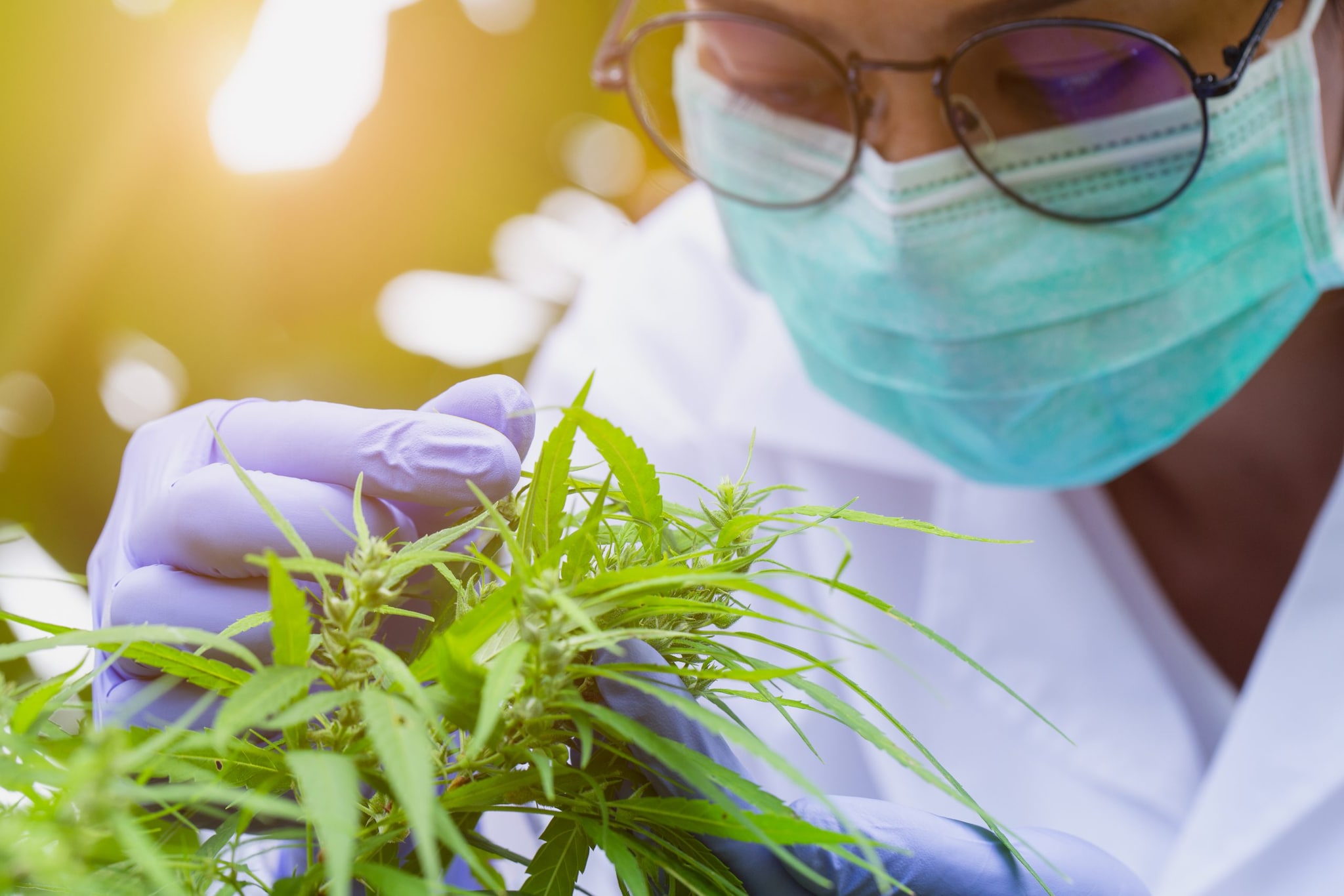
Marijuana is the most commonly used federally illegal drug in the United States, with an estimated 48.2 million people using it in 2019.

Marijuana is the most commonly used federally illegal drug in the United States, with an estimated 48.2 million people using it in 2019.

Heart and Lungs

  • Smoking any product, including marijuana, can damage the lungs, increase risk of bronchitis, and scar small blood vessels. Smoking marijuana can also increase the risk for stroke, heart disease, and other vascular diseases.

Mental Health

  • Marijuana use has been linked to social anxiety, depression, suicide, and schizophrenia. Scientists don’t yet know whether marijuana use directly causes these health issues, but it may make symptoms more severe.

Inhaling or Eating Marijuana

  • Vaping THC-containing products has been linked to lung injury and even death. Use of concentrates in vaping or dabbing devices delivers very high levels of THC to the user and may carry health risks because of the high concentration or strength of THC being used.
  • Eating edibles (foods and drinks that contain marijuana) can take longer to kick in compared to smoking marijuana. The delayed effect of consuming edibles may increase the risk of consuming too much, which can lead to poisoning or serious injury.

Polysubstance Use— The use of more than one drug. This includes when two or more drugs are taken together or within a short time period, either intentionally or unintentionally:

  • Using alcohol and marijuana at the same time will likely cause greater impairment and risk of physical harm.
  • Using marijuana in combination with opioids can increase risk for opioid misuse.
  • Marijuana may change how prescription drugs work, so talk with your doctor about any medications you are taking and the possible side effects when mixed with marijuana or other drugs.
Marijuana Use Disorder
cannabis leaf

Some people who use marijuana will develop marijuana use disorder, meaning that they are unable to stop using marijuana even though it’s causing health and social problems in their lives.

One study estimated that approximately 3 in 10 people who use marijuana have marijuana use disorder. The risk of developing marijuana use disorder is stronger in people who start using marijuana during youth and who use marijuana more frequently..."
Marijuana
 

Cocaine and Psychostimulant-involved Overdose Deaths Disproportionately Affect Racial and Ethnic Minority Groups

"National Youth Substance Use Prevention Month is a time to recognize the importance of addressing health equity to help end the drug overdose epidemic.

Health inequities can contribute to negative health outcomes, including increased overdose deaths, among racial and ethnic minority populations including Black, American Indian/Alaska Native, and Hispanic persons. Clinicians, public health professionals, policy makers, and other community members can work together to promote health equity, reduce poor health outcomes, and prevent health disparities.


October marks National Youth Substance Use Prevention Month, a time for Americans to renew our commitment to end the drug overdose epidemic that has claimed nearly 850,000 lives over the last 20 years. Research shows that drug overdose deaths involving stimulants like cocaine and psychostimulants with abuse potential (e.g., methamphetamine) have increased significantly and are disproportionately affecting racial and ethnic minority populations.

  • From 2004 to 2019, death rates for overdoses involving cocaine were generally higher among Black persons than other racial and ethnic groups, and death rates for overdoses involving psychostimulants were generally higher among American Indian/Alaska Native (AI/AN) persons than among other racial and ethnic groups.
  • From 2013 to 2019, most racial and ethnic groups experienced increases in rates of overdoses involving both cocaine and opioids and rates of overdoses involving both psychostimulants and opioids.

Which drugs are considered psychostimulants with abuse potential?

  • Methamphetamine, which is an illegal stimulant that can be smoked, snorted, injected, or orally ingested
  • MDMA, also known as ecstasy, which is an illegal stimulant and is usually taken orally
  • Prescription stimulants, which are prescribed for conditions such as attention deficit hyperactivity disorder (ADHD) or depression, and can be taken orally, snorted, or injected
Cocaine

Cocaine is a highly addictive, illegal stimulant that can be snorted, smoked, or dissolved and injected into a vein. Note that deaths involving cocaine are usually categorized separately from psychostimulants with abuse potential.

Why are stimulant-involved overdose deaths increasing? Why are racial and ethnic minority populations more affected than others?

Overall factors that may be influencing the surge in stimulant-involved death rates include increases of:

  • Supply of methamphetamine
  • Use of stimulants and opioids together
  • Presence of fentanyl in other illicit drugs, also known as “contamination” or “lacing” of other drugs

While these factors may have contributed to the increase of stimulant-involved overdose deaths, disparities in stimulant-involved overdose deaths among Black and AI/AN persons are not fully explained by substance use patterns. For instance, recent data show that while rates of past-year cocaine use among Black and White persons are not significantly different, cocaine-involved overdose death rates among Black persons were more than twice as high as those among White persons in 2019.
Overdose death disparity 

On Guard Against African Swine Fever

"USDA has a proven track record of protecting U.S. farmers from foreign animal and plant pests and diseases.

When African Swine Fever (ASF) was detected in the Dominican Republic and Haiti this summer, we swung into action and immediately enhanced existing exclusion efforts due to the proximity of the detections to Puerto Rico and the U.S. Virgin Islands. Working closely with federal partners, Puerto Rico, the U.S. Virgin Islands, and industry, we are actively:

  • Enhancing ASF surveillance in Puerto Rico and the U.S. Virgin Islands;
  • Expanding an existing classical swine fever sampling program to include ASF;
  • Implementing an enhanced outreach program in Puerto Rico and the U.S. Virgin Islands, to remind residents not to bring in foreign pork and pork products from ASF-affected countries;
  • Working with U.S. Customs and Border Protection to increase inspections of Dominican Republic flights for prohibited products and ensure proper disposal of airplane garbage;
  • Continuing efforts to remove urban Puerto Rican feral swine

To further protect U.S. swine production, we suspended the interstate movement of all live swine, swine germplasm, swine products, and swine byproducts from Puerto Rico and the U.S. Virgin Islands to the U.S. mainland. We also established an OIE-recognized foreign animal disease protection zone (PZ) around Puerto Rico and the U.S. Virgin Islands to prevent disease entry and protect mainland producers and their markets.

We are providing the Dominican Republic with important technical assistance, particularly laboratory expertise, as part of a surveillance program and working with them to determine next steps.

Here at home we’ve reached out to domestic producers to remind them of the critical importance of biosecurity on US farm and are working with our partners in the Agricultural Research Service on promising vaccine research. Our experts are examining possible ASF-introduction pathways and identifying risk-reducing strategies..."
African swine fever 

Thursday, December 2, 2021

President Biden Announces New Actions to Protect Americans Against the Delta and Omicron Variants as We Battle COVID-⁠19 this Winter

"Today, President Biden will announce new actions to combat COVID-19 as the United States heads into the winter months and with the emergence of a new variant, Omicron.

The United States has come far in its fight against the virus and is more prepared than ever to deal with the challenges of COVID-19. We have the public health tools we need to continue to fight this virus without shutting down our schools and businesses. As we head into winter, today, the President will announce actions to provide additional protection to Americans and fight the Omicron and Delta variants, while keeping our economy growing.

This plan includes:

  1. Boosters for All Adults
  2. Vaccinations to Protect Our Kids and Keep Our Schools Open
  3. Expanding Free At-Home Testing for Americans
  4. Stronger Public Health Protocols for Safe International Travel
  5. Protections in Workplaces to Keep Our Economy Open
  6. Rapid Response Teams to Help Battle Rising Cases
  7. Supplying Treatment Pills to Help Prevent Hospitalizations and Death
  8. Continued Commitment to Global Vaccination Efforts
  9. Steps to Ensure We Are Prepared for All Scenarios

Last week, after the World Health Organization (WHO) named the Omicron variant as a Variant of Concern, the President took immediate steps to restrict travel from the most impacted countries in order to give the U.S. time to learn more about the variant and prepare. We have more tools today to fight the Omicron variant than we have had to fight previous variants, including Delta. Nearly 60 percent of Americans are fully vaccinated, booster shots are authorized for all adults, and a vaccine is authorized for kids aged 5 and older. The U.S. is leading the world in vaccinating children, and millions of Americans have already gotten their boosters. And, the Food and Drug Administration (FDA) is reviewing additional antiviral treatments for when people do get sick.

Today’s actions will ensure we are using these tools as effectively as possible to protect the American people against this variant and to continue to battle the Delta variant during the winter months when viruses tend to thrive. These actions will help keep our economy growing and keep Americans safe from severe COVID-19..."Delta and Omicron variants

Wednesday, December 1, 2021

Jewish Holidays: Fact Sheet

"Introduction

Judaism is one of the three major Abrahamic faiths, alongside Islam and Christianity. Many traditions and variations of Judaism are practiced in the United States, including cultural and religious variations. According to the Pew Research Center, about 2.4% of Americans (7.5 million people) self-identify as religiously or culturally Jewish. Roughly 27% of American Jews describe themselves as culturally, but not religiously, Jewish.1

This fact sheet highlights four major cultural and religious holidays (Passover, Rosh Hashanah, Yom Kippur, and Hanukkah) observed by a significant portion of Jewish American populations and addresses some of the ways that these holidays have been recognized by elected officials. It does not include national holidays recognizing modern Israeli history.

This fact sheet is designed to assist congressional offices with work related to Jewish holidays. It contains sample speeches and remarks from the Congressional Record, presidential proclamations and remarks, and selected historical and cultural resources.

This is part of a series of Congressional Research Service fact sheets on religious holidays in the United States.

Determining Dates of Holidays

The traditional Jewish calendar is based on a lunisolar calendar, with 354 days, adjusted every few years.2 This means that while Jewish holidays are observed on the same date every year according to the Jewish calendar, these dates vary on the Gregorian calendar.

Major Holidays and Observances

By and large, official government observance of Jewish holidays is determined at the local level. For example, some school districts close schools or allow students to take excused absences to observe certain Jewish holidays. In some Jewish communities, work is forbidden on specific holidays, including Rosh Hashanah, Yom Kippur, and certain days of Passover. These provisions against work are similar to the prohibitions against working on the Sabbath.

Owing to the long history and great diversity within Jewish communities, the observance of these holidays can vary widely.

Passover

Passover is generally observed in April in the Gregorian calendar. It commemorates the Israelites’ emancipation and exodus from Egypt, and lasts for seven or eight days. The name refers to the last of the 10 plagues that God inflicted on Egypt, in which God killed the first born of every Egyptian household, but “passed over” Israelite households, leaving their firstborn children alive.

Observing Passover often includes clearing the house of leavened foods, eating unleavened foods throughout the festival, and participating in the Seder, which usually takes place at home on the first or second night of the festival. There are many variations on the Seder, but it generally includes reading from a book called the Haggadah and eating a ritualized meal.

Rosh Hashanah

Rosh Hashanah is generally observed in September or October in the Gregorian calendar. It celebrates the Jewish New Year and lasts for two days. It also marks the beginning of 10 days of repentance leading up to Yom Kippur.

During Rosh Hashanah, many Jews eat bread or a piece of apple dipped in honey so that the coming year will be sweet. Challah bread is often baked in round loaves for the holiday to symbolize the cycle of the year. The shofar (a hollowed ram’s horn) is often blown. In religious communities, the holiday includes a special service at a synagogue.

Yom Kippur

Yom Kippur, or the Day of Atonement, is generally observed for one day in September or October in the Gregorian calendar. It is generally considered the holiest day of the year.

Observing Yom Kippur often includes fasting and prayer. Synagogues generally hold multiple services throughout the day, which means that some Jews spend most of the day at a synagogue.

Hanukkah

Hanukkah (also spelled Chanukah), or the Festival of Lights, is generally observed in December in the Gregorian calendar. Lasting eight nights, it commemorates the rededication of the temple in Jerusalem in the 2nd century B.C.

During the first evening of the festival, the first branch of the menorah is usually lit. The menorah is a candelabrum with nine branches. Eight branches represent each night of the festival. The ninth branch is the shamash or helper candle, which is usually used to light all the others. On each subsequent night of the festival, an additional branch is usually lit. Common traditions include exchanging gifts, playing with a four-sided top called a dreidel, and eating certain fried foods, including latkes (a type of fried potato pancake) and doughnuts..."
Jewish holidays 

Compilation of Federal Whistleblower Protection Statutes

"Overview

In general, whistleblowers are employees who report misconduct or illegal activity committed by their employers.

This report is a compilation of federal whistleblower and employee protection statutes. In addition to identifying laws that protect whistleblowers from retaliation, this report includes employee protection laws that prohibit retaliation against employees who engage in various protected activities, such as participating in an investigation or filing a complaint.

For each law, the popular name of the Act with a whistleblower or employee protection provision is provided. If the whistleblower protection provision was amended after original enactment, the date of those changes is noted. The United States Code or public law citation for the provision and an excerpt of the text of the provision is included. Listed below this text are protected individuals or classes identified in the provision(s). Lastly, the original congressional committee(s) to receive or consider the legislation are identified.

Where statutory text falls outside the scope of the topic, CRS has deleted portions of statutory provisions and replaced them with ellipses symbols (...) standing alone within a passage.

Methodology

CRS identified these statutes by reviewing various internal CRS products and federal government resources, and by searching the United States Code Service on Lexis Advance and the Statutes-atLarge on ProQuest Congressional for variations of (whistleblower or (employee w/2 protection) or (((person or employer or employee or witness) /20 (fire or fired or discharg! or discriminat! or demot! or “personnel action” or retaliat!)) /20 (person or employees or applicants or witness))).

This report uses the official version of the United States Code on the House Law Revision Counsel’s website.1

The committees identified for each law were found by searching Congress.gov and ProQuest Congressional for the public law number and reviewing committee reports. CRS identified persons or classes covered by the law from the Act’s text.

Limitations

CRS searched and reviewed a range of laws to provide an extensive list of statutes. It is nonetheless possible that some relevant laws do not appear in this report for various reasons, including the following:

 Due to variations in database search functionalities, the searches may not have captured all relevant authorities currently in effect.

 Other unofficial versions of the United States Code may retrieve different results from various databases.

 The criteria used to identify statutes may have excluded relevant authorities that did not contain terms used in the database search, particularly if they did not expressly refer to whistleblower, discharg!, discriminat!, demot!, “personnel action” or retaliate..."
Whistleblowers 

Investigating Charities

[LLRX: Law and Technology Resources for Legal Professionals]

"InfoSecSherpa: Your Guide Up a Mountain of Information!

It’s great to be a charitable person, but be safe and smart about where you give your hard-earned money.

Here are some tips and guides on checking out charities before giving a donation. Most of these sites are free, or have a subscription required for more in-depth reports.

Notes:

  • Don’t fret if a charity you are interested in doesn’t show up on one of these investigation websites. It doesn’t automatically mean it isn’t legitimate. The charity could be very small, or very local and/or just not captured for evaluation. In that case, the best place to search is the Internal Revenue Service Tax Exempt Organization Search site to see if they have filed a Form 990. If a U.S. charity does not have any filings with the I.R.S., then be concerned and ask some questions. Don’t be afraid to inquire directly with the charity, and with an independent third-party to confirm that they are trustworthy for your donation.
  • One thing that you may want to pay attention to in these results is the percentage of donations that a charity puts towards their mission, whether it be feeding the food insecure or housing for the unsheltered. Some legitimate charities have a high percentage of their donations go to administrative and marketing costs. Ultimately, it’s your money, so evaluate and decide what is best for you. Read, Where Your Donation Dollars Go (2013).
  • Be cautious with GoFundMe and other crowdsourced fundraising initiatives. While there can be legitimate crowdsourced fundraising sites, it’s also an easy breeding ground for scammers. Do your research. If something feels fishy about it, find another way to donate.
  • The five sites below primarily deal with organizations in the U.S. — but, search for your specific non-U.S. charity to be sure. See point number six below for links to non-U.S. organizations. This is not a comprehensive list, but some guidance of where to get started.

1. CharityNavigator.org
This site allows you to search by name and you can view their assessment of the charity. Some charities will have gaps in the information, but what Charity Navigator offers is an overview so that you can get to know the charity better.


2. GuideStar.org
This site also provides a breakdown of a charity’s expenses, their mission statement, and other pertinent information.

3. CharityWatch.org
This site didn’t have the Philadelphia Animal Welfare Society listed, as the previous two sites. But, they have a lot of big-name charities that are popular.

4. Give.org
This site is affiliated with the Better Business Bureau and provides pretty thorough reports about charities. You can also go to the BBB site directly, but Give.org is their affiliated charity site.

5. Internal Revenue Service
The Tax Exempt Organization Search provides copies of the documentation a legit charity in the U.S. needs to submit in order to maintain their charity and/or non-profit status. You specifically want to look for a Form 990 series to view what all the charity has reported to the U.S. government. This is likely one of the most solid ways to determine if a charity is legitimate, is if they file with the Internal Revenue Service.

6. Non-U.S. Resources
Generally speaking, the basic rules apply to researching charities outside the U.S. as it does for inside the U.S. — checking tax filings and/or government registration as a legitimate charity. If the country you are interested in isn’t listed below, look for that country’s tax and/or charity registration sites.

Australia — Charities and Not-for-Profits Commission
Canada — Revenue Agency’s Charities List and Charity Data
New Zealand — Charities Services
United Kingdom — Charity Commission for England and Wales.."
Charities 

Preventing Infections in Cancer Patients

"Call your doctor right away if you get a fever or feel sick during your chemotherapy treatment.

People with cancer who are treated with chemotherapy are more likely to get infections. Your immune system helps your body protect itself from getting an infection. Cancer and chemotherapy can damage this system by reducing the number of infection-fighting white blood cells. This condition is called neutropenia.

An infection can lead to sepsis, the body’s extreme response to an infection. It is a life-threatening medical emergency.

Find out from your doctor when your white blood cell count is likely to be lowest, since this is when you’re most at risk for infection. This usually occurs between 7 and 12 days after you finish each chemotherapy dose, and may last as long as one week.

How to Prevent Infections During Your Cancer Treatment

Cancer and infections 

FTC Launches Inquiry into Supply Chain Disruptions

"The Federal Trade Commission is ordering nine large retailers, wholesalers, and consumer good suppliers to provide detailed information that will help the FTC shed light on the causes behind ongoing supply chain disruptions and how these disruptions are causing serious and ongoing hardships for consumers and harming competition in the U.S. economy.

The FTC is issuing the orders under Section 6(b) of the FTC Act, which authorizes the Commission to conduct wide-ranging studies that do not have a specific law enforcement purpose. The orders are being sent to Walmart Inc., Amazon.com, Inc., Kroger Co., C&S Wholesale Grocers, Inc., Associated Wholesale Grocers, Inc., McLane Co, Inc. Procter & Gamble Co., Tyson Foods, Inc., and Kraft Heinz Co. The companies will have 45 days from the date they received the order to respond.

“Supply chain disruptions are upending the provision and delivery of a wide array of goods, ranging from computer chips and medicines to meat and lumber. I am hopeful the FTC’s new 6(b) study will shed light on market conditions and business practices that may have worsened these disruptions or led to asymmetric effects,” said Chair Lina M. Khan. “The FTC has a long history of pursuing market studies to deepen our understanding of economic conditions and business conduct, and we should continue to make nimble and timely use of these information-gathering tools and authorities.”

In addition to better understanding the reasons behind the disruptions, the study will examine whether supply chain disruptions are leading to specific bottlenecks, shortages, anticompetitive practices, or contributing to rising consumer prices.

The orders require the companies to detail the primary factors disrupting their ability to obtain, transport and distribute their products; the impact these disruptions are having in terms of delayed and canceled orders, increased costs and prices; the products, suppliers and inputs most affected; and the steps the companies are taking to alleviate disruptions; and how they allocate products among their stores when they are in short supply..."
Supply chain disruption 

Building Back Better: Toward a disability-inclusive, accessible, and sustainable post COVID-19 world

"Some people with disabilities have severe illness from the virus that causes COVID-19 due to underlying medical conditions, if they live in a group setting, or because of systemic health and social inequities. CDC recommends that all people age 5 and older receive a COVID-19 vaccine. Adults with disabilities are less likely to report hesitancy about getting vaccinated; yet, are more likely to report experiencing difficulties obtaining a COVID-19 vaccine than adults without a disability. It is critical to ensure that people with disabilities are able to access COVID-19 vaccines to keep themselves and their loved ones safe.

December 3 is International Day of Persons with Disabilitiesexternal icon. In the United States, 1 in 4 adults has a disability.1 Many people will experience a disability at some point during their lives. Disabilities may include difficulty with walking or climbing stairs; hearing; seeing; or concentrating, remembering, or making decisions.

Although the term “people with disabilities” sometimes refers to a single population, this is a diverse group of people with a wide range of needs and abilities. Two people with the same type of disability can be affected in very different ways. Some disabilities may be hidden or not easy to see.

Many Adults with Disabilities Report Difficulty Getting Vaccinated

A recent CDC study found that adults with disabilities were more likely than adults without a disability to report difficulty getting vaccinated against COVID-19.2 Among unvaccinated adults, those with a disability were more likely than were those without a disability to report challenges such as:

  • Getting an appointment online,
  • Not knowing where to get vaccinated,
  • Getting to vaccination sites, and
  • Vaccination sites not being open at convenient times2

Health disparities are differences (also known as disparities) in health and access to services. Addressing these barriers to COVID-19 vaccination for people with disabilities can help reduce health disparities, increase COVID-19 vaccination demand, and increase the number of people with disabilities who get the COVID-19 vaccine.

COVID-19 Materials for People with Intellectual and Developmental Disabilities and Care Providers

People with intellectual and developmental disabilities (IDD) face unique challenges and are more likely to get very sick from COVID-19. Throughout the COVID-19 pandemic, parents, family members, and caregivers have been working hard to help the people they care for stay healthy and safe during this difficult time.


FTC Issues Annual Report on Ethanol Market Concentration 2021

"The Federal Trade Commission has issued its 2021 Report on Ethanol Market Concentration. The Energy Policy Act of 2005 directs the Commission to perform an annual review of market concentration in the ethanol production industry “to determine whether there is sufficient competition among industry participants to avoid price-setting and other anticompetitive behavior.”

As in prior years, the 2021 report concludes that “[t]he low level of concentration and large number of market participants in the U.S. ethanol production industry continue to suggest that the exercise of market power to set prices, or coordinate on price or output levels, is unlikely on a nationwide basis.”  The Commission vote to approve the report was 4-0.