Thursday, July 15, 2021

Give Your Kids a Healthy and Active Summer

"Parents play a powerful role in helping their children prepare mentally, physically, and emotionally for the upcoming school year. Here are some ways you can give your child a healthy and active summer through activities that help them be safe, healthy, engaged, supported, and challenged.

Keep Your Children Safe This Summer


Physical Activity

Nutrition

  • Want to try a new recipe? Be safe while doing so! Teach your child the basics of food safety and handwashing.

Social Emotional Learning

Keep Your Children Healthy This Summer


Physical Activity

  • Help your kids and teens get 60 minutes of physical activityexternal icon every day! Check for free or low-cost sports camps at their school or the local rec center — or get active by walking, biking, or roller skating as a family during your summer vacation.

Nutrition

Social Emotional Learning

  • Dancing to music from other countries and languages can strengthen the ability to empathize with others from diverse backgrounds and cultures. Try dancing, for example, to hits from around the worldexternal icon or other multicultural music options.

Keep Your Children Engaged This Summer


Physical Activity


Planting a garden together can foster teamwork and improve mood.

Nutrition

Social Emotional Learning

An Ordinance for the Government of the Territory of the United States North-West of the River Ohio"

"The Northwest Ordinance, adopted July 13, 1787, by the Confederation Congress, chartered a government for the Northwest Territory, provided a method for admitting new states to the Union from the territory, and listed a bill of rights guaranteed in the territory. Following the principles outlined by Thomas Jefferson in the Ordinance of 1784, the authors of the Northwest Ordinance spelled out a plan that was subsequently used as the country expanded to the Pacific..."
Northwest Ordinance

United States Government Launches First One-Stop Ransomware Resource at StopRansomware.gov

"Today, as part of the ongoing response, agencies across the U.S. government announced new resources and initiatives to protect American businesses and communities from ransomware attacks. The U.S. Department of Homeland Security (DHS) and the U.S. Department of Justice (DOJ), together with federal partners, have launched a new website to combat the threat of ransomware. StopRansomware.gov establishes a one-stop hub for ransomware resources for individuals, businesses, and other organizations. The new StopRansomware.gov is a collaborative effort across the federal government and the first joint website created to help private and public organizations mitigate their ransomware risk.

“As ransomware attacks continue to rise around the world, businesses and other organizations must prioritize their cybersecurity,” said Secretary Mayorkas.  “Cyber criminals have targeted critical infrastructure, small businesses, hospitals, police departments, schools, and more.  These attacks directly impact Americans’ daily lives and the security of our Nation. I urge every organization across our country to use this new resource to learn how to protect themselves from ransomware and reduce their cybersecurity risk.”

“The Department of Justice is committed to protecting Americans from the rise in ransomware attacks that we have seen in recent years,” said Attorney General Garland. “Along with our partners in and outside of government, and through our Ransomware and Digital Extortion Task Force, the Department is working to bring all our tools to bear against these threats.  But we cannot do it alone.  It is critical for business leaders across industries to recognize the threat, prioritize efforts to harden their systems, and work with law enforcement by reporting these attacks promptly.”

StopRansomware.gov is the first central hub consolidating ransomware resources from all federal government agencies. Prior to today, individuals and organizations had to visit a variety of websites to find guidance, latest alerts, updates, and resources, increasing the likelihood of missing important information. StopRansomware.gov reduces the fragmentation of resources, which is especially detrimental for those who have become victims of an attack, by integrating federal ransomware resources into a single platform that includes clear guidance on how to report attacks, and the latest ransomware-related alerts and threats from all participating agencies. StopRansomware.gov includes resources and content from DHS’s Cybersecurity and Infrastructure Security Agency (CISA) and the U.S. Secret Service, the Department of Justice’s Federal Bureau of Investigation (FBI), the Department of Commerce’s National Institute of Standards and Technology (NIST), and the Departments of the Treasury and Health and Human Services..."
Ransomware 

Saturday, July 10, 2021

Executive Order on Promoting Competition in the American Economy

"The economy is booming under President Biden’s leadership. The economy has gained more than three million jobs since the President took office—the most jobs created in the first five months of any presidency in modern history. Today, the President is building on this economic momentum by signing an Executive Order to promote competition in the American economy, which will lower prices for families, increase wages for workers, and promote innovation and even faster economic growth.

For decades, corporate consolidation has been accelerating. In over 75% of U.S. industries, a smaller number of large companies now control more of the business than they did twenty years ago. This is true across healthcare, financial services, agriculture and more.

That lack of competition drives up prices for consumers. As fewer large players have controlled more of the market, mark-ups (charges over cost) have tripled.  Families are paying higher prices for necessities—things like prescription drugs, hearing aids, and internet service.

Barriers to competition are also driving down wages for workers. When there are only a few employers in town, workers have less opportunity to bargain for a higher wage and to demand dignity and respect in the workplace. In fact, research shows that industry consolidation is decreasing advertised wages by as much as 17%Tens of millions of Americans—including those working in construction and retail—are required to sign non-compete agreements as a condition of getting a job, which makes it harder for them to switch to better-paying options.In total, higher prices and lower wages caused by lack of competition are now estimated to cost the median American household $5,000 per year.
 

Inadequate competition holds back economic growth and innovation. The rate of new business formation has fallen by almost 50% since the 1970s as large businesses make it harder for Americans with good ideas to break into markets. There are fewer opportunities for existing small and independent businesses to access markets and earn a fair return.  Economists find that as competition declines, productivity growth slows, business investment and innovation decline, and incomewealth, and racial inequality widen.."
Competition in American Economy 

Thursday, July 8, 2021

A Low Carbon Fuel Standard: In Brief

"As part of the congressional deliberations on addressing climate change, Congress may consider policy options for reducing greenhouse gas (GHG) emissions from the transportation sector. One of the leading contributors to the U.S. GHG emission profile in 2019 was carbon dioxide (CO2) emitted from fossil fuel combustion by the transportation sector (e.g., gasoline and diesel consumption in automobiles, freight trucks, and aircraft). While Congress has acted to impact transportation sector GHG emissions (e.g., the Renewable Fuel Standard or RFS), some Members of Congress are evaluating taking additional action.

One policy option Congress may examine is a low carbon fuel standard (LCFS). An LCFS is a policy that requires transportation fuels to meet a certain energy-related GHG target (e.g., a specific carbon intensity) within a specified jurisdiction and time frame. Some states have established an LCFS (e.g., California), and some states and regions are considering adopting an LCFS (e.g., Colorado). Generally, an LCFS is intended to be both fuel-neutral and technology neutral. Eligible fuels for an LCFS could be required to meet certain requirements, such as a lifecycle assessment (LCA), which typically quantifies the environmental impact of a fuel from its extraction or feed stock production to its end use. Challenges to LCFS implementation include the determination of an appropriate energy-related GHG target, development of a robust LCA, and construction of a transparent compliance system.

Some in Congress are considering and have previously considered an LCFS. For instance, in the 117th Congress the Sustainable Aviation Fuel Act would establish a Low Carbon Aviation Fuel Standard that sets a carbon intensity benchmark for aviation fuel (S. 1608). Legislation that would have created an LCFS for motor vehicle fuel, non-road vehicle fuel, and aircraft fuel was introduced and at least one congressional hearing was held in the late 2000s. Some in Congress have opposed an LCFS, citing concerns about economic effects, including the potential for job losses, limited affordable lower carbon fuel options, and increasing fuel prices..."
Carbon Fuel Standards 

Wednesday, July 7, 2021

Domestic Terrorism: Overview of Federal Criminal Law and Constitutional Issues

"Federal statute defines domestic terrorism to include dangerous criminal acts intended to intimidate or coerce a civilian population or to influence or affect government policy or conduct within the jurisdiction of the United States.Despite the federal statutory definition, no federal criminal provision expressly prohibits “domestic terrorism.” Nevertheless, numerous federal statutes offer prosecutors options in charging violent and destructive conduct consistent with the statutory definition of domestic terrorism. Some of these statutes can be characterized as expressly focused on terrorism, listing criminal offenses to include, among others, providing material support or resources to terrorists and engaging in terrorism transcending domestic boundaries. Other generally applicable federal criminal laws may also be relevant to domestic terrorism prosecutions. For example, depending on the defendant’s motive, target, or means, various federal criminal statutes protecting certain property or persons, prohibiting violence motivated by particular biases, or criminalizing possession or use of specific weapons may apply. Depending on the circumstances, prosecutors may also rely on accomplice liability or inchoate offenses such as attempt, conspiracy, or solicitation to charge conduct consistent with the definition of domestic terrorism. Beyond applicable offenses, domestic terrorism may be relevant in federal sentencing, either through specific statutes that authorize additional penalties in the domestic terrorism context or through the United States Sentencing Guidelines, which include an upward adjustment for offenses connected to terrorism.

Civil disturbances over the past year have reportedly heightened interest in laws governing domestic terrorism, a topic that has long been a matter of congressional concern. As a number of proposals introduced in the 116th and 117th Congresses reflect, Congress remains interested in additional legislation addressingdomestic terrorism, and any legislative action in this area would take place against the backdrop of a broader discussion of potential policy concerns and constitutional considerations. For instance, some observers dispute whether there is a gap in the existing federal domestic terrorism legal regime that leaves some violent or destructive conduct outside the scope of federal jurisdiction, and, if so, what new criminal provisions would be required. Additionally, certain constitutional constraints, such as First Amendment protections, Fourth Amendment restrictions on government searches, and broader federalism-based limitations on federal jurisdiction, may be relevant should Congress consider new domestic terrorism law..."
Domestic Terrorism and Criminal Law 

Library of Congress Adds 'A Century of Lawmaking' to Congress.gov

"The Library of Congress announced today that U.S. congressional records dating back to the days of printing presses and the telegraph are now easily accessible on mobile devices. With this latest update of Congress.gov — the official website for U.S. federal legislative information — the Library has transitioned over 33,000 bills and resolutions crafted by Congress between 1799 and 1873 (the 6th to 42nd U.S. Congresses) to a modern, user-friendly web format.

“When the founding fathers wrote into the constitution that Congress must keep and publish records of its proceedings, none of them could have imagined a day when all those records could fit in the palm of your hand,” said Jim Karamanis, director of IT design and development at the Library of Congress. “Congress.gov is designed to be the single, authoritative source for official legislative information, and we’re proud to be able to add this treasure trove of historical congressional records to the site.” 

The Library’s “Century of Lawmaking for a New Nation” collection has been a premier source of historic legal documents since it was first published online in 1998, serving as an access point to the lawmaking of early America. The bills and resolutions provide insight into events during the nation’s most formative years, from the Louisiana Purchase to the American Civil War and Reconstruction.

These records from the Century of Lawmaking site join existing congressional data on Congress.gov beginning in the mid-20th century. Subsequent migrations over the next two years from the site will include other historical documents, such as “Journals of the Continental Congress,” the records of the daily proceedings of the first and second Continental Congresses, records from the Constitutional Convention and the state constitutional ratification debates.

Congress.gov provides access to accurate, timely and complete legislative information for members of Congress, legislative agencies and the public. It is presented by the Library of Congress using data from the Office of the Clerk of the U.S. House of Representatives, the Office of the Secretary of the Senate, the Government Publishing Office, Congressional Budget Office and the Congressional Research Service..."
Library of Congress and Lawmaking 

Get the Whooping Cough Vaccine During Each Pregnancy

"Only you can give your baby protection against whooping cough (pertussis) before your little one is even born. Talk to your doctor or midwife about getting the whooping cough vaccine (called Tdap) during your third trimester.

Whooping cough is a serious disease that can be deadly for babies. Unfortunately, babies do not start building their own protection against whooping cough until they get vaccinated at two months old. This leaves babies unprotected in the first months of life when they are at highest risk of getting very sick if they get whooping cough.

Protect your baby before she is able to get vaccinated by getting a Tdap vaccine during the third trimester of your pregnancy. By doing so, you pass high levels of antibodies to your baby before birth. These antibodies help protect your baby against whooping cough in those first months of life.

CDC recommends all women receive a Tdap vaccine during the 27th through 36th week of each pregnancy, preferably during the earlier part of this time period. The following medical associations dedicated to the health of pregnant women or children support this recommendation:

.."
Whooping Cough and Pregnancy
 

About Acute Flaccid Myelitis

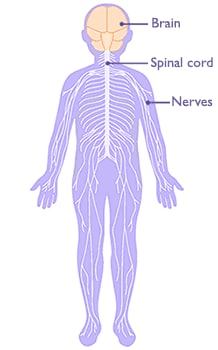
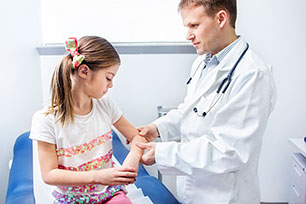
"Acute flaccid myelitis (AFM) is an uncommon but serious neurologic condition. It affects the nervous system, specifically the area of the spinal cord called gray matter, which causes the muscles and reflexes in the body to become weak.

  • Increases in AFM cases have occurred in 2014, 2016, and 2018 in the U.S.
  • Most AFM cases (more than 90%) have been in young children.
The nervous system: brain, spinal cord, and nerves

Acute Flaccid Myelitis 

Does Osteoporosis Run in Your Family?

"If one of your parents has had a broken bone, especially a broken hip, you may need to be screened earlier for osteoporosis. This is a medical condition where bones become weak and are more likely to break. Share your family health history with your doctor. Your doctor can help you take steps to strengthen weak bones and prevent broken bones.

How can osteoporosis affect my health?

People with osteoporosis are more likely to break bones, most often in the hip, forearm, wrist, and spine. While most broken bones are caused by falls, osteoporosis can weaken bones to the point that a break can occur more easily, for example by coughing or bumping into something. As you get older, you are more likely to have osteoporosis and recovering from a broken bone becomes harder. Broken bones can have lasting effects including pain that does not go away. Osteoporosis can cause the bones in the spine to break and begin to collapse, so that some people with it get shorter and are not able to stand up straight. Broken hips are especially serious—afterward, many people are not able to live on their own and are more likely to die sooner.

How can I find out if I have osteoporosis?

Osteoporosis is more common in women. It affects almost 20% (1 in 5) of women aged 50 and over and almost 5% (1 in 20) of men aged 50 and over. Many people with osteoporosis do not know they have it until they break a bone. Screening is important to find these people before this happens, so they can take steps to decrease the effects of osteoporosis.

Currently, screening for osteoporosis is recommended for women who are 65 years old or older and for women who are 50 to 64 and have certain risk factors, which include having a parent who has broken a hip. You can use the FRAX Risk Assessment toolexternal iconexternal icon to learn if you should be screened. It uses several factors to determine how likely you are to have osteoporosis. Talk to your doctor if you have concerns about osteoporosis.

Screening for osteoporosis is commonly done using a type of low level x-rays called dual/energy x-ray absorptiometry (DXA). Screening also can show if you have low bone mass, meaning your bones are weaker than normal, and are likely to develop osteoporosis.

How can I improve my bone health if I have osteoporosis?

There are steps you can take to improve your bone health and strengthen weak bones:

  • Take medications to strengthen your bones and avoid medications that can make your bones weaker.
  • Eat a healthy diet that includes adequate amounts of calcium and vitamin D.
  • Perform weight-bearing exercises regularly.
  • Do not smoke.
  • Limit alcohol use.

Don’t wait until you have a broken bone to take steps to improve your bone health—you can start at any age! You can also take steps to prevent falls, including doing exercises to improve your leg strength and balance, having your eyes checked, and making your home safer..."
Osteoporosis 

Prevent Mosquito Bites

"Protect Yourself and Your Family from Mosquito Bites

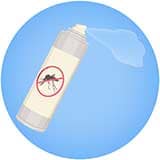
Can of mosquito repellent

Use insect repellent

Use Environmental Protection Agency (EPA)-registered insect repellentsexternal with one of the active ingredients below. When used as directed, EPA-registered insect repellents are proven safe and effective, even for pregnant and breastfeeding women.

  • DEET
  • Picaridin (known as KBR 3023 and icaridin outside the US)
  • IR3535
  • Oil of lemon eucalyptus (OLE)
  • Para-menthane-diol (PMD)
  • 2-undecanone

Find the right insect repellent for you by using EPA’s search toolexternal.

Tips for babies and children


  • Dress your child in clothing that covers arms and legs.
  • Cover strollers and baby carriers with mosquito netting.
  • When using insect repellent on your child:
    • Always follow label instructions.
    • Do not use products containing oil of lemon eucalyptus (OLE) or para-menthane-diol (PMD) on children under 3 years old.
    • Do not apply insect repellent to a child’s hands, eyes, mouth, cuts, or irritated skin.
      • Adults: Spray insect repellent onto your hands and then apply to a child’s face.

Tips for everyone

  • Always follow the product label instructions.
  • Reapply insect repellent as directed.
    • Do not spray repellent on the skin under clothing.
    • If you are also using sunscreen, apply sunscreen first and insect repellent second.

Natural insect repellents (repellents not registered with EPA)

  • We do not know the effectiveness of non-EPA registered insect repellents, including some natural repellents.
  • To protect yourself against diseases spread by mosquitoes, CDC and EPA recommend using an EPA-registered insect repellent.
  • Choosing an EPA-registered repellent ensures the EPA has evaluated the product for effectiveness.
  • Visit the EPA website to learn more.external
Treat clothing and gear with permethrin

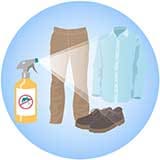
Wear long-sleeved shirts and long pants

Treat clothing and gear

  • Use 0.5% permethrin to treat clothing and gear (such as boots, pants, socks, and tents) or buy permethrin-treated clothing and gear.
    • Permethrin is an insecticide that kills or repels mosquitoes.
    • Permethrin-treated clothing provides protection after multiple washings.
    • Read product information to find out how long the protection will last.
  • If treating items yourself, follow the product instructions.
  • Do not use permethrin products directly on skin.
  • Watch the video, What You Need to Know About Permethrin.
Use screens on windows and doors

Take steps to control mosquitoes indoors and outdoors

  • Use screens on windows and doors. Repair holes in screens to keep mosquitoes outdoors.
  • Use air conditioning, if available.
  • Stop mosquitoes from laying eggs in or near water.
    • Once a week, empty and scrub, turn over, cover, or throw out items that hold water, such as tires, buckets, planters, toys, pools, birdbaths, flowerpots, or trash containers.
    • Check for water-holding containers both indoors and outdoors..."
      Mosquito bites
       

Saturday, July 3, 2021

NHTSA Launches Interactive, Searchable Recall Dashboard

"The National Highway Traffic Safety Administration (NHTSA) today unveiled a new cloud-based recall dashboard to make searching for auto safety recall data easy and efficient. The dashboard offers user-friendly and transparent ways to sort, filter, visualize and export recall data. 

“This new dashboard provides unprecedented transparency into the recall process,” said Dr. Steven Cliff, NHTSA’s Acting Administrator. “More than 50 years of recall data are now easily available to the media, researchers, safety advocates, and anyone interested in learning more about vehicle safety. This initiative is part of the U.S. Department of Transportation’s commitment to safety on our roadways, and it provides increased transparency and accountability to the American people.”

The dashboard will be updated daily and is available here.

The new dashboard allows users to sort and filter data, search by keyword, and export data in CSV, TSV for Excel, XML, and other formats. It also presents data in easy-to-read charts and graphs.

Previously, NHTSA made its recall data available through a bulk download, requiring users to download large data files and import them into a database like Microsoft Access. This has long been available to the public, but this new dashboard makes that information easier to access and analyze. 

NHTSA encourages everyone to search for open recalls by using NHTSA’s VIN Look-Up Tool and to download our SaferCar app to stay informed on current recalls. Make sure to promptly address any open recalls..."

NHTSA Recall database
 

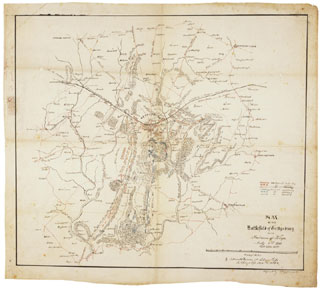
Lee’s Map of the Battle of Gettysburg

"Considered by many historians as a turning point in the Civil War, the Battle of Gettsburg, fought from July 1 to July 3, 1863, was a major defeat for the Confederacy and for General Robert E. Lee in his second invasion of the North. Shown here is one of General Lee’s maps of Gettysburg, showing positions of troops on July 2..."

Gettysburg map