Friday, May 14, 2021

When You’ve Been Fully Vaccinated

"How to Protect Yourself and Others

Updated May 13, 2021
Choosing Safer Activities
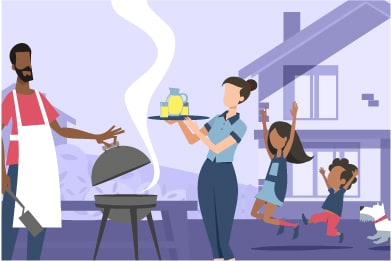
Friends and family grilling outside
  • If you are fully vaccinated, you can resume activities that you did prior to the pandemic.
  • Fully vaccinated people can resume activities without wearing a mask or physically distancing, except where required by federal, state, local, tribal, or territorial laws, rules, and regulations, including local business and workplace guidance.
  • If you haven’t been vaccinated yet, find a vaccine.

Safer Activities

COVID-19 vaccines are effective at protecting you from getting sick. Based on what we know about COVID-19 vaccines, people who have been fully vaccinated can start to do some things that they had stopped doing because of the pandemic.

These recommendations can help you make decisions about daily activities after you are fully vaccinated. They are not intended for healthcare settings.

Have You Been Fully Vaccinated?

In general, people are considered fully vaccinated: ±

  • 2 weeks after their second dose in a 2-dose series, such as the Pfizer or Moderna vaccines, or
  • 2 weeks after a single-dose vaccine, such as Johnson & Johnson’s Janssen vaccine

If you don’t meet these requirements, regardless of your age, you are NOT fully vaccinated. Keep taking all precautions until you are fully vaccinated..."
Fully vaccinated
 

Apportionment and Redistricting Process for the U.S. House of Representatives

"The census, apportionment, and redistricting are interrelated activities that affect representation in the U.S. House of Representatives. Congressional apportionment (or reapportionment) is the process of dividing seats for the House among the 50 states following the decennial census. Redistricting refers to the process that follows, in which states create new congressional districts or redraw existing district boundaries to adjust for population changes and/or changes in the number of House seats for the state. At times, Congress has passed or considered legislation addressing apportionment and redistricting processes under its broad authority to make law affecting House elections under Article I, Section 4, of the U.S. Constitution. These processes are all rooted in provisions in Article I, Section 2 (as amen ded by Section 2 of the Fourteenth Amendment).

Seats for the House of Representatives are constitutionally required to be divided among the states, based on the population size of each state. To determine how many Representatives each state is entitled to, the Constitution requires the national population to be counted every 10 years, which is done through the census. The Constitution also limits the number of Representatives to no more than one for every 30,000 persons, provided that each state receives at least one Representative. Additional parameters for the census and for apportionment have been established through federal statutes, including timelines for these processes; the number of seats in the House; and the method by which House seats are divided among states. Congress began creating more permanent legislation by the early 20th century to provide recurring procedures for the census and apportionment, rather than passing measures each decade to address an upcoming reapportionment cycle. Federal law related to the census process is found in Title 13 of the U.S. Code, and two key statutes affecting apportionment today are the Permanent Apportionment Act of 1929 and the Apportionment Act of 1941..."
Apportionment and redistricting 

Climate Change Indicators in the United States CONTACT US

"About EPA's Indicators

The Earth's climate is changing. Temperatures are rising, snow and rainfall patterns are shifting, and more extreme climate events – like heavy rainstorms and record high temperatures – are already happening. Many of these observed changes are linked to the rising levels of carbon dioxide and other greenhouse gases in our atmosphere, caused by human activities.

EPA partners with more than 50 data contributors from various government agencies, academic institutions, and other organizations to compile a key set of indicators related to the causes and effects of climate change. These indicators also provide important input to the National Climate Assessment and other efforts to understand and track the science and impacts of climate change. Explore the indicators below. Learn more about EPA's indicators..."
Climate change indicators 

Executive Order on Improving the Nation’s Cybersecurity

"By the authority vested in me as President by the Constitution and the laws of the United States of America, it is hereby ordered as follows:

Section 1.  Policy.  The United States faces persistent and increasingly sophisticated malicious cyber campaigns that threaten the public sector, the private sector, and ultimately the American people’s security and privacy.  The Federal Government must improve its efforts to identify, deter, protect against, detect, and respond to these actions and actors.  The Federal Government must also carefully examine what occurred during any major cyber incident and apply lessons learned.  But cybersecurity requires more than government action.  Protecting our Nation from malicious cyber actors requires the Federal Government to partner with the private sector.  The private sector must adapt to the continuously changing threat environment, ensure its products are built and operate securely, and partner with the Federal Government to foster a more secure cyberspace.  In the end, the trust we place in our digital infrastructure should be proportional to how trustworthy and transparent that infrastructure is, and to the consequences we will incur if that trust is misplaced.

Incremental improvements will not give us the security we need; instead, the Federal Government needs to make bold changes and significant investments in order to defend the vital institutions that underpin the American way of life.  The Federal Government must bring to bear the full scope of its authorities and resources to protect and secure its computer systems, whether they are cloud-based, on-premises, or hybrid.  The scope of protection and security must include systems that process data (information technology (IT)) and those that run the vital machinery that ensures our safety (operational technology (OT)). 

It is the policy of my Administration that the prevention, detection, assessment, and remediation of cyber incidents is a top priority and essential to national and economic security.  The Federal Government must lead by example.  All Federal Information Systems should meet or exceed the standards and requirements for cybersecurity set forth in and issued pursuant to this order..."
Nation's Cybersecurity 

Monday, May 10, 2021

Physical Activity Boosts Brain Health

"Regular physical activity is an important part of a healthy lifestyle. Not only is it good for your muscles and bones, it can keep your brain healthy, too.

Physical activity can improve your cognitive health—helping you think, learn, problem-solve, and enjoy an emotional balance. It can improve memory and reduce anxiety or depression. But you don’t have to be a fitness guru to reap the benefits. Any amount of physical activity can help. No matter your age or fitness level, physical activity can help improve sleep, brain health, and quality of life.

Regular physical activity can also reduce your risk of cognitive decline, including dementia. One studyexternal icon found that cognitive decline is almost twice as common among adults who are inactive compared to those who are active.

Most adults should get at least 150 minutes of moderate intensity  physical activity weekly. This can be broken into 30 minutes a day, 5 days a week. In addition to improving brain health, following these recommendations for physical activity can help you sleep and feel better, lose weight, reduce your risk of 20 chronic health conditions including heart disease and some cancers, and add years to your life.

What You Can Do

Healthy older adults can have cognitive decline. Learn about the important health benefits of physical activity for healthy aging.

Being active is easier than you may think. It doesn’t have to happen in one stretch. You can break up your activity across the week, and some activity is better than none. Here are four activities you can add to your daily routine to help become a healthier you:

  1. Dance.
    Turn up the music at home and dance. Twisting and turning will burn calories without even feeling like exercise.
  2. Be physically active while watching TV.
    Look for ways to reduce sedentary time and increase active time. For example, keep a list of quick activities, like squats or marching in place, near the remote so that you can be active during commercial breaks.
  3. Add physical activity into your daily routine.
    Walking is a good way to start being active. When shopping for essential items, increase your activity by parking at the back of the parking lot and walking to the shop. Use the stairs instead of the elevator or get off transit one stop sooner.
  4. Walk the dog.
    Dogs are great walking companions and can help you have an active lifestyle. One studyexternal icon found that dog owners on average walk 22 minutes more every day compared to people who don’t own a dog..."
    Brain health
     

Deep Fakes and National Security

Updated May 7, 2021

"“Deep fakes”—a term that first emerged in 2017 to describe realistic photo, audio, video, and other forgeries generated with artificial intelligence (AI) technologies—could present a variety of national security challenges in the years to come. As these technologies continue to mature, they could hold significant implications for congressional oversight, U.S. defense authorizations and appropriations, and the regulation of social media platforms.

How Are Deep Fakes Created?

Though definitions vary, deep fakes are most commonly described as forgeries created using techniques in machine learning (ML)—a subfield of AI—especially generative adversarial networks (GANs). In the GAN process, two ML systems called neural networks are trained in competition with each other. The first network, or the generator, is tasked with creating counterfeit data—such as photos, audio recordings, or video footage—that replicate the properties of the original data set. The second network, or the discriminator, is tasked with identifying the counterfeit data. Based on the results of each iteration, the generator network adjusts to create increasingly realistic data. The networks continue to compete—often for thousands or millions of iterations—until the generator improves its performance such that the discriminator can no longer distinguish between real and counterfeit data.

Though media manipulation is not a new phenomenon, the use of AI to generate deep fakes is causing concern because the results are increasingly realistic, rapidly created, and cheaply made with freely available software and the ability to rent processing power through cloud computing. Thus, even unskilled operators could download the requisite software tools and, using publically available data, create increasingly convincing counterfeit content..."
Deep Fakes 

Friday, May 7, 2021

Social Security: Who Is Covered Under the Program?

"Social Security pays cash benefits to about 65 million people each month. In all cases, a Social Security beneficiary becomes eligible for benefits either by working in a job that is covered by Social Security (a covered worker), by having a close family relationship to a covered worker, or both (among other requirements). For people who work in jobs that are covered by Social Security, participation is mandatory. Covered workers and their employers are required to pay Social Security payroll taxes. In 2021, workers pay 6.2% of earnings in covered employment up to a maximum earnings of $142,800. The maximum is adjusted annually based on average wage growth in the national economy. Employers pay a corresponding amount—6.2% of the worker’s covered earnings up to the annual maximum. Self-employed workers pay 12.4% of net earnings up to the annual maximum.

To become eligible for benefits, a worker must have a sufficient connection to covered employment, which is measured in terms of Quarters of Coverage (QCs). In 2021, a worker earns one QC for every $1,470 in covered earnings up to a maximum of fourQCs for the year (based on covered earnings of $5,880 or more). The amount needed to earn one QC is adjusted annually based on average wage growth in the national economy. When a worker has earned a sufficient number of QCs, he or she is insured under the program. The number of QCs needed for insured status varies depending on the circumstances and type of benefit, ranging from a minimum of six QCs to a maximum of 40 QCs. Insured status allows a worker to establish eligibility for retired-worker or disabled-worker benefits and for the worker’s family members to establish eligibility for benefits in the event of the worker’s retirement, disability, or death. See CRS Report R42035, Social Security Primer.."
Social Security 

Science and Technology Issues in the 117th Congress

"The federal government supports scientific and technological advancement directly by funding and performing research and development, and indirectly by creating and maintaining policies that encourage private sector efforts. Additionally, the federal government regulates many aspects of S&T activities. This report briefly outlines a key set of science and technology policy issues that may come before the 117thCongress.

Many of these issues carry over from previous Congresses, and represent areas of continuing Member interest.Examples include policies on taxation, trade, intellectual property, commercialization of basic scientific research and other overarching issues that affect scientific and technological progress. Other issues may represent new or rapidly evolving areas affected by the threats of pandemic diseases, climate change, and malicious cyber activities, among others. Examples covered in this report include infectious disease modeling and forecasting, digital contact tracing and digital exposure notification, hydrogen pipelines, and expansion of emerging information and communications technologies such as 5G.

These and other S&T-related issues that may come before the 117thCongress are grouped into 10 categories.
 Overarching S&T Policy Issues,
 Agriculture,
 Biotechnology and Biomedical Research and Development,
 Climate Change and Water,
 Defense,
 Energy,
 Homeland Security,
 Information Technology,
 Physical and Material Sciences, and
 Space.

Each of these categories includes concise analysis of multiple policy issues. The material presented in this report should be viewed as illustrative rather than comprehensive. Each section identifies CRS reports, when available, and the appropriate CRS experts to contact for further information and analysis.."
 Science and Technology 

Wednesday, May 5, 2021

Alzheimer.gov

"Among the challenges are moments of joy.

The federal government is committed to making every day better for people with dementia, their caregivers, and their families..."
Alzheimer disease
 

Over the Line: Asset Thresholds in Bank Regulation

"As of December 31, 2020, there were over 5,000 banks in the United States. While certain kinds of banks may be similar to each other, the industry as a whole is made of up institutions that differ in a variety of ways, in some ways quite drastically. How concentrated a bank is in loan making, how concentrated that lending is in specific loan types or geographic markets, how many other financial services the bank provides, and how much risk it is willing to take on are just a few characteristics across which banks may differ significantly. Perhaps the most striking disparity across the industry is bank size, typically measured as the value of the assets a bank owns.

Nearly a fifth of banks hold less than $100 million in assets, and the industry median is about $300 million. Meanwhile, the largest U.S. bank has over $3 trillion in assets, with three others over or near $2 trillion. Relative to large banks, small banks also tend to focus more on traditional commercial bank activities such as loan making and deposit taking; be less or not at all involved in other activities such as securities dealing and derivatives; have fewer resources to dedicate to regulatory compliance; and individually pose less or no risk to the stability of the financial system. For these reasons, there is general consensus that bank regulations should be tailored to account for bank differences, although questions over how much regulation should be tightened or relaxed for different groups of banks and to exactly which banks the changes should apply are matters of perennial debate.

Tailoring bank regulation in general produces certain benefits (e.g., achieving the goals of a regulation at less cost; not subjecting a group of banks to needless, costly regulation; freeing small bank resources for lending) but at certain costs (e.g., potential increased risk of failure for banks that qualify for relatively lax regulation, creating the opportunity for regulatory arbitrage). Furthermore, the reliance on asset thresholds has strengths and weaknesses. As a simple criterion, it makes regulatory treatment objective and transparent and minimizes opportunity for regulatory arbitrage. However, when application of a rule relies on a single, binary criterion, it can create distortionary “cliff” effects..."
Bank regulations 

Dane County Public Health Requirements for May 5, 2021

"Public Health Madison & Dane County has released Emergency Order #16 PDF . An order overview is below, but please check the full order PDF  for details.


Face Coverings

Requirements for face coverings are mostly unchanged from Order #15, except one bullet point was added to the exceptions:

  • Face coverings are required for people ages five and older when in any enclosed building with people you don’t live with, in line to enter any enclosed building, and while driving or riding in vehicles with people you don’t live with.
  • Certain exceptions exist for fully vaccinated people. Details are below.
  • Face coverings are recommended but not required in all other settings, including outdoors when it’s not possible to maintain six feet of physical distancing.
  • Face coverings are not required indoors when actively playing an instrument that has a bell cover or, similar cover, that acts as a face covering over the instrument, as long as individuals are spaced at least six feet apart at all times.

Gatherings

Indoor gathering limits increased but requirements for outdoor gatherings are unchanged from Order #15.

  • Indoor gatherings. Indoor gatherings are limited to 350 people or less, not including employees if food or drink is offered or provided. Indoor gatherings are limited to 500 people or less, not including employees if food or drink is not offered or provided. Indoor gatherings must also comply with the percentage capacity caps. In addition, gatherings must allow for 6 feet distancing between individuals not from the same household or living unit, except when in transit. Face coverings are required.
  • Outdoor gatherings. Numbers must be limited to ensure people who don’t live together can maintain six feet physical distancing at all times, except when in transit.

Schools, Childcare, and Youth Activities

Requirements for schools and childcare are unchanged from Order #15.  Youth activities have been added to this section.

Public and private schools, childcare, and youth activities  must develop and implement a written hygiene, cleaning, and protective measures policies (see page 3 of order for details on what must be included in those policies). Entities must document staff receipt, acknowledgement, or training of these policies. Schools must implement Public Health Madison & Dane County’s action plan for COVID-19 cases PDF  at a school.


Sports

Requirements related to sports unchanged from Order #15.

  • Distancing is required at all times between people who don’t live together except when actively participating in the sport.
  • Face coverings are required when sports are played indoors.
  • Sports must follow gathering limit requirements.
  • Sports must develop and implement written hygiene, cleaning, and protective measure policies and the organizing entity must document their receipt, acknowledgement, or training.
  • Organizations must implement Public Health Madison & Dane County’s sports action plan PDF  for COVID-19 cases.

Businesses

Capacity limits increased for businesses, but all other requirements are the same from Order #15.

  • Businesses are limited to up to 75% of approved capacity levels indoors. Actual capacity level must still allow for 6 feet distancing between individuals not from the same household or living unit.
  • Businesses must develop and implement written hygiene, cleaning, and protective measure policies and must document staff receipt, acknowledgement, or training on these policies.
  • All businesses should, to the greatest extent possible, facilitate remote work and other measures that limit the number of individuals present at an office..."
    Dane County Public Health Requirements
     

Tuesday, May 4, 2021

The Capitol Riot: Documents You Should Read (Part 3)

[National Security Archives]
"Washington, D.C. - May 4, 2021 - Some United States Capitol Police (USCP) officers could not access their shields during the January 6, 2021, mob attack on the Capitol because the equipment was locked on a bus. Others had access to their shields, but, because they had been stored in a trailer without climate control, they shattered on impact.

These were just a few of the revelations made during USCP Inspector General Michael Bolton’s April 15 testimony before the House Administration Committee. His testimony is especially alarming considering the USCP’s own January 3 intelligence assessment stating that, “Unlike previous postelection protests, the targets of the pro-Trump supporters are not necessarily the counterprotesters as they were previously, but rather Congress itself.”

Bolton also testified that USCP leadership:

  • Ordered officers on January 6 to use “heavier less-lethal weapons” out of concern that “they could potentially cause life-altering injury and/or death, if they were misused in any way;”
  • Did not ensure that recruits had the required hours of civil disturbance training;
  • Maintained outdated munitions;
  • Failed to complete required audits;
  • And tolerated a culture within the Civil Disturbance Unit that decreased “operational readiness.”

Bolton’s testimony is among the documents posted today in the National Security Archive’s third "January 6 Sourcebook." Other highlights include:

  • Internal Federal Protective Service documents showing the Department of Homeland Security had ample concern for potential violence on January 6;
  • A video showing how the mob took advantage of the USCP’s lack of preparation and attacked USCP officer Brian Sicknick with chemical spray; Sicknick died the following day;
  • Testimony from FBI director Christopher Wray stating that “The top threat we face from [Domestic Violent Extremists] continues to be those we identify as Racially or Ethnically Motivated Violent Extremists (“RMVEs”), specifically those who advocate for the superiority of the white race;”
  • Testimony from D.C. National Guard Commanding General William Walker that further highlights the Pentagon’s continued failure to explain its delay in authorizing the use of the D.C. National Guard;
  • An Army Investigation Report on the use of extremely low-flying helicopters to disperse crowds that were gathered close to the White House on June 1, 2020, to protest the murder of George Floyd – an incident that contrasts sharply with the DOD’s response to the January 6 attacks;
  • And Justice Department charging documents alleging that a “quick reaction force” of Oath Keepers furnished a weapons stockpile in Arlington, VA that was to be brought to the Capitol “if something goes to hell.”

The documents posted today – and throughout the National Security Archive’s systematic FOIA campaign to open the documentary record on the Capitol riot – will serve as an important repository for the public, historians, and members of Congress, especially as hopes dim for a bipartisan, independent commission into the attack similar to the 9/11 Commission..."
Capitol Riot 

The Capitol Riot: Documents You Should Read (Part 2)

[National Security Archives]

"Washington, D.C., March 3, 2021 - Video evidence presented by House impeachment managers during Donald Trump’s second impeachment trial shows just how close the violent mob came to physically confronting Vice President Mike Pence and Senators Mitt Romney and Chuck Schumer, and includes footage of the mob rifling through congressional desks and offices. The never-before-seen cell phone and surveillance footage, which members of Congress watched at the same time as the public, makes the Pentagon’s continued silence about its delay in sending in the D.C. National Guard to protect the U.S. Capitol all the more glaring.

The videos, as well as the flash message that was sent at 5:39 PM ordering all D.C. National Guard not already at the Capitol to report to duty – hours after the assault was underway – are among the documents posted today in the National Security Archive’s second "January 6 Sourcebook".

The Sourcebook’s second installment includes:

* A collection of seven videos presented by House impeachment managers;

* An FBI press release announcing a $75,000 reward for information on the person(s) who placed pipe bombs at the Democratic and Republican National Committee buildings;

* The flash message sent by Joint Operations Command ordering all D.C. National Guard troops not already supporting Operation First Amendment Support to report to the D.C. National Guard armory at 7 PM for encampment duty;

* The official written testimonies submitted by Steven A. Sund, Former Chief of Police, U.S. Capitol Police, Robert J. Contee III, Acting Chief of Police of the Metropolitan Police Department, Washington, D.C., and others for the first joint Senate hearing on the events of January 6, “Examining the January 6 Attack on the U.S. Capitol”;

* A re-posting of the Defense Department’s three-page timeline that fails, particularly in light of the impeachment video evidence, to answer mounting questions about the catastrophic decision to delay sending in the D.C. National Guard to assist the Capitol Police.

The January 6 Sourcebook publication marks the continuation of a systematic campaign by the Archive, a champion of the Freedom of Information Act, to use the FOIA to open the documentary record of what the government knew and when, and what the government did and didn’t do and when, about the mob attack on the Capitol. Archive staff have already drafted more than 100 specific, targeted FOIA requests to multiple federal agencies..."
Capitol Riot 

The Capitol Riot: Documents You Should Read (Part 1)

[National Security Archives]

"Washington, D.C., January 13, 2021 - The Pentagon’s timeline of its response to the January 6, 2021 mob attack on the U.S. Capitol features multiple discrepancies with the public record, while the first federal indictment of mob participants details the specific legal charges that likely will be brought against others, according to the documents in the National Security Archive’s first "January 6 Sourcebook" posted today.

The Sourcebook, subtitled “documents you should read,” includes:

* the Dissent Channel message signed by more than 100 State Department employees denouncing the attack as undermining the U.S. promotion of democracy abroad (published by Josh Rogin of the Washington Post in his Twitter feed);

* the earlier 2006 FBI report warning of white supremacists’ influence in far-right circles, released by the House Oversight Committee;

* the Department of Homeland Security threat assessment from October 2020 warning that violent white supremacy was “the most persistent and lethal threat in the Homeland” (published by Lawfare);

* the FBI poster “seeking information” on “violence at the U.S. Capitol”;

* the text of the speech by President Trump at the Ellipse just prior to the mob marching on the Capitol (published and annotated by the Washington Post);

* the Congressional Research Service report detailing the steps Congress was taking to certify the presidential election vote when the mob interrupted (posted by Steve Aftergood of the Federation of American Scientists); and

* the federal grand jury indictment of one of the mob members, Mark Leffingwell, citing five different sections of the U.S. Code violated by the mob. (First reported by Josh Gerstein of Politico.)
 

The January 6 Sourcebook publication marks the beginning of a systematic campaign by the Archive, a champion of the Freedom of Information Act, to use the FOIA to open the documentary record of what the government knew and when, and what the government did and didn’t do and when, about the mob attack on the Capitol. Archive staff have already drafted more than 75 specific, targeted FOIA requests to multiple federal agencies..."
Capitol Riot (part 1) 

Sunday, May 2, 2021

Afghanistan: Background and U.S. Policy: In Brief

"Afghanistan emerged as a significant U.S. foreign policy concern in 2001, when the United States, in response to the terrorist attacks of September 11, 2001, led a military campaign against Al Qaeda and the Afghan Taliban government that harbored and supported it. In the intervening 19 years, the United States has suffered over 22,000 military casualties (including around 2,400 fatalities) in Afghanistan and Congress has appropriated approximately $143 billion for reconstruction and security forces there. In that time, an elected Afghan government has replaced the Taliban; improvement in most measures of human development is limited; and future prospects of gains remain mixed.

In January 2021, the Trump Administration reported that it had reduced U.S. forces in Afghanistan to 2,500, the lowest level since 2001, in advance of the potential full military withdrawal by May 2021 to which the United States committed in the February 2020 U.S.-Taliban agreement. As part of that agreement, in return for the full withdrawal of international forces, the Taliban committed to preventing other groups, including Al Qaeda, from using Afghan soil to recruit, train, or fund raise toward activities that threaten the United States or its allies. The agreement is accompanied by text which, according to Chairman of the Joint Chiefs of Staff General Mark Milley, contains additional Taliban commitments, including to not attack U.S. or international forces. U.S. officials contend that the Taliban have not fulfilled their commitments, and describe the prospective U.S. withdrawal as “conditions-based,” but have not specified exactly what conditions might halt, reverse, or otherwise alter the withdrawal timeline laid out in the agreement.

Afghan government representatives were not participants in U.S.-Taliban talks, leading some observers to conclude that the United States would prioritize a military withdrawal over a complex political settlement that preserves some of the social, political, and humanitarian gains made since 2001. After months of delays, on September 12, 2020, Afghan government and Taliban representatives officially met in Doha, Qatar, to begin their first direct peace negotiations toward such a settlement, a significant moment with potentially dramatic implications for the course of the ongoing Afghan conflict. Talks do not appear to have made progress and remain complicated by a number of factors, including high levels of violence..."
Afghanistan