Showing posts with label Public_Domain. Show all posts

Friday, December 22, 2023

Public Domain Day 2024


[Center for the Study of Public Domain. Duke Law School]

"On January 1, 2024, thousands of copyrighted works from 1928 will enter the US public domain, along with sound recordings from 1923. They will be free for all to copy, share, and build upon. This year’s highlights include Lady Chatterley’s Lover by D. H. Lawrence and The Threepenny Opera by Bertolt Brecht, Buster Keaton’s The Cameraman and Cole Porter’s Let’s Do It, and a trove of sound recordings from 1923. And, of course, 2024 marks the long-awaited arrival of Steamboat Willie – featuring Mickey and Minnie Mouse – into the public domain. That story is so fascinating, so rich in irony, so rife with misinformation about what you will be able to do with Mickey and Minnie now that they are in the public domain that it deserved its own article, “Mickey, Disney, and the Public Domain: a 95-year Love Triangle.” Why is it a love triangle? What rights does Disney still have? How is trademark law involved? Read all about it here.

Here is just a handful of the works that will be in the US public domain in 2024.[2]  They were first set to go into the public domain after a 56-year term in 1984, but a term extension pushed that date to 2004. They were then supposed to go into the public domain in 2004, after being copyrighted for 75 years. But before this could happen, Congress hit another 20-year pause button and extended their copyright term to 95 years.[3]  Now the wait is over. “To find more material from 1928, you can visit the Catalogue of Copyright Entries.”

Books and Plays
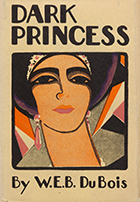
Dark_Princess
  • D.H Lawrence, Lady Chatterley's Lover
  • Bertolt Brecht, The Threepenny Opera (in the original German, Die Dreigroschenoper)
  • Virginia Woolf, Orlando
  • Erich Maria Remarque, All Quiet on the Western Front (in the original German, Im Westen nichts Neues)
  • W.E.B. Du Bois, Dark Princess
  • Claude McKay, Home to Harlem
  • A. A. Milne, illustrations by E. H. Shepard, House at Pooh Corner (introducing the Tigger character)
  • J. M. Barrie, Peter Pan; or the Boy Who Wouldn't Grow Up (because it was not "published" for copyright purposes until 1928)[4]
  • Radclyffe Hall, The Well of Loneliness
  • Evelyn Waugh,Decline and Fall
  • Agatha Christie, The Mystery of the Blue Train
  • Wanda Gág, Millions of Cats (the oldest American picture book still in print)
  • Robert Frost, West-Running Brook
  • Ben Hecht and Charles MacArthur, The Front Page

These are just a few of the thousands of works entering the public domain in 2024..."
Public Domain 

Thursday, December 30, 2021

Public Domain Day 2022

[Duke's Center for the Study of the Public Domain] 

"On January 1, 2022, copyrighted works from 1926 will enter the US public domain, 1  where they will be free for all to copy, share, and build upon. The line-up this year is stunning. It includes books such as A. A. Milne’s Winnie-the-Pooh, Felix Salten’s Bambi, Ernest Hemingway’s The Sun Also Rises, Langston Hughes’ The Weary Blues, and Dorothy Parker’s Enough Rope. There are scores of silent films—including titles featuring Harold Lloyd, Buster Keaton, and Greta Garbo, famous Broadway songs, and well-known jazz standards. But that’s not all. In 2022 we get a bonus: an estimated 400,000 sound recordings from before 1923 2  will be entering the public domain too!

In 2022, the public domain will welcome a lot of “firsts”: the first Winnie-the-Pooh book from A. A. Milne, the first published novels from Ernest Hemingway and William Faulkner, the first books of poems from Langston Hughes and Dorothy Parker. What’s more, for the first time ever, thanks to a 2018 law called the Music Modernization Act, a special category of works—sound recordings—will finally begin to join other works in the public domain. On January 1 2022, the gates will open for all of the recordings that have been waiting in the wings. Decades of recordings made from the advent of sound recording technology through the end of 1922—estimated at some 400,000 works—will be open for legal reuse.

Why celebrate the public domain? When works go into the public domain, they can legally be shared, without permission or fee. That is something Winnie-the-Pooh would appreciate. Community theaters can screen the films. Youth orchestras can perform the music publicly, without paying licensing fees. Online repositories such as the Internet Archive, HathiTrust, and Google Books can make works fully available online. This helps enable access to cultural materials that might otherwise be lost to history. 1926 was a long time ago. The vast majority of works from 1926 are out of circulation. When they enter the public domain in 2022, anyone can rescue them from obscurity and make them available, where we can all discover, enjoy, and breathe new life into them.

The public domain is also a wellspring for creativity. The whole point of copyright is to promote creativity, and the public domain plays a central role in doing so. Copyright law gives authors important rights that encourage creativity and distribution—this is a very good thing. But it also ensures that those rights last for a “limited time,” so that when they expire, works go into the public domain, where future authors can legally build on the past—reimagining the books, making them into films, adapting the songs and movies. That’s a good thing too!.."
Public Domain 

Wednesday, January 2, 2019

For the First Time in More Than 20 Years, Copyrighted Works Will Enter the Public Domain

"Whose woods these are, I think I”—whoa! We can’t quote any more of Robert Frost’s “Stopping by Woods on a Snowy Evening,” because it is still under copyright as this magazine goes to press. But come January 1, 2019, we, you, and everyone in America will be able to quote it at length on any platform.
At midnight on New Year’s Eve, all works first published in the United States in 1923 will enter the public domain. It has been 21 years since the last mass expiration of copyright in the U.S.
That deluge of works includes not just “Stopping by Woods on a Snowy Evening,” which appeared first in the New Republic in 1923, but hundreds of thousands of books, musical compositions, paintings, poems, photographs and films. After January 1, any record label can issue a dubstep version of the 1923 hit “Yes! We Have No Bananas,” any middle school can produce Theodore Pratt’s stage adaptation of The Picture of Dorian Gray, and any historian can publish Winston Churchill’s The World Crisis with her own extensive annotations. Any artist can create and sell a feminist response to Marcel Duchamp’s seminal Dadaist piece, The Large Glass (The Bride Stripped Bare by Her Bachelors, Even) and any filmmaker can remake Cecil B. DeMille’s original The Ten Commandments and post it on YouTube.
“The public domain has been frozen in time for 20 years, and we’re reaching the 20-year thaw,” says Jennifer Jenkins, director of Duke Law School’s Center for the Study of the Public Domain. The release is unprecedented, and its impact on culture and creativity could be huge. We have never seen such a mass entry into the public domain in the digital age. The last one—in 1998, when 1922 slipped its copyright bond—predated Google. “We have shortchanged a generation,” said Brewster Kahle, founder of the Internet Archive. “The 20th century is largely missing from the internet.."
Copyright works